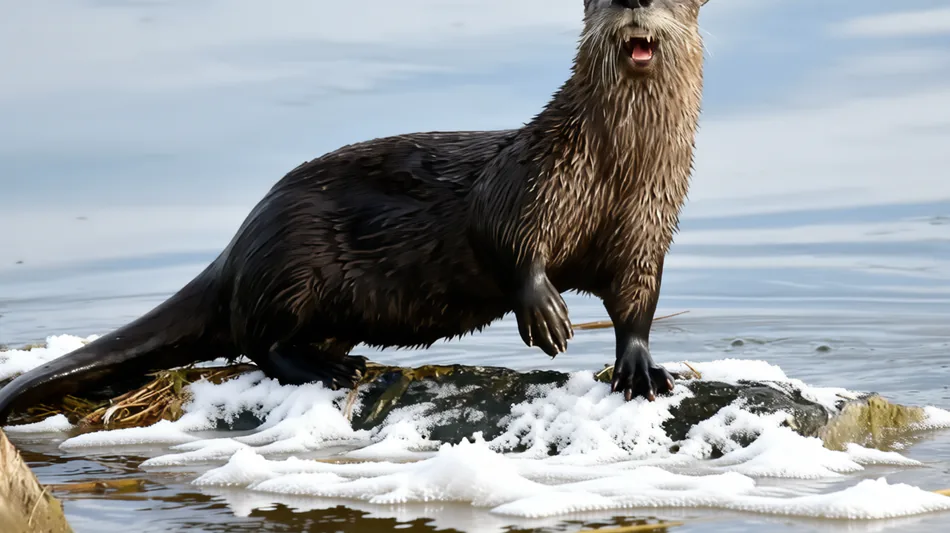
Indiana River Otters Make Comeback After Decades of Conservation Efforts

 Shruti Haasan Reveals Kamal Haasan’s Defense of Her Film Career

 Penrith Panthers Face Backlash Over Decision to Disband Pantherettes Cheerleading Squad

 Make-A-Wish Announces 2026 Starblazer Award Honorees; Allied World Becomes First Corporate Founder

 Lee-Trump Golf Diplomacy Faces Diplomatic Dilemma Ahead of G20 Summit

 Mavericks Defeat Jazz 112-100 Behind Washington’s 26 Points and Second-Half Surge

 BingX: Major Announcement of Far-Reaching Significance

 James Blunt Scores First Number One Album in 19 Years; Wife Sofia Wellesley Celebrates
River otters, once nearly extinct in Indiana, have successfully recolonized every county in the state following a targeted wildlife management initiative. Starting in 1995, officials released 303 otters into local waterways to restore the population that had disappeared due to historical hunting and habitat loss.
River otters, a species once nearly extinct in Indiana, have successfully recolonized every county in the state following a decades-long wildlife management initiative. The comeback of the North American river otter marks one of the most significant conservation successes in Indiana's history, reversing a population collapse caused by unregulated hunting and habitat degradation throughout the 20th century.
The recovery effort began in earnest in 1995, when state wildlife officials launched a targeted reintroduction program. Over the course of several years, biologists captured otters from healthy populations in other regions and released 303 individuals into Indiana’s rivers and streams. The goal was to establish breeding populations that could naturally expand and repopulate the state’s waterways.
The strategy proved effective. Within a few decades, the released otters not only survived but thrived, expanding their range across the state. Today, river otters are no longer considered endangered or threatened in Indiana; they are present in all 92 counties, utilizing rivers, lakes, and even urban waterways.
The White River in Indianapolis serves as a prime example of this ecological shift. Once devoid of the species, the river now supports healthy otter populations, with residents frequently reporting sightings of the animals swimming in the water or leaving distinctive tracks in the snow along the banks. The presence of otters is often viewed as an indicator of water quality, as they require clean, fish-rich environments to survive.
Historically, river otters were abundant in Indiana but faced severe declines due to fur trapping and the loss of wetlands. By the mid-20th century, the species had vanished from much of its former range. The 1995 reintroduction program was a critical intervention that halted the decline and set the stage for the current widespread presence.
Wildlife officials continue to monitor otter populations to ensure the species remains stable. The success in Indiana serves as a model for other states dealing with similar conservation challenges, demonstrating that targeted reintroduction efforts can restore native wildlife even after long periods of absence.
S.Leonhard--VB