-
 England Rugby League World Cup hopes hang by a thread
-
St. Louis City's unbeaten MLS run ends at 19, Union's reaches 15

-
 Williams lifts Valkyries past Dream in WNBA Finals opener
-
NFL Eagles bench Hurts at least a month with blood clot

-
 Dubois destroys Wardley to retain WBO heavyweight crown
-
Across US, 'No Kings' events seek to boost early voting
-
 Oregon families grapple with explaining school shooting to children
-
Tents spring up in Lisbon as Portugal housing protests spread
-
 Israeli settlers attack European diplomats, beat French mayor
-
'Best in world' Yamal powers Barca to Betis rout, Atletico strike late

-
 Town hall in Limoges 'largely lost' to blaze set during French protests
-
El Salvador's Bukele puts conditions on early release of gang prisoners

-
 US goes on the offensive in central Asia
-
Fire rages at town hall in France's Limoges after protests: authorities

-
 Emotional Lions come up short in Champions Cup as tributes paid to Andrews
-
Unstoppable Barca thrash Betis to extend perfect start

-
 Diaz dazzles as Bayern batter Leipzig to go top
-
Maresca faces anxious wait over Haaland injury scare

-
 Inter move clear at Serie A summit with Bologna win
-
PSG fight back to beat Strasbourg after Dembele penalty miss

-
 Liverpool still have 'lots to improve', says match-winner Isak
-
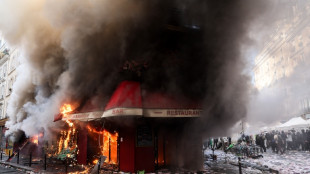
Looting, blazes and clashes in France amid nationwide protests
-
 Looters ransack shops during France cost-of-living protests
-
Walsh breaks her own 50 free world short course record

-
 Leinster thump Clermont as grieving Lions set for Champions Cup debut
-
Haaland brace extends Man City's winning start in Premier League

-
 Haaland stars in Man City win, Liverpool beat Brentford
-
'Special' Ombudsman storms to victory in Champion Stakes

-
 Dortmund go top despite Union Berlin stalemate
-
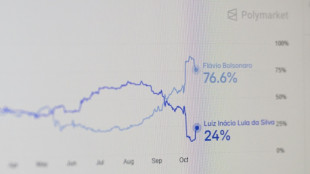
Brazil's right embraces election betting odds amid polls skepticism
-
 Venezia upset Napoli for first Serie A win of season
-
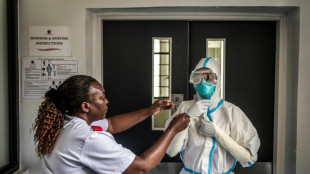
Four more Ebola cases detected in Kenya, bringing total to seven
-
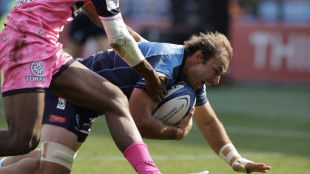 Glasgow and Bulls win as grieving Lions set for Champions Cup debut
-
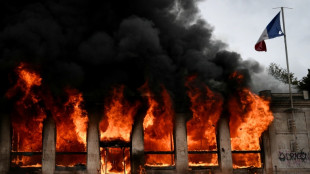
Clashes erupt in France as protesters vow to make government 'tremble'
-
 Smiling pope returns to Vatican after cancer surgery
-
Chwalinska downs Swiatek to set up Wuhan final with world number 170 Kartal

-
 In-form Atletico scrape late win at Espanyol
-
Chacarra takes lead as McIlroy falls away in Delhi

-
 Rabada returns as S.Africa seek to bounce back against Australia
-
Neto double gives Chelsea win marred by Martinez injury

-
 Zverev, Medvedev ousted with Spaniards to clash for Shanghai title
-
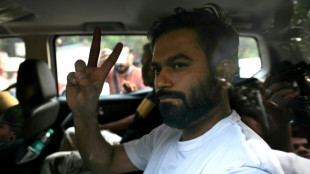
'Cockroach' party founder released from Indian police custody
-
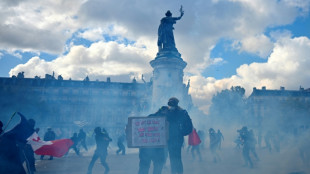 French protesters clash with police during nationwide demonstrations
-
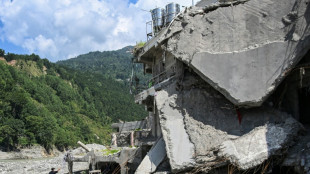
Nepal floods 'defining moment' for climate action: UN
-
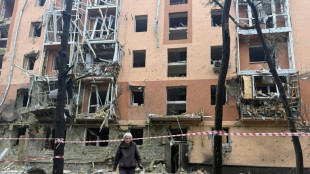 Zelensky says Trump could lift more Russia sanctions
-
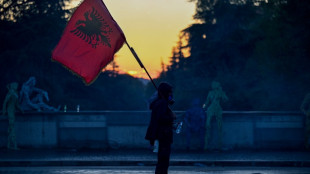
Albanian capital sees fifth straight day of violent clashes
-
 Jayawardene quits as coach of five-time IPL winners Mumbai
-
Leaders weigh 'huge benefit', risks of AI for global economy

-
 World number 170 Kartal battles past Ostapenko to reach Wuhan final
-
Zverev stunned by Davidovich Fokina in Shanghai semi-finals

Beijing's new Taiwan playbook
Beijing's military machinery and political ambitions have moved it closer to a point where it could attempt to seize Taiwan by force. Decades of double‑digit defence spending have yielded advanced amphibious assault vessels, fleets of hypersonic and ballistic missiles and an air force that can saturate airspace around the island. Naval analysts note that the People’s Liberation Army Navy’s new Type 054B guided‑missile frigates incorporate artificial‑intelligence‑enabled sensors to improve anti‑submarine warfare and fleet air defence and can undertake long‑range escort missions. Dozens of civilian‑flagged research vessels, operating under the cover of scientific exploration, have spent years mapping the seabed across the western Pacific and as far afield as Guam and Hawaii to improve Chinese submarine navigation and to erode the United States’ traditional advantage in undersea warfare. Expanded missile launch infrastructure in Xinjiang, featuring scores of launch pads, is intended to increase the survivability of China’s land‑based nuclear forces.
Yet despite these capabilities, Beijing has shown little appetite for a near‑term invasion. A recent threat assessment by the United States’ intelligence community concluded that Chinese leaders do not currently plan to execute an invasion by 2027 and lack a fixed timetable for unification. Taiwan’s defence ministry concurs that China’s build‑up is relentless but emphasises that deterrence, rather than assumptions about invasion windows, will shape Beijing’s calculations. Analysts argue that a war would trigger unprecedented economic costs. Taiwan’s semiconductor industry underpins global technology supply chains and about a fifth of world trade transits the Taiwan Strait. Any conflict that closed this artery would reverberate through financial markets, manufacturing and energy supplies. Even without U.S. intervention, Chinese leadership would risk social stability at home if a miscalculated assault stalled or provoked severe sanctions.
Against this backdrop, Beijing has refined what some analysts describe as a grey‑zone strategy — a web of coercive measures designed to wear down Taiwan’s morale and manoeuvre it towards “reunification” without firing a shot. People’s Liberation Army aircraft entered Taiwan’s air defence identification zone more than three hundred times a month after William Lai’s 2024 election, only for the number of incursions to fall sharply in 2026 as planners redistributed sorties to training and maintenance. China’s coast guard now conducts routine multi‑ship patrols in the restricted waters around Kinmen and Pratas, two Taiwanese‑administered archipelagos close to the mainland, to normalise jurisdictional claims and erode Taiwan’s threat awareness. As part of the large‑scale “Strait Thunder 2025A” and “Justice Mission 2025” exercises, the People’s Liberation Army practised cutting power and blockading Taiwan’s liquefied natural gas terminals — a rehearsal for imposing energy strangulation during a future crisis.
Energy insecurity is a key prong of Beijing’s hybrid approach. Taiwan imports around 97 percent of its energy, with liquefied natural gas accounting for roughly half of electricity generation. When war in Iran temporarily choked off shipments through the Strait of Hormuz earlier this year, Chinese‑language social media channels flooded TikTok and Xiaohongshu with ominous videos claiming Taiwan’s gas reserves would expire within a fortnight and extolling “peaceful unification” as the only remedy. Officials from the Taiwan Affairs Office even offered to supply electricity and gas from the mainland as soon as Taiwan surrendered its sovereignty. Taiwan’s government countered by publicising the diversification of its imports, increasing strategic reserves and conducting joint navy‑coast‑guard drills to escort fuel tankers through potential blockades. Such moves aim to reassure citizens and blunt the psychological impact of Beijing’s energy narratives.
Political infiltration forms another component of the grey‑zone campaign. Beijing has long supported parties in Taiwan that advocate a looser relationship with the mainland, but recent cases show a willingness to back actors whose public stance on unification is ambiguous. Taiwanese courts convicted a former spokesperson for the Taiwan People’s Party (TPP) after she accepted funds from Chinese handlers and provided contact lists of government agencies. Investigators say the case is not isolated: election interference and covert recruitment have targeted both the centrist TPP and elements of the governing Democratic Progressive Party (DPP). At the international level, Chinese diplomats persuade or pressure host governments to label Taiwan as a province of China; Taiwan stayed away from this year’s World Trade Organization ministerial in Yaoundé after delegates were issued documents bearing that designation.
This cognitive warfare extends to culture and education. President William Lai has warned that video‑sharing platforms may be used to cultivate the notion that Taiwanese and mainland Chinese people are “one family” and to foster resignation towards annexation. His administration has banned certain Chinese apps from public‑sector devices and proposed curriculum changes to strengthen civic identity and debunk disinformation. Opinion polls still show a solid majority of Taiwanese identifying as Taiwanese rather than Chinese, suggesting that Beijing’s narrative campaigns have yet to shift the island’s self‑perception.
While China deploys these non‑military tools, Taiwan is struggling to adapt its defence posture. The DPP has proposed a special budget worth around US$40 billion to procure hundreds of thousands of unmanned systems, develop an integrated air and missile defence network and fund the domestic arms industry. Opposition parties controlling the legislature have delayed the budget, preferring a smaller package focused on conventional platforms such as artillery and anti‑tank missiles. Delays threaten to slow deliveries of High Mobility Artillery Rocket Systems, self‑propelled howitzers and anti‑tank weapons from the United States. At the same time, Taipei is investing in its first domestically built submarine and plans to upgrade two Dutch‑built boats from the 1980s. Such measures are meant to raise the cost of aggression and complicate any blockade.
Elsewhere in the region, countries are recalibrating their own strategies in anticipation of cross‑strait tensions. Japan has acquired Tomahawk cruise missiles from the United States and is modifying its destroyers to carry them, signalling a shift towards a counter‑strike doctrine that can threaten missile launch platforms on the Chinese coast. The Philippines and Japan have agreed to step up military intelligence sharing and have begun negotiating a boundary in their overlapping exclusive economic zones east of Taiwan. Manila is seeking Japanese anti‑submarine destroyers and anti‑ship missiles to bolster its navy. Such cooperation, alongside the United States’ continued security commitments under the Taiwan Relations Act, suggests that any attempt by Beijing to seal off the island would face a more coordinated regional response.
Seen together, these developments reveal why Beijing may perceive hybrid coercion as “something better” than a risky assault. China’s ability to project force across the Taiwan Strait has improved markedly, but its leaders recognise that a failed invasion would jeopardise economic growth and political legitimacy. By combining military modernisation with psychological operations, energy leverage, political interference and calibrated maritime pressure, Beijing hopes to corrode Taiwan’s will and convince its citizens that unification is inevitable. Whether this strategy succeeds will depend on Taiwan’s resilience, the cohesion of its democratic institutions and the willingness of regional partners to deter aggression. For now, the contest remains a test not of who can fire the first shot, but of whose vision for the island’s future will ultimately prevail.
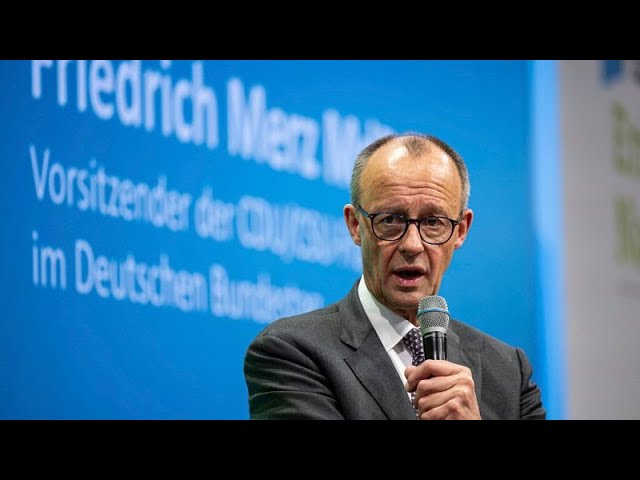
Germany: Migration reform package

Europe, Germany and the end of the euro?
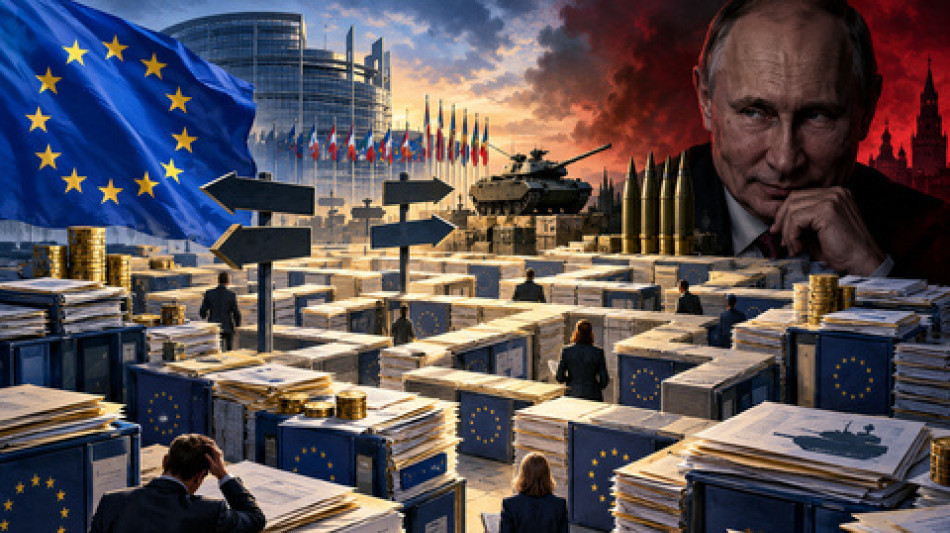
Europe’s arms money maze
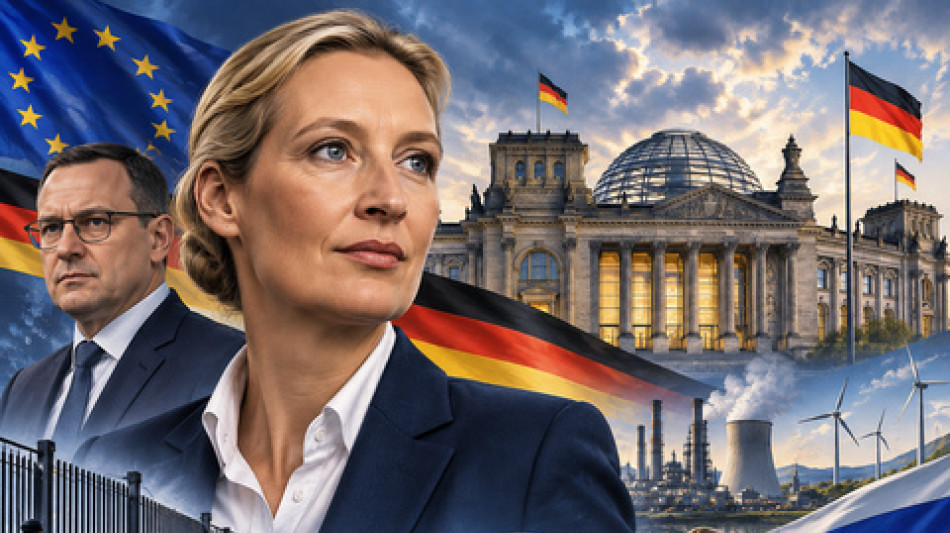
Germany under Weidel
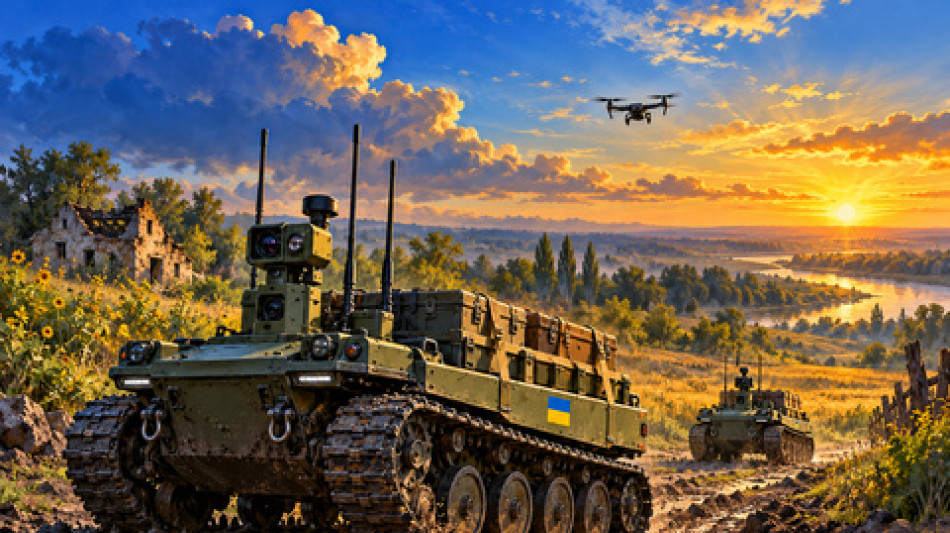
Ukraine sends ground robots
Brazil's trade-war boom

AI sparks Wall Street panic

India defies U.S. tariffs

EU misstep on mercosur Deal

Argentina reshapes oil

Cuba Strangled by US Pressure