-
 St. Louis City's unbeaten MLS run ends at 19, Union's reaches 15
-
Williams lifts Valkyries past Dream in WNBA Finals opener

-
 NFL Eagles bench Hurts at least a month with blood clot
-
Dubois destroys Wardley to retain WBO heavyweight crown

-
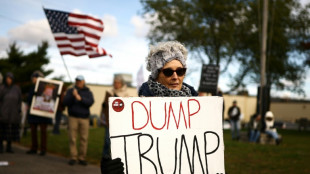 Across US, 'No Kings' events seek to boost early voting
-
Oregon families grapple with explaining school shooting to children

-
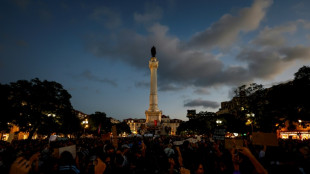 Tents spring up in Lisbon as Portugal housing protests spread
-
Israeli settlers attack European diplomats, beat French mayor
-
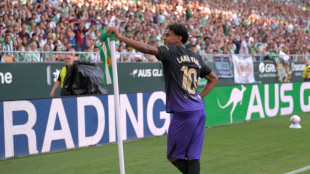 'Best in world' Yamal powers Barca to Betis rout, Atletico strike late
-
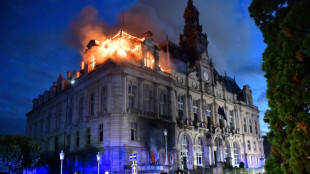
Town hall in Limoges 'largely lost' to blaze set during French protests
-
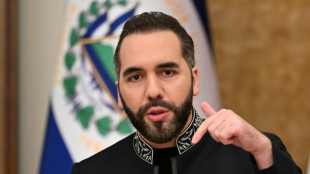 El Salvador's Bukele puts conditions on early release of gang prisoners
-
US goes on the offensive in central Asia
-
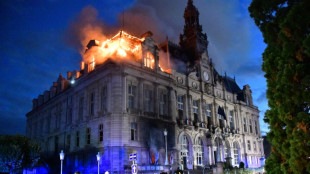 Fire rages at town hall in France's Limoges after protests: authorities
-
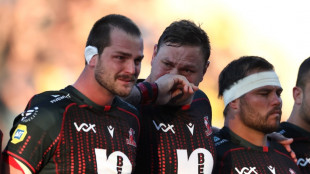
Emotional Lions come up short in Champions Cup as tributes paid to Andrews
-
 Unstoppable Barca thrash Betis to extend perfect start
-
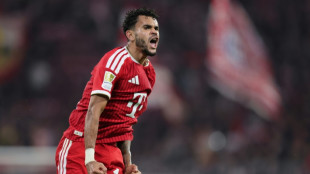
Diaz dazzles as Bayern batter Leipzig to go top
-
 Maresca faces anxious wait over Haaland injury scare
-
Inter move clear at Serie A summit with Bologna win

-
 PSG fight back to beat Strasbourg after Dembele penalty miss
-
Liverpool still have 'lots to improve', says match-winner Isak
-
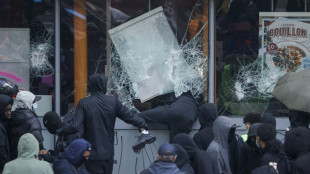
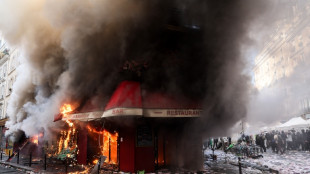 Looting, blazes and clashes in France amid nationwide protests
-
Looters ransack shops during France cost-of-living protests
-
 Walsh breaks her own 50 free world short course record
-
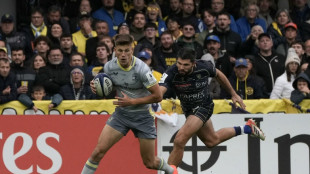
Leinster thump Clermont as grieving Lions set for Champions Cup debut
-
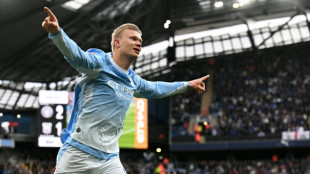
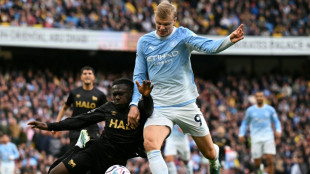 Haaland brace extends Man City's winning start in Premier League
-
Haaland stars in Man City win, Liverpool beat Brentford
-
 'Special' Ombudsman storms to victory in Champion Stakes
-
Dortmund go top despite Union Berlin stalemate

-
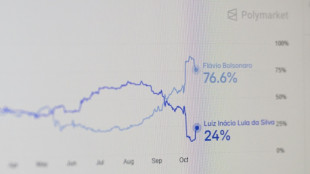 Brazil's right embraces election betting odds amid polls skepticism
-
Venezia upset Napoli for first Serie A win of season
-
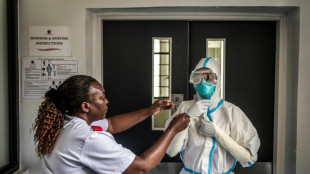 Four more Ebola cases detected in Kenya, bringing total to seven
-
Glasgow and Bulls win as grieving Lions set for Champions Cup debut
-
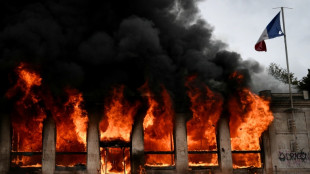 Clashes erupt in France as protesters vow to make government 'tremble'
-
Smiling pope returns to Vatican after cancer surgery
-
 Chwalinska downs Swiatek to set up Wuhan final with world number 170 Kartal
-
In-form Atletico scrape late win at Espanyol

-
 Chacarra takes lead as McIlroy falls away in Delhi
-
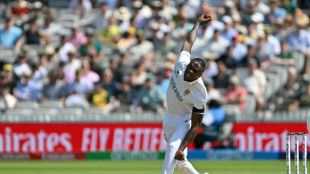
Rabada returns as S.Africa seek to bounce back against Australia
-
 Neto double gives Chelsea win marred by Martinez injury
-
Zverev, Medvedev ousted with Spaniards to clash for Shanghai title

-
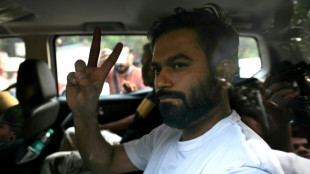 'Cockroach' party founder released from Indian police custody
-
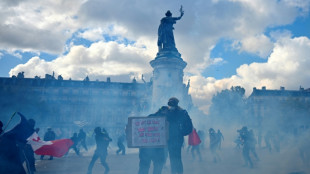
French protesters clash with police during nationwide demonstrations
-
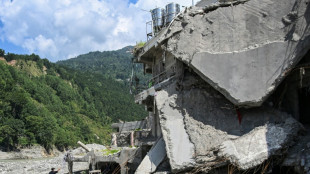 Nepal floods 'defining moment' for climate action: UN
-
Zelensky says Trump could lift more Russia sanctions
-
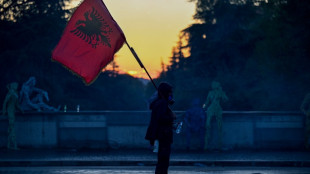 Albanian capital sees fifth straight day of violent clashes
-
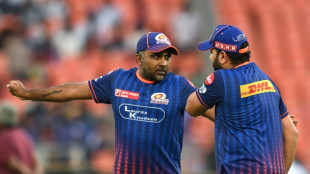
Jayawardene quits as coach of five-time IPL winners Mumbai
-
 Leaders weigh 'huge benefit', risks of AI for global economy
-
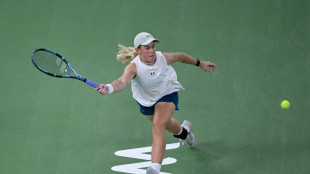
World number 170 Kartal battles past Ostapenko to reach Wuhan final
-
 Zverev stunned by Davidovich Fokina in Shanghai semi-finals
-
Pope to return to Vatican after cancer surgery
Iran's revenge rewired
The Middle East has crossed a threshold that diplomats spent decades trying to avoid: a direct, multi‑theatre confrontation in which escalation is no longer measured by deniable sabotage or proxy fire, but by openly declared “major combat operations”, leadership decapitation, and retaliatory strikes that fan out across an entire region.
In the early hours of 28 February, a joint campaign by the United States and Israel began striking targets across Iran. The operation—described by US officials as a concentrated effort to cripple Tehran’s missile and nuclear capabilities—rapidly expanded beyond a single night of raids into a sustained strike programme. Within hours, the most consequential political fact of the crisis crystallised: Iran’s Supreme Leader, Ayatollah Ali Khamenei, was dead, along with a tranche of senior military and security figures.
For Tehran, the death of its paramount leader is more than a symbolic blow. It punctures the central claim of the Islamic Republic’s deterrence model: that its leadership can control the tempo of conflict, calibrate retaliation, and avoid a war that threatens regime survival. Yet what has followed is not simply a conventional quest for revenge. Iran is escalating—but in ways that suggest the next phase may be designed less to “answer” a strike in kind than to widen the battlefield, multiply pressure points, and force adversaries—and their regional partners—into an exhausting, costly posture with no clean off‑ramp.
A weekend that rewrote the rules
By the time the first assessments emerged, the outlines were stark. Strikes targeted a wide range of sites linked to Iran’s military, command infrastructure and strategic programmes. Iran responded with missile attacks aimed at Israel and at US assets in the region, while allied armed groups—long embedded in Tehran’s security architecture—moved to join the fight. Casualty figures, as ever in a fast‑moving war, shifted by the hour; by early March, the toll included American service members killed during the opening days, deaths in Israel from Iranian strikes, and a sharply rising number of fatalities inside Iran from the strike campaign.
The political messages were as dramatic as the military ones. The US President publicly framed the operation not as a limited punitive action but as a decisive move to end a threat. He also urged Iranians to take control of their future—language that, even when paired with official denials of an open‑ended ground war, inevitably sharpened Tehran’s suspicion that the campaign’s real horizon might be broader than the stated targets.
In Tehran, state institutions moved quickly to memorialise the Supreme Leader’s death as a national trauma, announcing an extended mourning period and days of public closure. The government portrayed the killing not merely as an attack on Iran, but as an affront to the wider religious community it claims to lead. Iran’s President vowed justice and retaliation, arguing that accountability was both a right and an obligation.
These signals matter because they illuminate the strategic crossroads Tehran now faces. Iran can retaliate “as Iran”—with missiles, drones, and overt military action—or it can retaliate “as the Islamic Republic”—a system built to fight indirectly, to disperse risk, and to turn regional geography into leverage. Recent days indicate it is attempting both simultaneously.
Escalation, but not symmetry
The most intuitive reading of revenge is symmetry: you strike us, we strike you. Yet Iran’s current approach points to a different logic—one aimed at imposing a regional tax on war itself.
Rather than concentrating its response solely on Israel, Iran has been reported to activate a pre‑existing plan designed for a scenario precisely like this: a sudden leadership shock and sustained external attack. The plan’s essence is dispersion. It seeks to destabilise the wider Middle East and disrupt global markets by widening the target set far beyond the immediate combatants.
In practice, that has meant drone and missile activity across the Gulf, including strikes aimed at energy infrastructure and attacks on US bases and strategic sites across multiple countries. The geographical breadth is not incidental. It pressures governments that have tried to keep the conflict at arm’s length, raises insurance and shipping costs, and feeds market volatility—especially in oil and gas—by creating the perception that supply routes and export terminals could become collateral damage or deliberate targets.
This is why Iran’s revenge could indeed be “different”. It is less about a single spectacular blow and more about sustained friction: making the region feel unsafe, forcing adversaries to defend many sites at once, and turning every partner base or pipeline into a political liability for a host government.
Decapitation and decentralisation
The killing of a Supreme Leader would ordinarily invite paralysis: competing factions, contested succession, and uncertainty within command structures. Instead, Iran appears to have anticipated the risk of decapitation. Reports indicate it has decentralised operational authority so that military units can continue functioning—and even act autonomously—despite leadership losses.
This is a hard lesson of modern conflict: removing commanders does not always remove capability, particularly when a system has trained itself to operate through redundancy and ideology. Decentralisation complicates deterrence because it blurs the line between ordered retaliation and opportunistic escalation. It also raises the risk of miscalculation: if local commanders believe they are empowered to act, an incident can trigger an escalation spiral without a clear political hand on the brake.
For Israel and the United States, this creates a paradox. A campaign intended to degrade Iran’s strategic tools may simultaneously validate Tehran’s long‑held belief that dispersal—across units, across geography, across proxies—is the only sustainable defence. The more the battlefield expands, the more Iran can claim that it is not “losing” but “surviving” by making the war uncontainable.
Why energy and bases matter more than rhetoric
Iran’s strategic leverage has always rested on three overlapping capabilities: missiles and drones that can reach targets across the region; networks of aligned armed groups that can open secondary fronts; and geography that sits astride critical energy routes. In the current crisis, Tehran appears to be drawing on all three. Targeting energy infrastructure does not merely threaten physical assets; it threatens predictability—one of the most valuable commodities in global markets. Even limited disruption can push prices upwards, create political pressure in consumer countries, and strain alliances as governments argue over the costs of continued confrontation.
Similarly, striking US bases is not only a military act but a political one. It forces Washington to respond in a way that risks deeper entanglement, while also testing the political tolerance of host countries that have granted access or basing rights. If a base becomes a magnet for attack, a host government may face domestic pressure to curtail cooperation or publicly distance itself—precisely the kind of diplomatic friction Tehran can use as a weapon.
Allies, proxies, and the widening circle
The entry of Iran‑aligned groups—particularly in Lebanon and Iraq—adds another layer of complexity. These groups can escalate on their own timelines, choose targets that create maximum political impact, and exploit local dynamics that outside powers struggle to control. Their involvement also increases the chances of civilian harm and regional spillover, especially if retaliatory air strikes hit densely populated areas or if armed groups fire from within civilian environments.
For Israel, the prospect of simultaneous pressure from multiple directions has long been central to its threat assessments. For Gulf states, the danger is different: becoming battlegrounds by proximity. For the United States, the risk is the slow creep from a declared, time‑bounded operation into a rolling campaign to protect personnel and bases, respond to new attacks, and maintain credibility. This is how “different revenge” works: it is a method of stretching an opponent’s attention and resources until political cohesion frays.
The fog of war, now amplified by the internet
As missiles fly and leaders die, an older battlefield has returned with a new twist: information. A wave of misrepresented imagery has circulated online since the strikes began, including AI‑generated or repurposed videos falsely presented as evidence of dramatic battlefield outcomes. Some prominent claims—such as the alleged disabling of a US aircraft carrier—have been publicly refuted by US officials. Other viral clips have been traced to simulation footage or to older, unrelated events.
The significance is not only that misinformation spreads. It is that, in a crisis where public opinion matters—where governments must justify casualties, where allies must defend their choices, and where markets react to fear—false narratives can shape behaviour before facts catch up. In that environment, “revenge” does not always look like a missile launch. Sometimes it looks like confusion, panic buying, political pressure, and a public sense that the war is spiralling beyond anyone’s control.
What comes next: a long campaign, not a single strike
The most important question is not whether Iran will retaliate; it already has. The question is what form its continuing retaliation will take—and whether the United States and Israel can contain the conflict to their stated objectives.
Official statements emphasise the destruction of missiles, naval assets, and the prevention of a nuclear weapons capability. They also stress that the operation is not intended to become a prolonged occupation. Yet history offers a caution: even wars that begin with narrow goals can expand when adversaries choose to fight asymmetrically, when allies are attacked, or when domestic politics demands visible results.
Iran’s incentives, meanwhile, have shifted. The death of a Supreme Leader is a profound internal shock. It may strengthen hard‑line impulses, weaken restraint, and elevate the argument that survival requires demonstrating continued capacity to hurt opponents—directly and indirectly. It may also intensify internal power struggles, as competing factions seek to prove resolve and legitimacy. In this setting, Iran’s “different” revenge is best understood not as a single act, but as a strategy: disperse command, widen the theatre, hit the region’s economic nerves, keep adversaries guessing, and force the confrontation to become a regional crisis that nobody can simply walk away from.
The danger is that every day the war continues, the number of potential triggers multiplies: an accidental shoot‑down, a misread radar blip, a strike that hits a sensitive site, or a proxy attack that causes mass casualties. Any one of these can make restraint politically impossible. For now, the shape of the conflict suggests an unmistakable conclusion. Iran is escalating its attacks, but it is also reframing revenge. The aim appears less to mirror the opening strike than to create a landscape in which the costs of continuing—economic, political, and strategic—become intolerably high for everyone involved.
Germany under Weidel
After Europe’s capitulation
Operation Venezuela: Scenario

Can the FANB shield Maduro?

After Kirk: Speech at Risk

Power at the Heart of Iran

Argentina reshapes oil

EU misstep on mercosur Deal
India defies U.S. tariffs
Cuba: The Regime's last Card
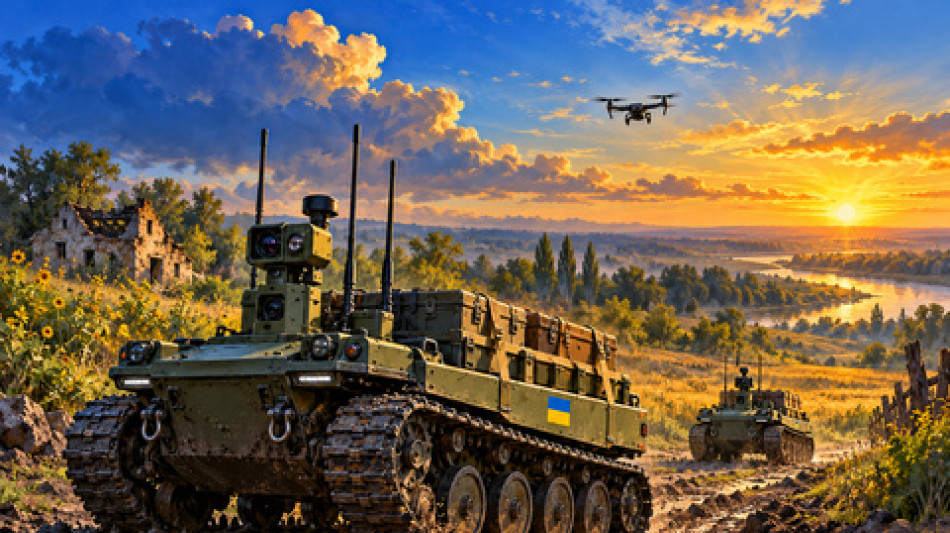
Ukraine sends ground robots