
-
 Oregon families grapple with explaining school shooting to children
-
Tents spring up in Lisbon as Portugal housing protests spread
-
 Israeli settlers attack European diplomats, beat French mayor
-
'Best in world' Yamal powers Barca to Betis rout, Atletico strike late

-
 Town hall in Limoges 'largely lost' to blaze set during French protests
-
El Salvador's Bukele puts conditions on early release of gang prisoners
-
 US goes on the offensive in central Asia
-
Fire rages at town hall in France's Limoges after protests: authorities

-
 Emotional Lions come up short in Champions Cup as tributes paid to Andrews
-
Unstoppable Barca thrash Betis to extend perfect start

-
 Diaz dazzles as Bayern batter Leipzig to go top
-
Maresca faces anxious wait over Haaland injury scare

-
 Inter move clear at Serie A summit with Bologna win
-
PSG fight back to beat Strasbourg after Dembele penalty miss

-
 Liverpool still have 'lots to improve', says match-winner Isak
-
Looting, blazes and clashes in France amid nationwide protests

-
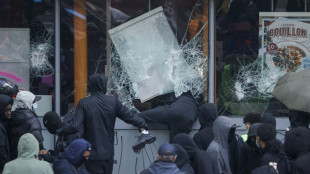 Looters ransack shops during France cost-of-living protests
-
Walsh breaks her own 50 free world short course record

-
 Leinster thump Clermont as grieving Lions set for Champions Cup debut
-
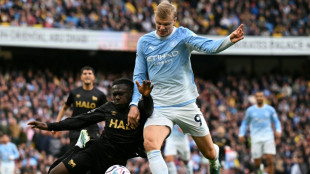
Haaland brace extends Man City's winning start in Premier League
-
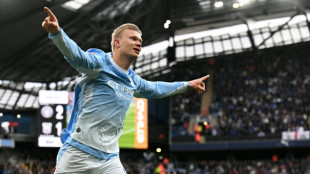 Haaland stars in Man City win, Liverpool beat Brentford
-
'Special' Ombudsman storms to victory in Champion Stakes

-
 Dortmund go top despite Union Berlin stalemate
-
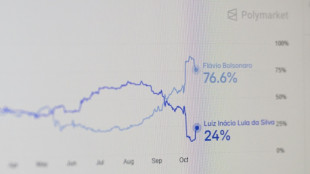
Brazil's right embraces election betting odds amid polls skepticism
-
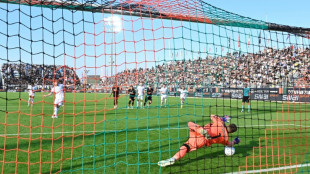 Venezia upset Napoli for first Serie A win of season
-
Four more Ebola cases detected in Kenya, bringing total to seven
-
 Glasgow and Bulls win as grieving Lions set for Champions Cup debut
-
Clashes erupt in France as protesters vow to make government 'tremble'
-
 Smiling pope returns to Vatican after cancer surgery
-
Chwalinska downs Swiatek to set up Wuhan final with world number 170 Kartal
-
 In-form Atletico scrape late win at Espanyol
-
Chacarra takes lead as McIlroy falls away in Delhi
-
 Rabada returns as S.Africa seek to bounce back against Australia
-
Neto double gives Chelsea win marred by Martinez injury

-
 Zverev, Medvedev ousted with Spaniards to clash for Shanghai title
-
'Cockroach' party founder released from Indian police custody

-
 French protesters clash with police during nationwide demonstrations
-
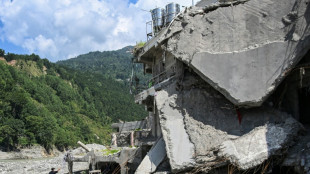
Nepal floods 'defining moment' for climate action: UN
-
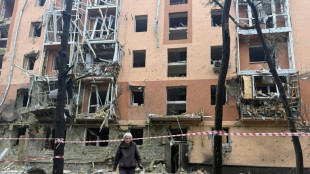 Zelensky says Trump could lift more Russia sanctions
-
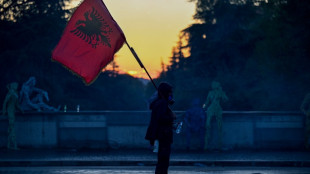
Albanian capital sees fifth straight day of violent clashes
-
 Jayawardene quits as coach of five-time IPL winners Mumbai
-
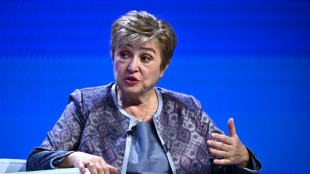
Leaders weigh 'huge benefit', risks of AI for global economy
-
 World number 170 Kartal battles past Ostapenko to reach Wuhan final
-
Zverev stunned by Davidovich Fokina in Shanghai semi-finals
-
 Pope to return to Vatican after cancer surgery
-
France faces day of cost-of-living protests

-
 Haze triggers highest-level alert in parts of Southeast Asia
-
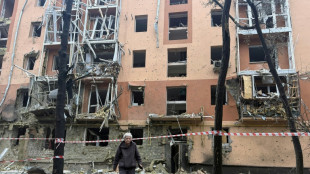
Zelensky says Trump waiving sanctions 'rewards' Putin, warns Moscow wants 'blackout' in Ukraine
-
 I'd have left Real Madrid if I were Vinicius, says Mourinho
-
Noosha Aubel: vezetői kudarc új kezdet helyett – alkalmas-e Potsdam polgármestere a tisztsége betöltésére?

EU India deal gains unveiled
On 26 January 2026 negotiators from Brussels and New Delhi announced that they had finally concluded a free‑trade agreement (FTA) after nearly two decades of on‑off negotiations. European Commission President Ursula von der Leyen described it as the “mother of all deals”. The pact – which still requires legal revision and ratification in both the European Parliament and the Indian parliament – is broad in scope. It will eventually eliminate or reduce tariffs on over 90 % of EU exports to India, save European companies around €4 billion per year in duties and double EU exports to India by 2032. In return, the EU will cut tariffs to zero on about 90 % of Indian goods at launch and extend duty‑free access to 93 % within seven years. The agreement complements a newly signed Security and Defence Partnership that extends cooperation into areas such as maritime security, cyber‑defence and counterterrorism, signalling that the relationship now goes well beyond commerce.
Europe’s economic gains
Market access to a massive growth engine
India’s economy – valued at roughly $4.2 trillion and forecast to grow faster than any other major economy – is the EU’s tenth‑largest export market. EU goods face a weighted‑average tariff of about 9.3 % when entering India. Under the FTA, India will eliminate or reduce tariffs on 96.6 % of EU exports by value. Tariffs on roughly 30 % of goods will fall to zero immediately, while remaining duties will be phased out over five, seven or ten years. High barriers on automobiles and industrial goods are set to tumble: duties on cars will fall from 110 % to 10 % over five years under a quota for 250 000 vehicles; tariffs of up to 44 % on machinery, 22 % on chemicals and 11 % on pharmaceuticals will be scrapped. For European vintners and distillers, India’s prohibitive 150 % wine tariff will drop to 20–30 % and duties on spirits will fall to 40 %.
The EU’s exporters stand to benefit disproportionately in sectors where India currently imposes the steepest barriers. According to an Allianz Research estimate, an ambitious FTA could boost EU exports by USD 19.2 billion per year (about +0.3 % of total EU exports) and raise EU GDP by +0.1 percentage points annually. Germany, France and Italy – with strong industrial and machinery exports – would gain the most. The EU also expects improved access in financial and maritime services, stronger intellectual‑property protection and simplified customs procedures, making it easier for European firms to invest in and operate within the Indian market.
Securing supply chains and reducing dependency on China
Beyond the immediate tariff windfall, the FTA is part of a broader strategy to diversify supply chains and reduce reliance on China. A Reuters analysis notes that for Europe the deal provides a route to “support supply‑chain diversification and reduce reliance on China” while tapping India’s fast‑growing market. EU trade with the United States and China dwarfs its trade with India – €873 billion and €736 billion in goods respectively in 2024 – but both relationships have become more uncertain. The return of U.S. tariff threats and growing geopolitical friction with Beijing have pushed Brussels to accelerate deals with Mercosur, Mexico, Indonesia and now India.
India’s demographic scale offers long‑term opportunities. The agreement opens a market of 1.4 billion consumers to European companies with lower tariffs and better regulatory cooperation. Crucially, it provides a foothold in sectors where China currently dominates global supply chains. The pact’s digital‑trade provisions set rules on data flows, privacy and standards, allowing European technology firms to collaborate with India’s vast digital workforce. It also contains labour, environment and women’s empowerment commitments, aligning trade flows with the EU’s sustainability agenda.
Strategic and defence dividends
The simultaneous Security and Defence Partnership gives the trade accord a geopolitical dimension. Signed on 27 January 2026, the pact builds a comprehensive framework for cooperation in maritime security, counterterrorism, cyber‑defence and emerging technologies. EU foreign policy chief Kaja Kallas said the partnership marks a new phase in relations and reflects how “the EU and India see the world changing in similar ways”. By aligning security interests, Europe hopes to embed India in a rules‑based order and create an Indo‑Pacific partner that can balance China’s influence, thus increasing the geopolitical payoff from deeper economic integration. The partnership also includes cooperation on space security, resilience of critical infrastructure and counter‑terrorism training, underlining that the EU’s gains are not merely commercial but strategic.
The truth behind the deal: limits and conditions
Ratification risks and delayed benefits
While political leaders celebrated, the FTA’s benefits will not be immediate. The legal text still needs to be reviewed, translated and approved by all 27 EU governments, the European Parliament and India’s parliament, a process that could take a year or more. Analysts caution that the ratification could face setbacks similar to the EU–Mercosur agreement, which has been challenged in the EU’s top court. Even after entry into force, many tariff cuts are phased in over up to ten years and low‑price cars as well as sensitive farm products are excluded entirely. Therefore, the claimed doubling of EU exports by 2032 will depend on smooth implementation and sustained political will on both sides.
Modest gains relative to global trade
Although labelled the “mother of all deals”, some analysts argue that the economic impact for Europe may be modest. EU–India goods trade was about €120 billion in 2024, a fraction of the EU’s trade with the United States or China. Even if EU exports to India double, they would remain small relative to the bloc’s global trade. Allianz estimates that Europe’s auto industry would gain less than USD 50 million in additional car exports because current car exports to India are only USD 300–400 million. The EU’s major export interests lie in machinery, chemicals and pharmaceuticals, while automotive gains attract headlines but deliver little material uplift.
Stringent conditions and mutual compromises
The FTA is less ambitious than some other EU deals. It leaves out government procurement, energy and raw materials and investment protection agreements, which are still being negotiated separately. Agriculture and dairy are largely excluded; India will maintain protections for rice, sugar, dairy and poultry. EU demands for far‑reaching environmental, labour and intellectual‑property standards have been controversial. India succeeded in limiting tariff elimination to around 97 % of EU exports and secured quotas for sensitive goods such as cars, steel and shrimps. Delhi also obtained a commitment that any flexibilities the EU grants other countries under its Carbon Border Adjustment Mechanism will also apply to India, mitigating some of the impact of Europe’s new carbon levy.
Non‑tariff barriers and the carbon border tax
The greatest obstacles to EU gains may lie outside the tariff schedules. Indian exporters complain of stringent EU technical standards, certification costs and regulatory delays, while the EU is concerned about data security and market access in services. India’s trade community fears that Europe’s Carbon Border Adjustment Mechanism could erode tariff gains by imposing duties on carbon‑intensive exports. A technical group and a €500 million EU fund have been created to help Indian firms verify carbon footprints and reduce emissions. For the EU, success will depend on the enforcement of environmental and labour provisions and on ensuring that India implements reforms to ease doing business.
Conclusion: beyond trade
The EU‑India trade pact represents the most comprehensive trade agreement either party has ever signed. For Europe it offers access to a vast and rapidly growing economy, savings in duties, diversification away from China and the United States, and a new strategic partner in the Indo‑Pacific. Tariffs on machinery, chemicals, pharmaceuticals and premium wines will fall sharply, and European firms will gain improved access to Indian services sectors. The accompanying security partnership underscores the geopolitical stakes: Europe aims to anchor India in a rules‑based order and counterbalance competitors in Asia. However, the deal is conditional, phased and subject to political hurdles. The economic gains are significant but remain limited relative to Europe’s overall trade. To realise its full potential, both sides must navigate ratification, implement reforms, and balance economic ambition with domestic sensitivities. Only then will the truth behind the deal – whether it truly delivers for Europe – become clear.

Tariffs roil U.S.–India ties
After Europe’s capitulation
Trump vs Intel: Chip endgame?
Operation Venezuela: Scenario

Can the FANB shield Maduro?

Venezuela braces after Strike

Tokyo’s Housing playbook

Tel Aviv’s Wartime rally

After Kirk: Speech at Risk

Milei suffers crushing Defeat

Why Nepal is burning



