-
 Blockbuster US job gains ruffle Wall Street
-
Strong US job growth beats expectations in May, firming recent gains

-
 Nvidia's Huang arrives in South Korea with 'surprises', bets on robotics
-
'No hope': Indian crew stranded off Turkey for months

-
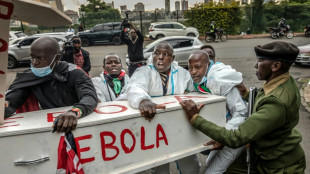 Kenyans fearful and furious over US Ebola centre
-
From Siberia to French Open final, Andreeva living 'dream'

-
 Chwalinska, the 'tennis freak' making Roland Garros history
-
Leclerc beats Hamilton as Ferrari shine in Monaco F1 practice

-
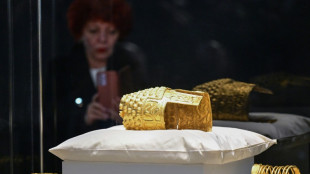 Dutch court jails trio over Romanian golden helmet theft
-
Lawsuit seeks to stop US 'third-country' deportations to Eq.Guinea
-
 Man City chairman will 'say everything' after verdict on financial charges
-
Celtic fans oppose potential Keane move over Israel stay

-
 Balkan integration in the spotlight at EU summit
-
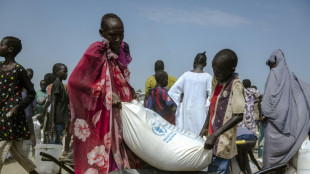
Feared global hunger crisis 'coming to pass' as Mideast war lingers: UN
-
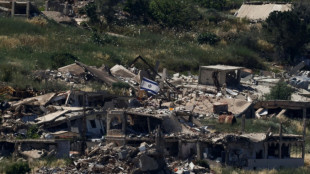 Israel strikes south Lebanon after warning to several areas
-
Macron blasts 'unacceptable' lapses over girl's suspected murder
-
 Chwalinska bidding to take final step at French Open against Andreeva
-
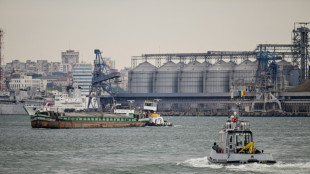
Sea drone explodes in the Romanian port of Constanta, no casualties
-
 Irish slump drags eurozone economy into red in first quarter
-
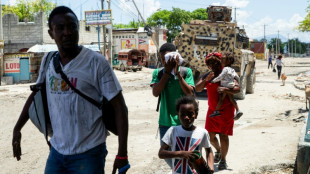
Nearly 1.5 million displaced in Haiti: UN
-
 England's Robinson takes five wickets as New Zealand all out for 113
-
Former France rugby coach Saint-Andre eyes making history with Aix

-
 Spanish PM denies links to plot to disrupt probes into allies
-
France probes judicial 'dysfunction' after girl's suspected murder
-
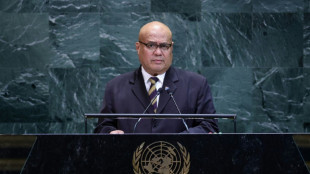 Tuvalu says fossil fuel holdings revealed by AFP 'not a good look'
-
Serena Williams' comeback to continue in Berlin

-
 France's data centre ambitions bump up against rural fears
-
Norway crown princess put on waitlist for lung transplant

-
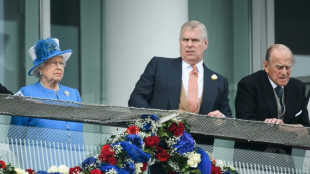 Disgraced ex-prince Andrew sublet royal cottages, UK auditors reveal
-
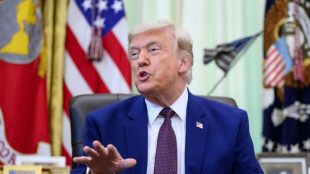
US Senate approves $70 billion for Trump immigration crackdown
-
 Pro-apartheid past of former boss roils Dutch climate group
-
France questions judicial system after girl's suspected murder
-
 Ireland head coach Farrell extends contract until 2031
-
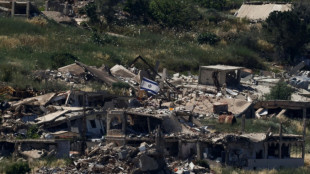
Israel strikes Lebanese village after warning to several areas
-
 Hurricanes hammer hapless Brumbies to make Super Rugby semi-finals
-
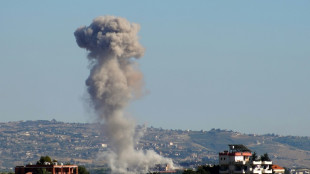
UN doubles appeal for Lebanon aid to nearly $640 mn amid Israel war
-
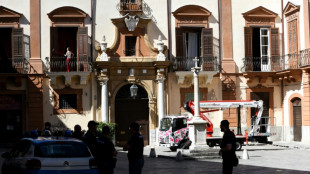 Sicily braces for post-wedding blowout of Dua Lipa, Callum Turner
-
Sooryavanshi, 15, in line for maiden India call-up: report

-
 Japan change World Cup training sites in Mexico over conditions
-
Rescued orphaned elephant highlights Nigeria's conservation fight

-
 Crypto scammers prey on French victims from Albania
-
Turkmenistan's 'heavenly' horses at the heart of fervent state cult

-
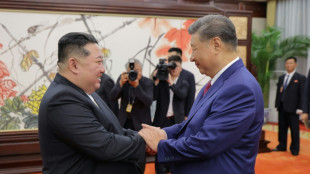 China's Xi to visit North Korea next week
-
'Extremely intelligent' bear at large in Japan after hurting four

-
 Irish racing great O'Brien bids to make Epsom Derby history
-
Uzbekistan's debut World Cup crowns surge in football popularity

-
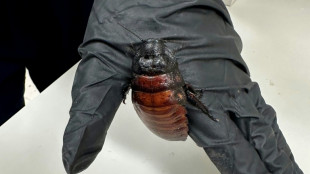 Australia seizes 100,000 cockroaches in bug-breeder bust
-
Kupcho seizes slim lead in US Women's Open at Riviera

-
 Asian stocks take another hit from AI, Mideast worries
-
Game on: Trump set to attend game 3 of NBA Finals in New York

Iran's Nuclear Ambitions
The recent US military strikes on Iran's nuclear facilities have raised questions about the current state of Iran's nuclear program and its potential to develop a nuclear weapon. While the US administration claims that the strikes have "completely and totally obliterated" Iran's key nuclear enrichment facilities, there are conflicting reports and expert opinions on the true extent of the damage.
On June 22, 2025, the United States launched a series of airstrikes on three major Iranian nuclear sites: Fordo, Natanz, and Isfahan. The operation, codenamed "Midnight Hammer," involved B-2 Spirit stealth bombers dropping massive bunker-buster bombs and a submarine launching Tomahawk missiles. President Donald Trump announced that the strikes were a "spectacular military success" and that Iran's nuclear ambitions had been "obliterated."
However, a leaked preliminary intelligence assessment from the Defense Intelligence Agency suggests that the strikes may have only set back Iran's nuclear program by a few months. According to sources familiar with the report, the attacks sealed off the entrances to two facilities but did not collapse their underground structures. Additionally, it is believed that some centrifuges used for uranium enrichment might still be intact.
Further complicating the picture, there are indications that Iran may have relocated its stockpile of enriched uranium prior to the strikes. Satellite imagery from the days before the attack shows trucks at the Fordo and Isfahan sites, possibly moving materials away from the facilities. If Iran has safeguarded its enriched uranium, it could potentially resume its nuclear activities more quickly than if the stockpile had been destroyed.
The International Atomic Energy Agency (IAEA) has confirmed that the three sites were hit and has reported extensive damage, particularly at Esfahan and Fordo. However, the agency also noted that there has been no increase in off-site radiation, suggesting that any radioactive materials were not released during the attacks.
Experts are divided on the long-term impact of the strikes. David Albright, president of the Institute for Science and International Security, stated that restoring Iran's nuclear program would require significant time, investment, and energy, and that Iran risks further attacks if it attempts to rebuild. Conversely, Jeffrey Lewis, a professor at the Middlebury Institute of International Studies, argues that the program is not destroyed and that Iran might still possess the necessary materials to continue its pursuit of nuclear weapons.
Prior to the strikes, the IAEA had reported that Iran possessed over 400 kilograms of uranium enriched to 60%, which is close to the 90% purity needed for a nuclear weapon. If this stockpile remains intact, Iran could theoretically use it to produce a bomb relatively quickly, provided it can rebuild its enrichment capabilities.
However, with the facilities damaged, Iran would need to reconstruct its infrastructure, a process that could take months or even years, depending on the extent of the damage and the resources available to Iran.
Moreover, Iran is now under intense international scrutiny, and any efforts to rebuild its nuclear program would likely face strong opposition, including the possibility of further military action.
In conclusion, while the US strikes have undoubtedly inflicted damage on Iran's nuclear facilities, the true impact on Iran's ability to develop a nuclear weapon remains uncertain. The status of Iran's enriched uranium stockpile and the resilience of its underground facilities are key factors that will determine how close Iran is to possessing a nuclear bomb. As of now, it is unclear whether the strikes have significantly delayed Iran's nuclear ambitions or merely caused a temporary setback.

Россия: Тайна диктатора Путина

Россия: Путин - свинья мира или радости пропаганды убийств

Россия: Преступная "спецоперация" на Украине идет не по плану

Ukrainian army destroys Russian terror scum!

Россия: Власть психует и чувствует неуверенность

Военный преступник России Путин не изменит судьбу человечества!

Россия: Военный преступник Владимир Путин на фронте войны

Russian Bastards murder defenceless children in Ukraine

Россия: Военные преступники Путин заберёт на войну всех

Тысячи погибших солдат российского террора опознаны! Свинья Пригожин теперь хочет мира?

Россия: Пропагандисты ликуют: отрезали голову!