-
 Trump threatens 'dropping bombs' if Iran doesn't 'behave'
-
EU lawmakers approve 'return hubs' migration reform

-
 Oil steadies, stocks rise as US-Iran peace talks approach
-
Global data declaration targets illegal fishing
-
 US not 'pulling away' from allies by cutting NATO commitments: Rutte
-
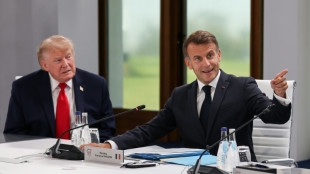
'I'm the boss', Trump tells G7 counterparts

-
 Adidas runs out of letter 'V' as German fans snap up World Cup shirts
-
Van Aert out of Tour de France with elbow injury

-
 Bernardo Silva signs two-year deal with Real Madrid
-
Louvre museum 'running out of steam', says new director

-
 German grid connection deal to boost North Sea wind power
-
G7 leaders applaud Iran, Ukraine progress ahead of tackling AI
-
 Sovereignty fears dog AI enthusiasm at France's Vivatech
-
England enter World Cup fray as Ronaldo makes history

-
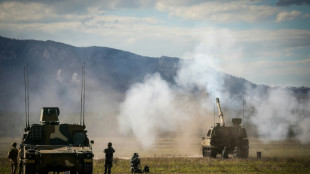 US military footprint growing in Australia: defence minister
-
France braces for heatwave with canal swimming allowed in Paris

-
 Japan puts the heat on suspected ice cream cartel
-
Sovereignty fears to dog AI enthusiasm at France's Vivatech

-
 MEXC May Report: SPACEX Launchpad Oversubscribed 15.5x, US Equity Futures Volume Jumps 85%
-
MEXC Prediction Markets Launches Combo to Enable Multi-Event Combination Trading

-
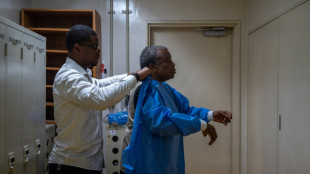 'We have always won': Ebola pioneer still on front line at 84
-
World Cup goals record 'just a number', says Messi

-
 Australian far-right leader slams media, 'radical Islam' in testy press briefing
-
Stuffed toys and surfboards: Japan used goods market booms overseas

-
 Messi salutes 'beautiful moment' after tying World Cup goals record
-
Putin hosts ASEAN leaders amid G7 pressure on Ukraine war

-
 Iranian tankers exit US blockade zone ahead of peace talks
-
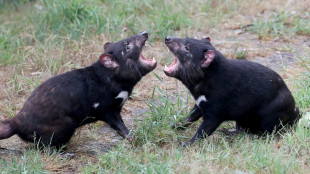
'Unstable' Tasmanian devil found after 15 days on the run
-
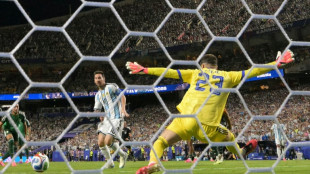 Magical Messi equals World Cup goals record as Argentina win
-
Messi equals World Cup goalscoring record in Argentina romp

-
 Restore Britain, the hard-right party troubling Nigel Farage
-
Trap, neuter, release: Jakarta battles cat-astrophic stray numbers

-
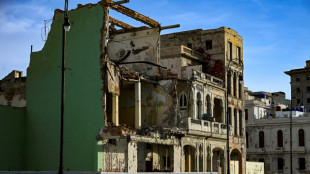 Cuba's historic homes teeter on brink as economy collapses
-
EU lawmakers to approve migrant detention and deportation boost

-
 Ronaldo as excited for sixth World Cup as his first, says Martinez
-
Macron winds up G7 with AI, Trump dinner
-
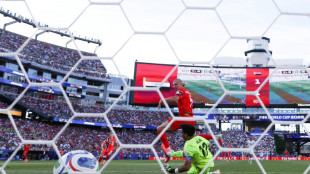 Norway coach hails Haaland after World Cup double
-
US Fed set to hold rates steady at Warsh's first meeting in charge
-
 Argentina's Messi plays in record sixth World Cup
-
Kane tells England 'be free in the mind' for World Cup title bid

-
 France and two-goal Mbappe roar into World Cup as Messi prepares
-
Trump ballroom cost soars to $600 mn, half from taxpayers: report

-
 Swamp Thing: Algae mess with Trump's pool project
-
Haaland double powers Norway to World Cup win over Iraq

-
 Sean Penn to direct film on January 6 Capitol assault: US media
-
Mbappe has World Cup history in sights after breaking France scoring record

-
 Deschamps hails 'extraordinary' Mbappe as France win on World Cup bow
-
New Asian pop and folk categories announced by music's Grammy Awards

-
 Europe eyes major treble at US Open as Scheffler seeks Slam
-
Ghana's Partey loses bid to enter Canada for World Cup

Iran's Nuclear Ambitions
The recent US military strikes on Iran's nuclear facilities have raised questions about the current state of Iran's nuclear program and its potential to develop a nuclear weapon. While the US administration claims that the strikes have "completely and totally obliterated" Iran's key nuclear enrichment facilities, there are conflicting reports and expert opinions on the true extent of the damage.
On June 22, 2025, the United States launched a series of airstrikes on three major Iranian nuclear sites: Fordo, Natanz, and Isfahan. The operation, codenamed "Midnight Hammer," involved B-2 Spirit stealth bombers dropping massive bunker-buster bombs and a submarine launching Tomahawk missiles. President Donald Trump announced that the strikes were a "spectacular military success" and that Iran's nuclear ambitions had been "obliterated."
However, a leaked preliminary intelligence assessment from the Defense Intelligence Agency suggests that the strikes may have only set back Iran's nuclear program by a few months. According to sources familiar with the report, the attacks sealed off the entrances to two facilities but did not collapse their underground structures. Additionally, it is believed that some centrifuges used for uranium enrichment might still be intact.
Further complicating the picture, there are indications that Iran may have relocated its stockpile of enriched uranium prior to the strikes. Satellite imagery from the days before the attack shows trucks at the Fordo and Isfahan sites, possibly moving materials away from the facilities. If Iran has safeguarded its enriched uranium, it could potentially resume its nuclear activities more quickly than if the stockpile had been destroyed.
The International Atomic Energy Agency (IAEA) has confirmed that the three sites were hit and has reported extensive damage, particularly at Esfahan and Fordo. However, the agency also noted that there has been no increase in off-site radiation, suggesting that any radioactive materials were not released during the attacks.
Experts are divided on the long-term impact of the strikes. David Albright, president of the Institute for Science and International Security, stated that restoring Iran's nuclear program would require significant time, investment, and energy, and that Iran risks further attacks if it attempts to rebuild. Conversely, Jeffrey Lewis, a professor at the Middlebury Institute of International Studies, argues that the program is not destroyed and that Iran might still possess the necessary materials to continue its pursuit of nuclear weapons.
Prior to the strikes, the IAEA had reported that Iran possessed over 400 kilograms of uranium enriched to 60%, which is close to the 90% purity needed for a nuclear weapon. If this stockpile remains intact, Iran could theoretically use it to produce a bomb relatively quickly, provided it can rebuild its enrichment capabilities.
However, with the facilities damaged, Iran would need to reconstruct its infrastructure, a process that could take months or even years, depending on the extent of the damage and the resources available to Iran.
Moreover, Iran is now under intense international scrutiny, and any efforts to rebuild its nuclear program would likely face strong opposition, including the possibility of further military action.
In conclusion, while the US strikes have undoubtedly inflicted damage on Iran's nuclear facilities, the true impact on Iran's ability to develop a nuclear weapon remains uncertain. The status of Iran's enriched uranium stockpile and the resilience of its underground facilities are key factors that will determine how close Iran is to possessing a nuclear bomb. As of now, it is unclear whether the strikes have significantly delayed Iran's nuclear ambitions or merely caused a temporary setback.

Iran war fuels terror risks

Bitcoin slump stirs doubt
Will US Forces Invade Iran?

Syria's forgotten tragedy
Ultimatum Spurs Credit Panic

Trump fears Asia's oil shock

Calm or Chaos: Iran’s reach

BlackRock fund freeze panic
Iran-War and dangerous Lines

30 Days to Save the Economy?

No red lines: Israel vs Iran