How queen’s death followed a disinformation playbook / Photo: © AFP

 Houthis target Red Sea shipping as US hits Iran
 Record-equalling Red Sox streak halted at 15 wins

 Messi-less Miami beat Fire 3-2 to spoil Lewandowski's MLS debut

 Mercedes expect Hungary challenge from Hamilton and Ferrari
 In Ghana, one man's race to save critically endangered fish

 Wilson captain, Slipper absent in Kiss's first Wallabies squad

 New Mideast fighting puts eurozone rate-setters on alert

 Venezuelans search for animal companions lost in the quakes

 Argentine Football Association says US did not detain its president

 June heatwave cost UK economy more than £1bn: study
 Google-parent Alphabet beats expectations, cloud revenue nearly doubles
 US announces civilian nuclear deal with Saudi Arabia
 Tesla shares dip after profit misses expectations
 Red Sox tie club record with 15th straight MLB win

 US eyes offshore nuclear reactors

 The Sterling Announces Luxury Cocktail Lounge Concept and Investor Showcase in Orlando
 Inter Miami signs Brazil veteran Casemiro but MLS probes deal

 White House accuses China's Moonshot of stealing Anthropic AI
 Pogacar sweating on Yates's fitness ahead of Tour Queen stage

 Ukrainian soldiers and civilians welcome new army commander

 UK fintech Revolut valuation soars to $115 bn: source

 German FM, on Africa tour, eyes business ties amid US, China pressure
 Rubio says at ASEAN meeting he expects 'positive' US visit by China's Xi
 Philipsen wins Tour de France 17th stage
 DonnaPro Introduces AI-Trained Executive Assistants for European CEOs

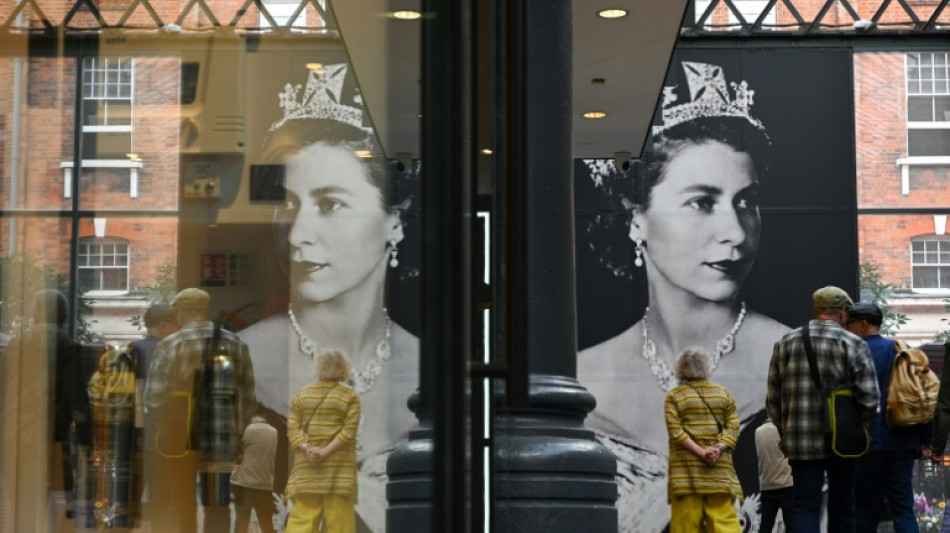
The death of Queen Elizabeth II has laid bare a blueprint for how disinformation flourishes around major news events, with bad actors taking advantage to grab attention and sow confusion.
As Britain mourned its longest reigning monarch, social media users shared digitally altered photos and other misleading content, blaming her death at 96 on causes other than old age -- including Covid-19 vaccines and Hillary Clinton.
But the misinformation tactics deployed after Buckingham Palace's announcement on September 8 were mainly old tricks remodeled to fit the current story and make falsehoods stick in people's minds.
Similar bogus claims spread after other big stories, such as Russia's war on Ukraine and Jeffrey Epstein's death, with the QAnon conspiracy movement also showing its hand.
"Familiarity leads to increased believability," said Gordon Pennycook, a behavioral scientist at the University of Regina, in Canada.
- Well-worn tactics -
Warning signs of disinformation sprang up as soon as the queen went under medical supervision, when imposter Twitter accounts disguised as news outlets published and relayed false updates on her status.
The pace accelerated once the palace announced her death.
"People all around the world were aware of and impacted by the queen's death, giving purveyors of misinformation a virtually limitless range of false narratives to choose from," said Dan Evon at the nonprofit News Literacy Project (NLP).
Among the deluge: a months-old video of dancers outside Buckingham Palace was passed off as an Irish celebration of the death. A fake social media post purported to show former US president Donald Trump claiming the queen knighted him. A manipulated photo made it look like Meghan Markle wore a T-shirt saying, "The Queen Is Dead."
Some blamed the queen's death on Covid-19 shots -- an allegation anti-vaccine advocates have made about well-known people who died, including actress Betty White and comedian Bob Saget.
Others named Clinton as the culprit, claiming the queen announced before dying that she had political dirt on the former US presidential candidate and secretary of state.
That made-up statement has been attributed to other world leaders. It is a long-running meme that plays off a conspiracy theory about the Clintons killing political opponents.
"When big events happen, people in different communities, particularly activists, try to figure out if there is an angle for them there," said Mike Caulfield, a research scientist at the University of Washington's Center for an Informed Public (CIP).
"For an anti-vaccine activist, they figure out if the death can be mapped to vaccines. For a (New World Order) conspiracy theorist, maybe they map to Clinton or Epstein."
Supporters of QAnon folded the queen's death into their beliefs about a cabal of child sex traffickers, floating a range of baseless claims and hailing the event as proof of the legitimacy of their movement.
"The royal family, given Prince Andrew's heavily reported connections with Jeffrey Epstein, have always been fodder for the QAnon crowd," said Rachel Moran, a postdoctoral scholar at the CIP.
One video popular in QAnon circles, which some supporters claimed showed a naked boy escaping Buckingham Palace, was actually an old promo for a fictional TV show.
But it spread on TikTok, one of several QAnon-adjacent narratives that reached the mainstream.
In the week after the queen's death, media intelligence firm Zignal Labs tracked more than 76,000 mentions of the late monarch that referenced Epstein and his accomplice Ghislaine Maxwell -- both convicted sex offenders -- on social media, websites, broadcast and traditional media.
Narratives linking the queen to pedophilia, Clinton and the vaccines were mentioned 42,000, 8,000 and 7,000 times, respectively.
- Avoiding misinformation -
The rolling news about the queen -- and her global influence -- explains some of the appeal of conspiracy theories about her death, said Karen Douglas, a social psychology professor at the University of Kent who studies why people believe such theories.
"Accepting mundane explanations for such a big event might be less convincing or appealing," she said.
But there are ways to resist falling for false information.
Media literacy organizations, including NLP and CIP, recommend cross-referencing online posts against trusted information sources and pausing before sharing.
"Even a few moments of reflection can often make a big difference," Pennycook said.
G.Schulte--BTB