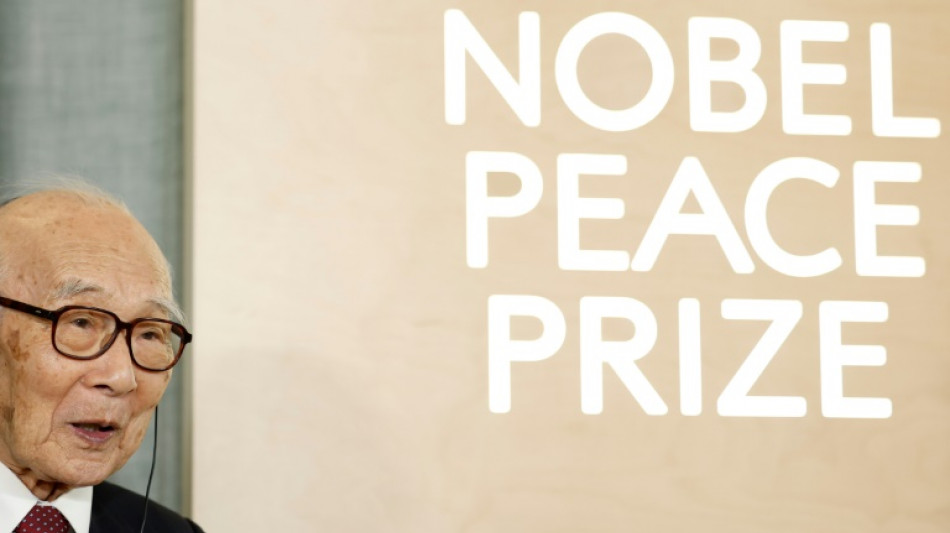
Nobel laureate warns Putin about danger of nuclear weapons / Photo: © AFP

 F1 drivers expecting crashes, chaos at new Spanish GP circuit
 NGO chief sees 'hypocrisy' in Afghan women's rights calls amid aid cuts

 Latin America could see fresh disinformation after Meta changes

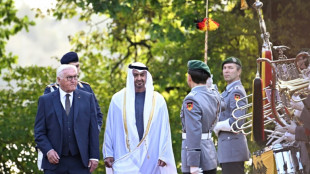
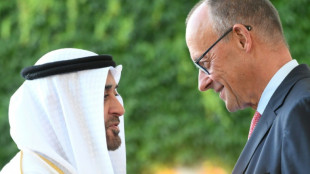 UAE to invest 40 billion euros in Germany, including for data centres: Berlin

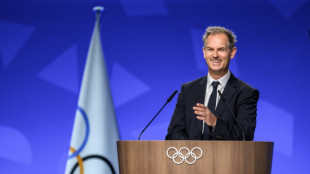 2030 Winter Olympics chief Grospiron quits

 AI Risks to Enter 60–80% of Liability and Cyber Insurance Underwriting by 2028, ScienceSoft Predicts
 Ultimate Championship as big as Olympics - and more lucrative, says Bolt

 Diana's 'revenge dress' to go up for auction in New York
 England dominate Pakistan, close in on Test series sweep

 Russia trafficking foreigners to fight in Ukraine, Amnesty says

 Global Tokenized Real Estate Market to Hit up to $3 Trillion by 2030, ScienceSoft Predicts
 Stocks fall as fresh oil surge fans inflation fears
 August hottest month ever recorded globally as huge El Nino emerges
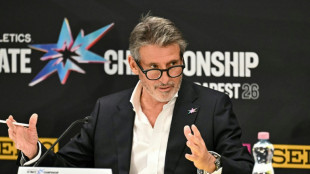 'Bragging rights' up for grabs at game-changing Ultimate Championship, says Coe
 ECB hikes borrowing costs to combat Mideast energy shock
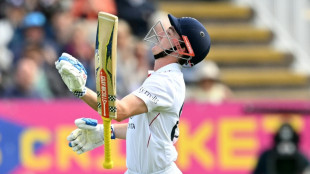 England turn screw in 3rd Test against Pakistan

 France will not support Infantino in FIFA election: federation chief

 In their words: Israeli forces describe AI-backed Gaza killing in new film
 Yemen's Houthis seize key city on Red Sea: military source

 Oil prices extend gains as markets await ECB rate outlook
 Wars pose a test as India hosts BRICS summit with China, Russia, Iran leaders
 Messi to buy second Spanish lower league club
 Pochettino calls for Chelsea to lose 2016-17 Premier League title
 North Korea leader's daughter believed to have younger sibling: Seoul
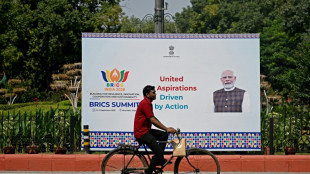 Wars pose a test as India hosts BRICS summit with Russia, Iran leaders

This year's Nobel Peace Prize laureate, Japan's atomic bomb survivors' group Nihon Hidankyo, on Monday urged Russia to stop issuing nuclear threats in a bid to prevail in its war in Ukraine.
"President Putin, I don't think he truly understands what nuclear weapons are for human beings," said Terumi Tanaka, the 92-year-old co-chair of Nihon Hidankyo and a survivor of the 1945 atomic bombing of Nagasaki.
"I don't think he has even thought about this," Tanaka told a press conference in Oslo a day before he was due to accept the 2024 Nobel Peace Prize, with two other co-chairs, at a formal ceremony in Oslo on behalf of Nihon Hidankyo.
Putin began making nuclear threats shortly after Russia's full-scale invasion of Ukraine in February 2022, and signed a decree in late November lowering the threshold for using atomic weapons.
Russian Foreign Minister Sergei Lavrov reiterated Thursday that Moscow was ready to use "any means" to defend itself.
On November 21, Moscow fired its new Oreshnik hypersonic missile on the Ukrainian city of Dnipro in an escalation of the almost three-year war.
The missile is designed to be equipped with a nuclear warhead, but was not in this case.
"Mr Putin... we would like to say that nuclear weapons are things which must never be used. The use of nuclear weapons is something which would be against humanity," Tanaka said.
Nihon Hidankyo, a grassroots anti-nuclear organisation, was established in 1956 and is the only nationwide organisation of atomic bomb survivors, who are known as hibakusha.
Around 140,000 people were killed in Hiroshima when the United States detonated an atomic bomb over the Japanese city on August 6, 1945.
A further 74,000 were killed by a US nuclear bomb in Nagasaki three days later.
Survivors suffered from radiation sickness and longer-term effects, including elevated risks of cancer.
The bombings were the only times nuclear weapons have been used in history.
Tanaka, who was 13 and living in Nagasaki when the bomb was dropped, said Nihon Hidankyo was not seeking "monetary compensation" from Washington.
"What we would like to see from the United States is for them to abolish their nuclear weapons," he said.
The organisation's ranks are dwindling with every passing year. The Japanese government lists around 106,800 "hibakusha" still alive today. Their average age is 85.
- Nuclear taboo -
The three co-chairs of Nihon Hidankyo formally receive their prestigious prize at Oslo's City Hall on Tuesday.
"Our message to Putin and also to other nuclear power states is, 'Listen to the testimonies of the hibakusha'," said the chairman of the Norwegian Nobel Committee, Jorgen Watne Frydnes.
"It is crucial for humanity to uphold the nuclear taboo, to stigmatise these weapons as morally unacceptable," he said.
"And to threaten with them is one way of reducing the significance of the taboo, and it should not be done," he added.
"And of course, to use them should never be done ever again by any nation on Earth."
Nine countries now have nuclear weapons: Britain, China, France, India, North Korea, Pakistan, Russia, the United States, and, unofficially, Israel.
As global geopolitical tensions rise, these nuclear powers have modernised their arsenals, the Stockholm International Peace Research Institute (SIPRI) said in a report in June.
In January, of the estimated 12,121 nuclear warheads around the world, about 9,585 were in stockpiles for potential use, according to SIPRI.
In 2017, 122 governments negotiated and adopted the historic UN Treaty on the Prohibition of Nuclear Weapons (TPNW), but the text is considered largely symbolic as no nuclear power has signed it.
"Of course, the nuclear weapon states will resist this," Tanaka said, urging citizens in these countries "to show them that their resistance is wrong".
"We want to create a world that is free from both nuclear weapons and from war."
C.Stoecklin--VB