Wildlife commission lowers European wolf protections / Photo: © AFP/File

 ECB opens door to September rate-hike as Iran war flares up

 World Bank estimates Venezuela quakes caused $19.6 bn in damage
 Italy's far-right line up to defend jeweller who killed robbers

 AI-led boom in IPOs raises concerns about a bust

 Klopp expected to be named new Germany coach on Friday

 ECB holds rates as Iran war flare-up threatens to drive prices higher

 MEXC's "Kickoff Fest" Trading Event Concludes with Top Individual Reward of 27,352 USDT

 Oil soars close to $100 on fresh Mideast attacks

 India's angry Gen Z protesters say Modi must fix accountability

 Barca sign Adeyemi from Borussia Dortmund

 EasyJet profits nosedive on Mideast war

 EU fines Google 890 mn euros, risking US fury

 France evacuates thousands of tourists as fire rages in pine forest

 French Jewish DJ sues after activists disrupt stage show: lawyer

 Nokia says AI, cloud boosted sales in second quarter

 Repsol says profit more than triples on higher oil prices

 TotalEnergies says profit doubled on Mideast war

 Giant swing on Swiss peak aims to boost summer tourism as Alps warm

 ASEAN to call for open straits as US-Iran war casts shadow

 AI catches up with humans to score 100% at top maths contest

 South Korea election office raided in fake turnout figures probe: investigators

 Killer whales: orcas blow fish to bits 'for fun', study finds

 Deadly wildfires force thousands from homes in parts of Europe

 Tech bounce lifts Asia stocks, oil extends gains on US-Iran fears

 Surrounded by militias, Sudanese fear endless cycle of war

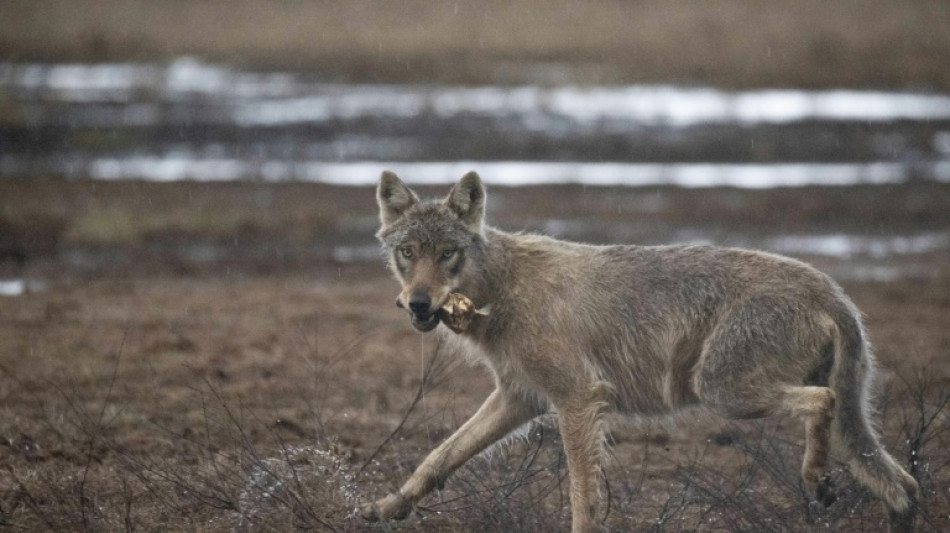
Dozens of countries on Tuesday approved downgrading the protection status of the wolf in Europe, a move activists say will upset the recovery made by the species over the past 10 years after near extinction a century ago.
The 49 member states of the Bern Convention charged with the protection of wildlife in Europe and some African countries agreed to lower the wolf's protection status from "strictly protected" to "protected", the Council of Europe said.
Grey wolves were virtually exterminated in Europe 100 years ago but their numbers have practically doubled to the current population of 20,300, triggering protests from farmers angry over the animals eating their livestock.
Demoting wolves to "protected" status would allow hunting to resume under strict regulation, a move activists fear could result in a large number of the species being shot dead.
"We need a balanced approach between the preservation of wildlife and the protection of our livelihoods," said European Commission President Ursula von der Leyen, who has strongly backed the lowering of the protection.
The Bern Convention is an international treaty of the Strasbourg-based Council of Europe in nature conservation which came into force in 1982.
The European Union, which is entirely separate from the Council of Europe, is a party to the convention.
- 'Far from solved' -
The move comes after the EU backed a plan in September to lower the protection status of wolves as the species' growing population brings the creatures into more frequent contact with humans.
The carnivores' proximity to human activity is causing damage to livestock at "significant levels", said Brussels.
In late 2022, von der Leyen herself lost her beloved pony Dolly to a wolf that crept into its enclosure on her family's rural property in northern Germany -- leading some to suggest the matter had become personal.
But some farmers say Tuesday's decision is not enough to protect their livestock.
"The problem is far from being solved", said Thierry Chalmin, head of a chamber of agriculture in northeastern France.
"What's the difference between a super-bandit and a bandit," added Chalmin, who in September encouraged farmers to "go out armed and shoot a wolf" if they see one.
- 'Purely demagogic' -
Animal-rights activists say the move puts at risk the wolf population, which at one point disappeared entirely from France.
"The risk of downgrading this status is to weaken or even cause the decline of this species in Europe," said Yann Laurans of WWF France.
Some say culling the wolf population will not reduce the number of attacks on livestock.
The decision is "political and purely demagogic," said Nathan Horrenberger, head of a France-based biodiversity association.
"It's not going to help solve the problems facing livestock farmers, because wolves have been shot in European countries for years... and it's not bearing fruit", he added.
Killing wolves might even disrupt pack behaviour, creating "more solitary animals, who turn to easier prey, namely farm animals", Horrenberger told AFP.
The change will be implemented on March 7, 2025, said the commission, unless at least a third of its members object.
But only five countries voted against the measure, said environmental association Green Impact, which called the decision a "disgrace" and vowed to take it to the European courts.
"The wolf remains a protected species," said Paris's ecology minister Agnes Pannier-Runacher, promising any killing of the carnivore "will remain highly regulated".
But "this change will make it easier to manage the species", added Pannier-Runacher.
I.Stoeckli--VB