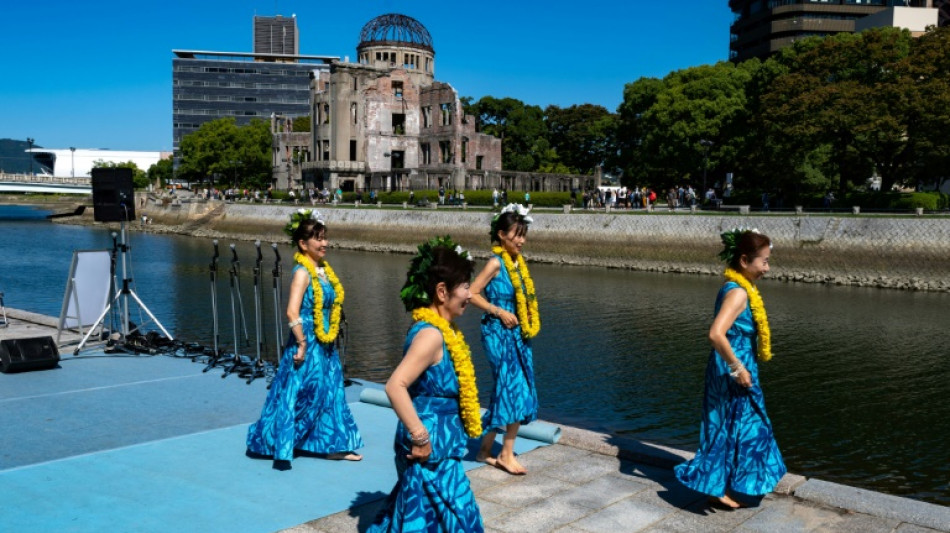
Nobel prize a timely reminder, Hiroshima locals say / Photo: © AFP

 Most Asian stocks track Wall St rally, yen drops after BoJ rate hike
 Russians begin voting in controlled election as war drags on
 Trump 'clearly' wants dialogue with Pyongyang: South Korean President

 Bank of Japan hikes rates to 31-year high to battle inflation
 Thailand's Muslim separatists vow to fight to the end

 Mideast turmoil, AI set to dominate UN gathering of world leaders
 Australia to detain tourists who overstay visa, minister says

 Championship rivals brace for renewal of bitter feuds
 In Brazil's Amazon, the hunt for oil fuels hopes and fears
 Australian athlete who soiled herself apologises for continuing Hyrox race
 Baby orangutans in India expose 'frightening' scale of trafficking
 Doom Loop? Ed Sheeran struggles against Gaza tide
 Sudanese women hold fast to threatened henna body art
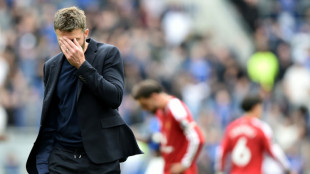 Man Utd misery puts Carrick under pressure, Spurs feeling the heat
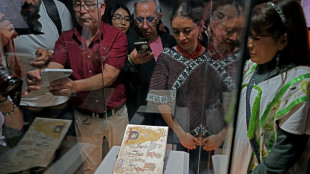 Prized Mexican relic returns on loan, two centuries on

 Venezuela unblocks some censored news sites

 Samba stars on debut in Man City rout of Norwich
 Oversight Board blasts 'inadequate' Meta safeguards for AI deepfakes

 The Easter Island origins of buzzy Malkovich drama 'Wild Horse Nine'

 Third body recovered after Grand Canyon flash flood
 Harry makes first public appearance since return to UK
 Abhishek hits record T20 ton as India sweep series 3-0
 Abhishek hits record T20 ton as India sweep T20 series 3-0
 English FA calls for Infantino to release World Cup sell-off documents

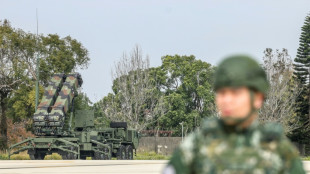 GM delivers first components for US interceptor missiles

Just like the dwindling group of survivors now recognised with a Nobel prize, the residents of Hiroshima hope that the world never forgets the atomic bombing of 1945 -- now more than ever.
Susumu Ogawa, 84, was five when the bomb dropped by the United States all but obliterated the Japanese city 79 years ago, and many of his family were among the 140,000 people killed.
"My mother, my aunt, my grandfather,and my grandfather all died in the atomic bombing," Ogawa told AFP a day after the survivors' group Nihon Hidankyo was awarded the Nobel Peace Prize.
Ogawa himself recalls very little but the snippets he garnered later from his surviving relatives and others painted a hellish picture.
"All they could do was to evacuate and save their own lives, while they saw other people (perish) inside the inferno," he said.
"All nuclear weapons in the world have to be abandoned," he said. "We know the horror of nuclear weapons, because we know what happened in Hiroshima."
What is happening now in the Middle East saddens him greatly.
"Why do people fight each other? ...hurting each other won't bring anything good," he said.
- 'Great thing' -
On a sunny Saturday, many tourists and some residents were strolling around the Hiroshima Peace Memorial Park to the bomb's 140,000 victims.
A preserved skeleton of a building close to ground zero of the "Little Boy" bomb and a statue of a girl with outstretched arms are poignant reminders of the devastation.
Jung Jaesuk, 43, a South Korean primary school teacher visiting the site, said the Nobel was a "a victory for (grassroots) people."
"Tension in East Asia is intensifying so we have to boost anti-nuclear movement," he told AFP.
Kiyoharu Bajo, 69, a retired business consultant, decided to take in the atmosphere of the site after the "great thing" that was the Nobel award.
With Ukraine and the Middle East, the world "faces crises that we've not experienced since the Second World War in terms of nuclear weapons," he told AFP.
The stories told by the Nihon Hidankyo group of "hibakusha", as the survivors of the bombings of Hiroshima and Nagasaki are known, "have to be known to the world," he said.
He said he hopes that the Nobel prize will help "the experiences of atomic bomb survivors spread further spread around the world” including by persuading people to visit Hiroshima.
- Future generations -
Kiwako Miyamoto, 65, said the Nobel prize was a "great thing, because even some locals here are indifferent" to what happened.
"In Hiroshima, you pray on August 6, and children go to school", even though the date is during summer vacation, she told AFP.
"But I was surprised to see that outside Hiroshima, some people don't know (so much about it)" she said.
She said that like many people in Hiroshima, she personally knows people whose relatives died in the bombing or who witnessed it.
With the average age among members of the Nihon Hidankyo over 85, it is vital that young people continue to be taught about what happened, added Bajo.
"I was born 10 years after the atom bomb was dropped, so there were many atom bomb survivors around me. I felt the incident as something familiar to me," he said.
"But for the future, it will be an issue."
D.Schlegel--VB