'Nature's mirror': Climate change batters Albania's butterflies
/ Photo: © AFP

 England's seven-goal spree sends message to Euro rivals: Kane

 Trump confirms national intelligence chief as new AI czar

 Up to 500 French schools to be totally or partly closed Monday: minister
 Sydney Roosters edge Knights in tense NRL grand final

 Sabalenka out of China Open in third round, Medvedev into semis

 Ethiopia controls Tigray capital as regional rivals meet in Egypt

 Ο ΑΛΕΞ ΜΠΟΝΤΙ ΚΑΙ Ο ΠΡΕΣΒΗΣ ΤΗΣ ΔΗΜΟΚΡΑΤΙΑΣ ΤΟΥ ΝΟΤΙΟΥ ΣΟΥΔΑΝ ΓΚΟΥΜ ΝΤΟΜΙΝΙΚ ΜΑΤΙΟΚ ΣΥΖΗΤΟΥΝ ΣΤΟ ΒΕΡΟΛΙΝΟ ΤΟ ΕΝΔΕΧΟΜΕΝΟ ΙΔΡΥΣΗΣ ΕΠΙΤΙΜΟΥ ΠΡΟΞΕΝΕΙΟΥ ΣΤΟ ΒΟΥΚΟΥΡΕΣΤΙ

 Asian Games close in Japan after records, rancour and rain

 Pro-Europe Latvian PM wins poll dominated by Russia, social worries

 ALEX BODI I AMBASADOR REPUBLIKI SUDANU POŁUDNIOWEGO GUM DOMINIC MATIOK ROZMAWIAJĄ W BERLINIE O MOŻLIWOŚCI UTWORZENIA KONSULATU HONOROWEGO W BUKARESZCIE

 Iran tells US there is no military solution to Middle East war

 ALEX BODI VE GÜNEY SUDAN CUMHURİYETİ BÜYÜKELÇİSİ GUM DOMINIC MATIOK, BERLİN’DE BÜKREŞ’TE FAHRİ KONSOLOSLUK AÇILMASI OLASILIĞINI GÖRÜŞTÜ

 Future of French far-right star in balance after antisemitism claims

 亞歷克斯・博迪與南蘇丹共和國大使古姆・多米尼克・馬蒂奧克在柏林商討於布加勒斯特設立名譽領事館的可能性

 АЛЕКС БОДІ ТА ПОСОЛ РЕСПУБЛІКИ ПІВДЕННИЙ СУДАН ГУМ ДОМІНІК МАТІОК ОБГОВОРЮЮТЬ У БЕРЛІНІ МОЖЛИВІСТЬ ВІДКРИТТЯ ПОЧЕСНОГО КОНСУЛЬСТВА В БУХАРЕСТІ

 Germany's Merz in Kyiv for talks with Zelensky

 Asian Games set to close after records, rancour and rain

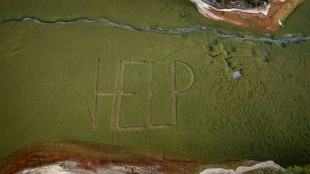 Cry for help as French-Swiss lake dries up

 Sabalenka swept out of China Open in third round

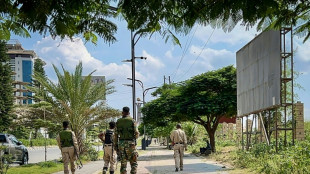 US urges 'restraint' as Ethiopia's Tigray crisis rocks region

 Teens on target again as USA down Mexico 3-0

 World records prove Asian Games were a hit, says top official

 US prison chief who oversaw botched execution resigns

 'Chaotic' Asian Games threaten Japan hopes of hosting Olympics again

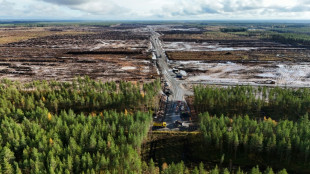 Finnish town braces for change from Google data centres

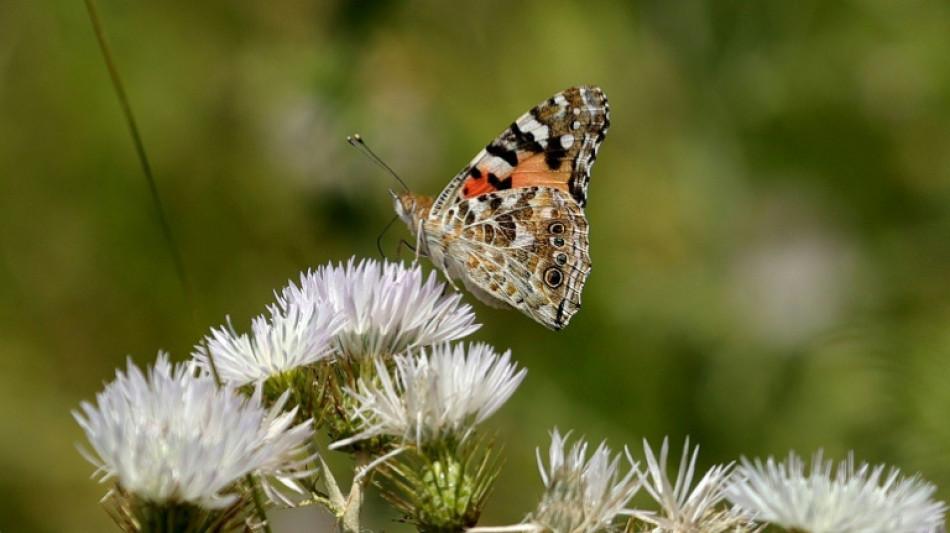
Bright yellow, black, red and blue, Alexanor butterflies once fluttered abundantly on southwestern Albania's flowery slopes. Now, like many related species, scientists say they are disappearing due to human impacts, including climate change.
Increasingly absent from the picturesque district of Zvernec, the Alexanor is one of 58 of the Balkan country's 207 butterfly species that researchers say are at risk.
"Sensitive to changes, they are a true mirror of the conditions of the ecosystem in which they live," said Anila Paparisto, an entomologist at Tirana University.
In Zvernec, Paparisto leads a team of researchers and students working to identify the country's remaining butterfly species along with those that are now extinct.
Numerous scientific studies have measured the impact of climate change on butterfly populations, though researchers also cite other environmental factors.
They blame a combination of rapid urbanisation, pesticides and warming temperatures for the decrease.
"Human activity and climate change have had major impacts on nature," said biology student Fjona Skenderi, who was helping conduct research in Zvernec.
In the nearby Divjaka Natural Park, Albanian agronomist Altin Hila points to the disappearance of the Giant Peacock Moth and the Plain Tiger as another worrying sign.
"It's a disaster marked by climatic disruptions, an early spring and excessively high temperatures in January and February," explained Hila, who is also a passionate collector and oversees a butterfly museum in Divjaka.
"It encouraged the eggs to hatch and the butterfly larvae to grow, but in April the temperatures were too low" for them to survive, he added.
- 'Butterfly effect' -
The butterflies' decline also affects other species.
"It will impact the entire food chain and biodiversity, which is also essential for humans," Paparisto said.
"When there are fewer butterflies, you expect... the butterfly effect."
Like large swaths of Albania, coastal areas near Zvernec have become increasingly overrun with resorts and apartment blocks, built with little oversight.
Scientists say the rapid urbanisation in the area, along with overfishing and climate change, has also played a part in the dramatic drop in migratory bird populations.
And while some butterfly populations are in decline, other similar species are prospering -- to the detriment of the environment.
The arrival of a non-native moth through imports of ornamental plants from China has ravaged more than 80 percent of Albania's boxwood forests since 2019, according to experts.
"It is very aggressive, it can reproduce three to four times a year, and it is a real misfortune which reduces entire areas to nothing," said forest engineer Avdulla Diku.
With their distinct neon green and black bodies, the larvae are easily spotted when clinging to the boxwoods' leaves and stems.
On the road along Lake Ohrid to Pogradec in northwestern Albania, the once vibrant green rows of boxwoods are reduced to husks after being devoured by the moths' larvae.
"It is a firm reminder of the fragility and subtle balance of the environment in which we live," said Sylvain Cuvelier, an entomological researcher who co-authored the first Albanian butterfly atlas.
"It is obviously urgent to unite our efforts to find solutions, to rethink in depth our use of natural resources and the way forward for the protection and restoration of our environment."
C.Bruderer--VB