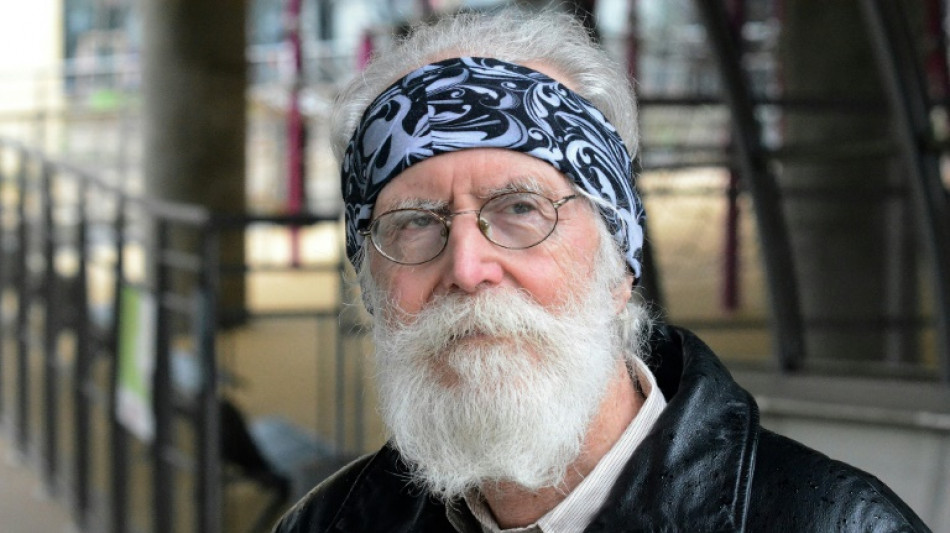
'I had such fun!', says winner of top maths prize / Photo: © NTB/AFP/File

 US wants to be 'strong partner' for central Asia: Rubio

 'Special' to face friend Perez in Champions League, says Liverpool's Iraola

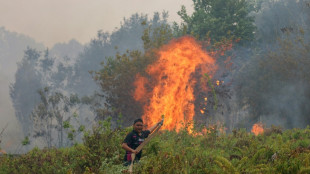 Monitor says Indonesia fires have burned nearly two million hectares
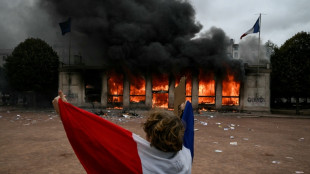
 French PM says could declare state of emergency over unrest 'if needed'
 Albanian PM warns of 'red line' after days of unrest
 Putin, Xi and Trump could meet at APEC summit: Kremlin
 Microsoft exits data centre deal in blow to UK AI ambitions
 European stocks retreat as France violence spreads
 North Korea warns 'grave situation' prevailing along border
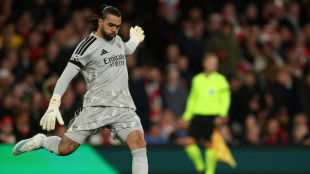 Raya proud of Arsenal's 'incredible' reaction after third straight win
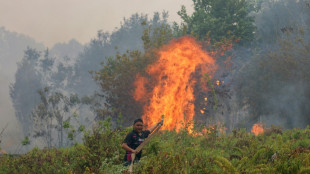 Indonesia fires have burned nearly two million hectares: monitor
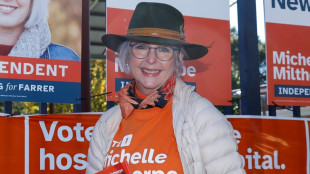 Australian lawmaker 'critically' hurt in attack, officials say
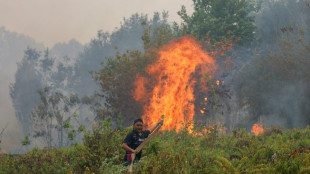 Indonesia fires burned over 1.9 mn hectares through September: monitor
 Asian tech stocks mixed after Wall St losses, eyes on earnings
 China's third-quarter growth narrowly beats forecasts
 Asian stocks start week on back foot, tracking tech-led Wall St losses
 China growth narrowly beats forecasts

 Faith and fury: Texas Senate rivals offer contrasting visions
 Women await justice for police killings in Brazil
 The painstaking task of cataloguing the world's species
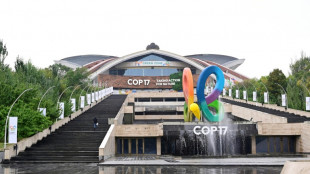 Nations seek reset at UN talks as nature goals off track
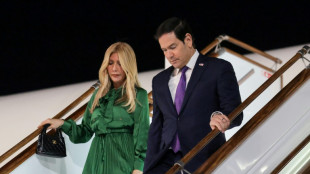 Rubio seeks to strengthen US foothold in Central Asia
 LeBron joins 76ers to chase one more NBA title at age 41
 Rays one win from World Series return after downing Guardians

 Chervon Names Krystle Adams Director of Sales Recruiting

For Michel Talagrand, who won the Abel mathematics prize on Wednesday, maths provided a fun life free from all constraints -- and an escape from the eye problems he suffered as a child.
"Maths, the more you do it, the easier it gets," the 72-year-old said in an interview with AFP.
He is the fifth French Abel winner since the award was created by Norway's government in 2003 to compensate for the lack of a Nobel prize in mathematics.
Talagrand's career in functional analysis and probability theory saw him tame some of the incredibly complicated limits of random behaviour.
But the mathematician said he had just been "studying very simple things by understanding them absolutely thoroughly."
Talagrand said he was stunned when told by the Norwegian Academy of Science and Letters that he had won the Abel prize.
"I did not react -- I literally didn't think for at least five seconds," he said, adding that he was very happy for his wife and two children.
- Fear of going blind -
When he was young, Talagrand only turned to maths "out of necessity," he said.
By the age of 15, he had endured multiple retinal detachments and "lived in terror of going blind".
Unable to run around with friends in Lyon, Talagrand immersed himself in his studies.
His father had a maths degree and so he followed the same path. He said he was a "mediocre" student in other areas.
Talagrand was particularly poor at spelling, and still lashes out at what he calls its "arbitrary rules".
Especially in comparison to maths, which has "an order in which you do well if you are sensitive to it," he said.
In 1974, Talagrand was recruited by the French National Centre for Scientific Research (CNRS), before getting a PhD at Paris VI University.
He spent a decade studying functional analysis before finding his "thing": probability.
It was then that Talagrand developed his influential theory about "Gaussian processes," which made it possible to study some random phenomena.
Australian mathematician Matt Parker said that Talagrand had helped tame these "complicated random processes".
Physicists had previously developed theories on the limits of how randomness behaves, but Talagrand was able to use mathematics to prove these limits, Parker said on the Abel Prize website.
- 'Monstrously complicated' -
"In a sense, things are as simple as could be -- whereas mathematical objects can be monstrously complicated," Talagrand said.
His work deepening the understanding of random phenomena "has become essential in today's world," the CNRS said, citing algorithms which are "the basis of our weather forecasts and our major linguistic models".
Rather than creating a "brutal transformation", Talagrand considers his discoveries as a collective work he compared to "the construction of a cathedral in which everyone lays a stone".
He noted that French mathematics had been doing well an elite level, notching up both Abel prizes and Fields medals -- the other equivalent to a maths Nobel, which is only awarded to mathematicians under 40.
"But the situation is far less brilliant in schools," where young people are increasingly less attracted to the discipline, he lamented.
The new Abel winner admitted that maths can be daunting at first, but re-emphasised his belief that it gets easier the more you do it.
He advised aspiring mathematicians not to worry about failure.
"You can fail to solve a problem 10 times -- but that doesn't matter if you succeed on the 11th try," he said.
It can also be hard work.
"All my life I worked to the point of exhaustion -- but I had such fun!" he said.
"With maths, you have all the resources within yourself. You work without any constraints, free from concerns about money or bosses," he added.
"It's marvellous."
Talagrand will receive his prize, including a 7.5-million-kroner ($705,000) cheque, in Oslo on May 21.
S.Leonhard--VB