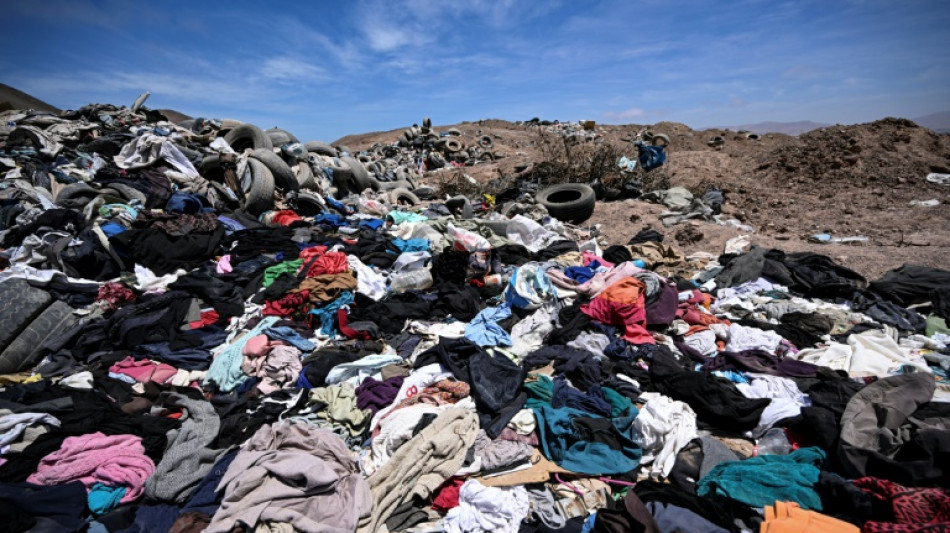
Our bad fashion habits -- and how we might change them -- in numbers / Photo: © AFP/File

 Brewers beat Rays 4-1 to capture first World Series title

 Philippine island fights rising seas with nature, not concrete

 Bangladesh presses India before Ganges water treaty expires

 Trump accuses Alaska Democrats of fraud over same-name scandal

 Spain mourns after latest train tragedy kills 68

 Trump's border: quiet, but few people are happy

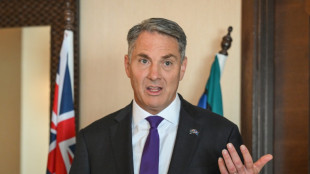 Australian defence chief says China military buildup creating 'pressure' in SE Asia

 No penalty practice? No problem for Man City in shoot-out win

 Microsoft beats expectations fueled by Azure cloud business

 Chelsea win as Bayern draw with Madrid in Women's Champions League

 Kane watches as Bayern cruise into German Cup last 16

 Bayern boss Kompany out of hospital after meningeal irritation

 Shares in Google owner Alphabet sink on profit miss, ad slowdown
 Chelsea win as Bayern and Madrid draw in Women's Champions League
 Made with munitions from the Falklands War, a 'Chalice of Peace' for the pope

 Pioneering US labor leader Dolores Huerta dies at 96

 Italian PM slams 'shameful' release of alleged protest organiser

 Hollywood producer Kennedy to head LA28 Olympic ceremony plans

 Djokovic wins Basel opener to boost ATP Finals bid

 US Fed holds interest rates steady despite surging inflation
 Chiefs sign ex-Ravens kicker suspended over sex allegations

 Inglis and Carey put Australia in command of South Africa decider

 92-year-old US judge handling Maduro case dies

 Perez extends Cadillac deal to 2029
 Arab Israelis proud of high election turnout, uncertain for future

The fashion industry is estimated to contribute upwards of two percent of global greenhouse gas emissions, and is on track to get even worse if there isn't major change.
Here are some key figures on how fashion is affecting the planet and how consumers can make a difference.
- 7 to 10 -
The average number of times a garment is worn before it is discarded, according to the Ellen Macarthur Foundation.
- 5 -
The maximum number of new items we should be buying every year if we are to reach the 1.5 degree Celsius global warming limit set out by the UN, according to the Hot or Cool institute think tank.
- Around 30 percent -
The percentage of donated clothes that ends up in landfills or incinerators abroad, according to Hot or Cool. They can also end up undercutting local vendors if they flood the market.
- 1 second -
The equivalent of a lorry load of clothes is incinerated or buried in a landfill every second, the Ellen Macarthur Foundation reckons.
- 100 billion -
The number of new clothing items produced each year, according to the Clean Clothes Campaign.
- 1 percent -
Less than one percent of the material used to produce clothing is actually recycled into new clothing, according to the United Nations Environment Programme (UNEP).
Many fast fashion firms say they can recycle old garments into new, but the reality is the fabric quality is mostly not fit to make garments that can be sold.
- 30 degrees Celsius -
The recommended temperature at which clothes should be washed in order to increase their lifespan.
- 20 / 20 / 20 -
On average, the fashion consumption of the richest 20 percent of the world's population causes 20 times higher emissions than that of the poorest 20 percent, say Hot or Cool.
- 2023 -
This year France will pass a decree requiring every item of clothing sold in the country to carry a label detailing its precise climate impact. The EU is expected to follow suit.
- 8 times -
The secondhand clothing market is growing eight times faster than the overall apparel market, according to online consignment shop thredUP.
- Double -
In the last 15 years, clothing production has roughly doubled, the Ellen Macarthur Foundation estimated, but over the same period we used those clothes almost 40 percent less.
- 40 percent -
The percentage of global consumers that belong to Gen-Z -- those born between 1997 and 2012 -- according to McKinsey & Company. Gen-Z is both a part of the problem and solution when it comes to fast fashion: they make up a huge portion of consumers, but are also calling for more sustainable fashion.
Y.Bouchard--BTB