UK coin study salvages forgotten Roman emperor from 'obscurity' / Photo: © THE HUNTERIAN/AFP

 EU fines Google 890 mn euros, risking US fury

 France evacuates thousands of tourists as fire rages in pine forest

 French Jewish DJ sues after activists disrupt stage show: lawyer

 Nokia says AI, cloud boosted sales in second quarter

 Repsol says profit more than triples on higher oil prices

 TotalEnergies says profit doubled on Mideast war

 Giant swing on Swiss peak aims to boost summer tourism as Alps warm

 ASEAN to call for open straits as US-Iran war casts shadow

 AI catches up with humans to score 100% at top maths contest
 South Korea election office raided in fake turnout figures probe: investigators

 Killer whales: orcas blow fish to bits 'for fun', study finds

 Deadly wildfires force thousands from homes in parts of Europe

 Tech bounce lifts Asia stocks, oil extends gains on US-Iran fears

 Surrounded by militias, Sudanese fear endless cycle of war

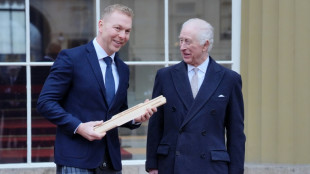 Commonwealth Games 'where champions are made' despite slimmed down model, argues president

 Trump family project in Albania has already caused 'irreparable' damage: NGOs
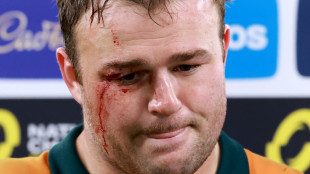
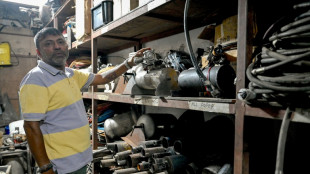 Bollywood blast master keeps it real with fire and fury

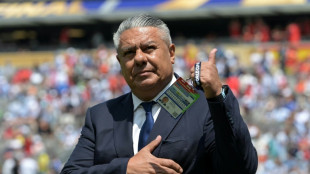
 Tearful fights, edible offerings: A glimpse into the Maradona trial

 What's the deal with peptides? The hyped market under US review
 Tesla shares fall as Musk touts ambitious -- and costly -- plans

 Houthis claim Red Sea tanker strikes as US hits Iran again

 Wildfires ravage parts of southern France, Italy and Spain

 Alphabet beats expectations in second quarter, cloud revenue nearly doubles

 Trump threatens Iran infrastructure, Tehran vows 'eye for eye'

 US teen withdraws lawsuit against Meta over social media addiction

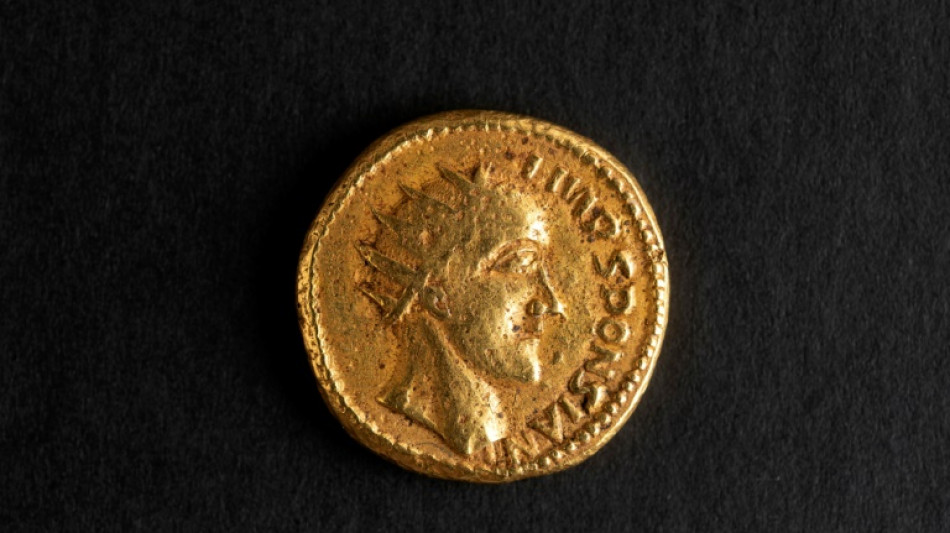
A forgotten Roman emperor has been rescued from "obscurity" after UK researchers determined a coin long dismissed as fake was in fact authentic.
The coin featuring the profile of an emperor named Sponsian was among a handful of similar coins found in Transylvania in present-day Romania in 1713.
They had been considered fakes since the mid-19th century due to their jumbled inscriptions and unusual design.
But researchers who studied one of the coins housed at The Hunterian collection at the University of Glasgow in Scotland have now concluded that the coin is genuine after comparison with others with a similar history.
"Scientific analysis of these ultra-rare coins rescues the emperor Sponsian from obscurity," said lead author Professor Paul Pearson, of University College London.
"Our evidence suggests he ruled Roman Dacia, an isolated gold mining outpost, at a time when the empire was beset by civil wars and the borderlands were overrun by plundering invaders."
The Roman province of Dacia, a territory overlapping with modern-day Romania, was a region prized for its gold mines, according to the study published in the PLOS ONE journal.
It is believed it was cut off from the rest of the Roman empire in around 260 AD with Sponsian, possibly a local army officer, forced into assuming supreme command until order was restored.
The earth science researchers reexamining the coins used powerful microscopes in visible and ultraviolet light to help reach their new verdict.
They believe Sponsian could have authorised the creation of locally produced coins, some featuring an image of his face, to support the economy in his isolated frontier territory.
Curator of numismatics at The Hunterian, Jesper Ericsson, said he hoped the study would kickstart interest in this long-lost figure.
"Not only do we hope that this encourages further debate about Sponsian as a historical figure, but also the investigation of coins relating to him held in other museums across Europe," he said.
The coin held in Glasgow is one of only four Sponsian coins known to still be in existence.
Another of the four is on public display at Romania's Brukenthal National Museum.
O.Krause--BTB