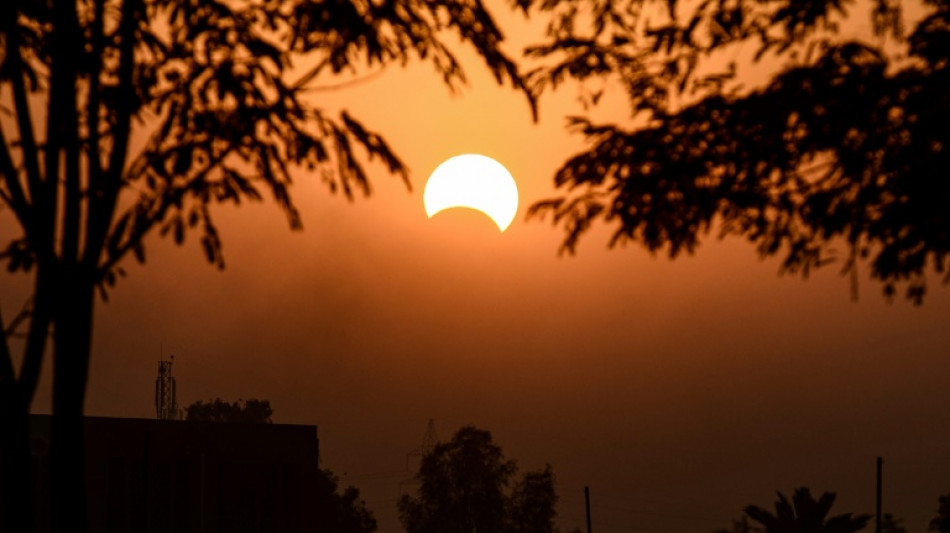
Partial solar eclipse from Iceland to India on Tuesday / Photo: © AFP/File

 Repsol says profit more than triples on higher oil prices

 TotalEnergies says profit doubled on Mideast war

 Giant swing on Swiss peak aims to boost summer tourism as Alps warm

 ASEAN to call for open straits as US-Iran war casts shadow

 AI catches up with humans to score 100% at top maths contest

 South Korea election office raided in fake turnout figures probe: investigators

 Killer whales: orcas blow fish to bits 'for fun', study finds

 Deadly wildfires force thousands from homes in parts of Europe

 Tech bounce lifts Asia stocks, oil extends gains on US-Iran fears

 Surrounded by militias, Sudanese fear endless cycle of war

 Commonwealth Games 'where champions are made' despite slimmed down model, argues president

 Trump family project in Albania has already caused 'irreparable' damage: NGOs

 Bollywood blast master keeps it real with fire and fury

 Tearful fights, edible offerings: A glimpse into the Maradona trial

 What's the deal with peptides? The hyped market under US review

 Tesla shares fall as Musk touts ambitious -- and costly -- plans

 Houthis claim Red Sea tanker strikes as US hits Iran again

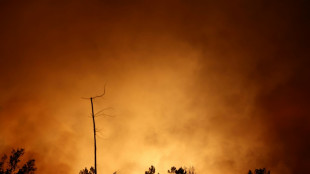 Wildfires ravage parts of southern France, Italy and Spain

 Alphabet beats expectations in second quarter, cloud revenue nearly doubles

 Trump threatens Iran infrastructure, Tehran vows 'eye for eye'

 US teen withdraws lawsuit against Meta over social media addiction

 Lebanon PM says Beirut working for 'complete Israeli withdrawal'

 EU conditionally clears Paramount bid for Warner Bros.

 Philipsen snaps 'horrible' drought with Tour de France stage 17 victory

 US trial of Venezuela's Maduro set for June 2027

A partial solar eclipse will be visible across a swathe of the Northern Hemisphere on Tuesday, with amateur astronomers warned to take care watching the rare phenomenon.
The eclipse will start at 0858 GMT in Iceland and end off the coast of India at 1302 GMT, crossing Europe, North Africa and the Middle East on its way, according to the IMCCE institute of France's Paris Observatory.
Solar eclipses occur when the Moon passes between the Sun and Earth, casting its shadow down onto our planet.
A total solar eclipse happens when the Moon completely blocks the Sun's disk, momentarily plunging a portion of the Earth into complete darkness.
However Tuesday's eclipse is only partial, and the "Moon's shadow will not touch the surface of the Earth at any point," the Paris Observatory said in a statement.
The Moon will cover a maximum of 82 percent of the Sun over Kazakhstan, but it will not be enough darken the daylight, Paris Observatory astronomer Florent Deleflie said.
"To start getting the sense of darkness in the sky, to perceive a kind of cold light, the Sun needs to be at least 95 percent obscured," Deleflie told AFP.
Those hoping to watch the eclipse should not look at the Sun directly, even through clouds, to avoid eye damage, according to experts. Protective eyewear should be worn instead.
"We will see that a small piece of the Sun is missing. It won't be spectacular, but it's always an event for amateur astronomers -- and it can make for beautiful photos," Deleflie said.
It will be the 16th partial solar eclipse of the century, and the second of this year.
The next total solar eclipse will cross North America on April 8, 2024, according to NASA.
F.Pavlenko--BTB