-
 Modi vows punishment for exam fraud fuelling India protests
-
ASEAN to call for open straits as US-Iran war casts shadow
-
 Six candidates in race to lead UN set for televised debate
-
AI catches up with humans to score 100% at top maths contest

-
 Comic-Con kicks off with Marvel's return
-
South Korea election office raided in fake turnout figures probe: investigators
-
 Dutch riders dreaming of crazy party corner of Alpe d'Huez
-
Killer whales: orcas blow fish to bits 'for fun', study finds
-
 Houthis target Red Sea shipping as US hits Iran
-
Deadly wildfires force thousands from homes in parts of Europe
-
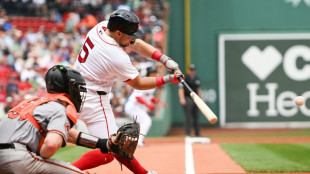 Record-equalling Red Sox streak halted at 15 wins
-
Tech bounce lifts Asia stocks, oil extends gains on US-Iran fears
-
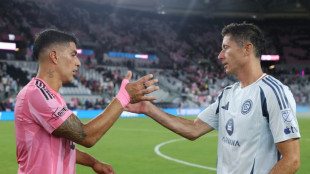 Messi-less Miami beat Fire 3-2 to spoil Lewandowski's MLS debut
-
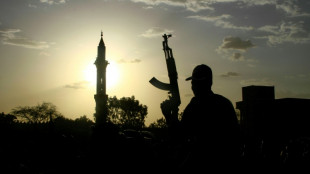
Surrounded by militias, Sudanese fear endless cycle of war
-
 Mercedes expect Hungary challenge from Hamilton and Ferrari
-
Commonwealth Games 'where champions are made' despite slimmed down model, argues president
-
 In Ghana, one man's race to save critically endangered fish
-
Trump family project in Albania has already caused 'irreparable' damage: NGOs
-
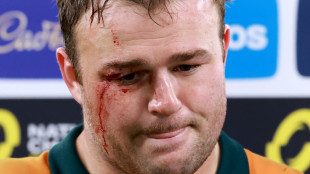 Wilson captain, Slipper absent in Kiss's first Wallabies squad
-
Bollywood blast master keeps it real with fire and fury
-
 New Mideast fighting puts eurozone rate-setters on alert
-
Tearful fights, edible offerings: A glimpse into the Maradona trial

-
 Venezuelans search for animal companions lost in the quakes
-
What's the deal with peptides? The hyped market under US review
-
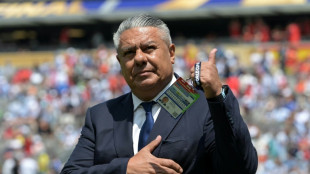 Argentine Football Association says US did not detain its president
-
Tesla shares fall as Musk touts ambitious -- and costly -- plans
-
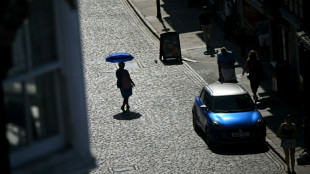 June heatwave cost UK economy more than £1bn: study
-
Houthis claim Red Sea tanker strikes as US hits Iran again
-
 Google-parent Alphabet beats expectations, cloud revenue nearly doubles
-
Wildfires ravage parts of southern France, Italy and Spain
-
 US announces civilian nuclear deal with Saudi Arabia
-
Alphabet beats expectations in second quarter, cloud revenue nearly doubles
-
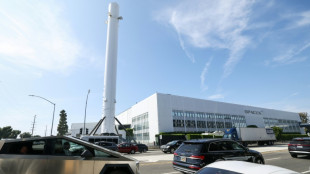 Tesla shares dip after profit misses expectations
-
Trump threatens Iran infrastructure, Tehran vows 'eye for eye'
-
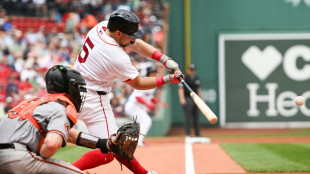 Red Sox tie club record with 15th straight MLB win
-
US teen withdraws lawsuit against Meta over social media addiction

-
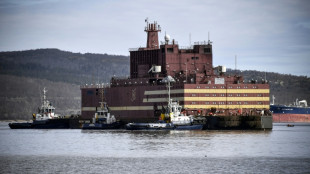 US eyes offshore nuclear reactors
-
Lebanon PM says Beirut working for 'complete Israeli withdrawal'

-
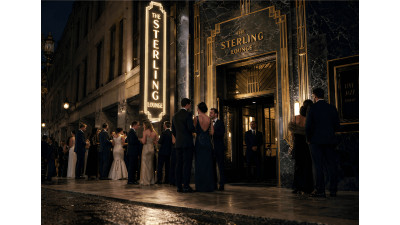 The Sterling Announces Luxury Cocktail Lounge Concept and Investor Showcase in Orlando
-
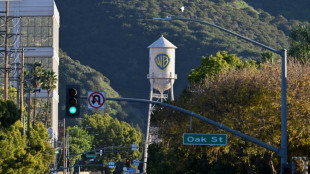
EU conditionally clears Paramount bid for Warner Bros.
-
 Inter Miami signs Brazil veteran Casemiro but MLS probes deal
-
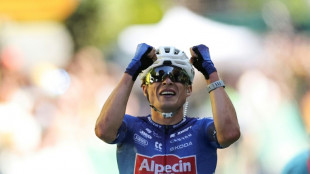
Philipsen snaps 'horrible' drought with Tour de France stage 17 victory
-
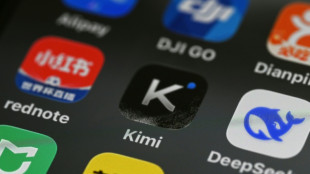 White House accuses China's Moonshot of stealing Anthropic AI
-
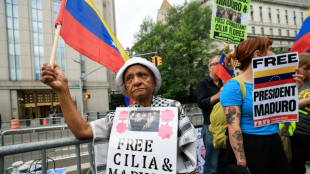
US trial of Venezuela's Maduro set for June 2027
-
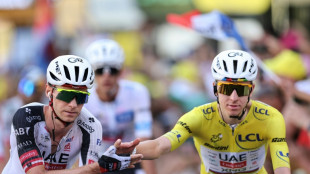 Pogacar sweating on Yates's fitness ahead of Tour Queen stage
-
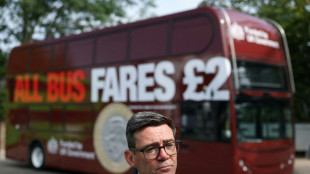
New UK PM Burnham gets early boost as inflation dips
-
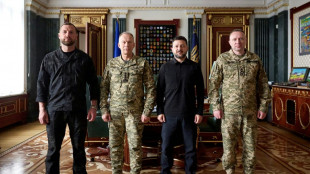 Ukrainian soldiers and civilians welcome new army commander
-
Samsung launches new, more expensive foldable smartphones
-
 UK fintech Revolut valuation soars to $115 bn: source
-
Philipsen ends 'horrible' drought with Tour de France 17th stage victory
The five scientists who won two Nobel prizes
American Barry Sharpless on Wednesday became only the fifth person ever to win a second Nobel Prize, two decades after being awarded his first.
AFP looks at the four other people who received the illustrious award twice for their services to mankind:
- Marie Curie (1903, 1911) -
The mother of modern physics was the first woman ever to win not one, but two, Nobel prizes for her seminal discoveries in physics and chemistry.
Born Maria Sklodowska in Poland, Curie moved to Paris as a student and is famed for having isolated the elements of polonium and radium as well as for promoting radium to alleviate suffering.
In 1903, she was awarded the Nobel Prize in Physics, along with her husband Pierre Curie and French physicist Antoine Henri Becquerel for their research into spontaneous radiation.
A second Nobel followed in 1911, this time for chemistry, when Curie was honoured alone for her work on radioactivity.
- Linus Pauling (1954, 1962) -
Linus Pauling, the US chemist who posited that huge doses of vitamin C can ward off the common cold, is the only person to have been awarded two unshared Nobel Prizes – the 1954 Nobel Prize in Chemistry and the 1962 Nobel Peace Prize.
Pauling won his first Nobel in 1954 for his work in molecular chemistry, particularly in the field of proteins and anti-bodies.
His second award came eight years later in 1962 was in recognition for his campaigning against nuclear testing.
- John Bardeen (1956, 1972) -
US engineer John Bardeen shared the Nobel Prize in Physics twice.
In 1956, he and two colleagues at Bell Labs, William Shockley and Walter Brattain, won for inventing the transistor, which revolutionised the field of electronics by leading to smaller and cheaper radios, calculators and computers, amongst other objects.
In 1972, he picked up his second Nobel for developing the BSC-theory of superconductivity, with fellow American physicists Leon Cooper and John Robert Schrieffer.
- Frederick Sanger (1958, 1980) -
British biochemist Frederick Sanger, dubbed the father of genomics, was the only person to win the chemistry Nobel twice.
Sanger was the sole winner of the prize in 1958 for his work on the structure of proteins, notably insulin, and then shared it with two others, Paul Berg and Walter Gilbert of the United States, in 1980 for pioneering developments in DNA sequencing that are still being used today.
His work allowed long stretches of DNA to be rapidly and accurately sequenced and was central to the Human Genome Project's mammoth achievement in mapping more than three billion units of human DNA.
- ICRC and UNHCR -
Two organisations have won multiple Nobel Peace Prizes.
The International Committee of the Red Cross won in 1917, 1944 and 1963 and the Office of the UN High Commissioner for Refugees won in 1954 and 1981.
W.Lapointe--BTB