
US activists work to connect Iranians via Starlink / Photo: © GETTY IMAGES NORTH AMERICA/AFP

 Afghans search for dozens missing after devastating flood

 Novartis says buoyed by new treatments in second quarter
 Great Barrier Reef at risk of 'collapse', scientists warn
 India's 'Cockroach' movement vows to protest until education minister resigns

 South Korea president urges regulator action on leveraged stock funds

 For Ukraine's drones, names are part of the battle

 Countries move to ban social media for children

 Asia stocks up as chip stocks recover, oil eases
 Desperate Rohingya risk deadly voyages as trafficking surges
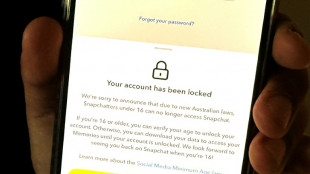
 French lawmakers expected to approve social media ban for under-15s

 'All these rashes': chickenpox surges in Gaza camps

 Australia's Cummins, Hazlewood, Lyon back for Bangladesh Test series

 Rubio in Philippines as US condemns 'dangerous' China actions

 Unnatural physique turns Evenepoel into a Tour de France contender

 'Sit down!' Australian politician berates dog on live TV

 Argentina squad returns, without Messi, after World Cup final loss

 New strikes as Trump warns Iran will pay for US troop deaths
 Spain stars lap up adulation of estimated two million on World Cup parade

 Business of Dance Mentees and Enola Bedard Join Shakira for the FIFA World Cup Halftime Show

 "The pain is immense," says Messi of World Cup defeat

 US judge suspends Paramount's acquisition of Warner Bros.

 Chess legend Judit Polgar rejects becoming Hungary's president

 Ceferin skipped World Cup final reportedly to show disapproval of FIFA

 Judge approved night-time Tour de France doping tests

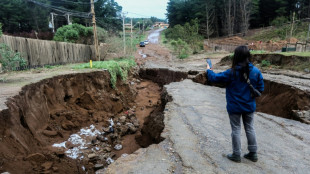 Chile declares state of emergency over deadly rainfall

With the war in Iran leading to a near-total internet blackout in the country, activists around the world -- especially in the United States -- are mobilizing to help Iranians stay connected via Starlink.
Despite being banned, billionaire Elon Musk's satellite internet system has gained ground in Iran thanks to a network of international activists, multiple people involved in these efforts told AFP.
The digital activists' efforts began in 2022, when mass protests broke out following the death of Mahsa Amini, who was being held by Iran's police for violating the country's strict dress code for women.
- Smuggling networks -
"As of this year, we have more than 300 devices that we have delivered to the country," said Emilia James of the US-based organization NetFreedom Pioneers. She declined to go into further detail to protect the operation and the users.
Ahmad Ahmadian, executive director of Holistic Resilience, explained that his organization purchased Starlink devices in European countries or elsewhere, before moving them into Iran via "neighboring countries."
The government cracked down hard on the Starlink terminals in 2025, and those caught using them face imprisonment.
Charges may be enhanced if the device is found to have been sent by a US organization, Ahmadian pointed out.
His group has supplied "up to 200" antennas to individuals in Iran, and has facilitated the sale of "more than 5,000 Starlink devices" by connecting ordinary citizens with underground resellers, he said.
This approach is less risky for both the activists and for the users.
For these reasons, Holistic Resilience taps smuggling networks and provides security tips and usage instructions remotely.
– Astronomical costs –
To get a Starlink antenna on the black market, Iranians previously had to shell out around "$800 or $1,000" at the end of 2025, Ahmadian recalled, a prohibitive amount for many.
Then there's the issue of paying for usage.
The devices can -- theoretically, at least -- provide internet to an entire family or apartment building.
But in practice, usage remains "limited" because "the costs are still prohibitive for most users," according to NetFreedom Pioneers' Emilia James.
For those that can afford the fees, Visa and Mastercard payments do not work in Iran, forcing users to find workarounds.
Since the bloody crackdown on protesters in January, free usage has been granted for new subscribers. However, the cost of terminals has skyrocketed to some $4,000, according to Ahmadian.
Demand is not the only factor driving up costs.
Many of the terminals were brought into Iran through the "southern borders and through the waterways," Ahmadian said.
The closure of the Straight of Hormuz due to the war "suppresses the supply" of the devices.
– 'More than 50,000' –
While the number of terminals within Iran is not publicly known, Ahmadian estimates that "there are more than 50,000 Starlink terminals in Iran, for sure."
For her part, James estimates that there are "tens of thousands" of Starlink devices in the country of 92 million.
Starlink did not respond to AFP requests for details.
James said that she has heard reports of Iranian authorities searching rooftops and balconies for the antennas since the start of the war.
And earlier this month, a man described as the head of a network that sold internet access via Starlink was arrested by Iranian authorities.
B.Wyler--VB