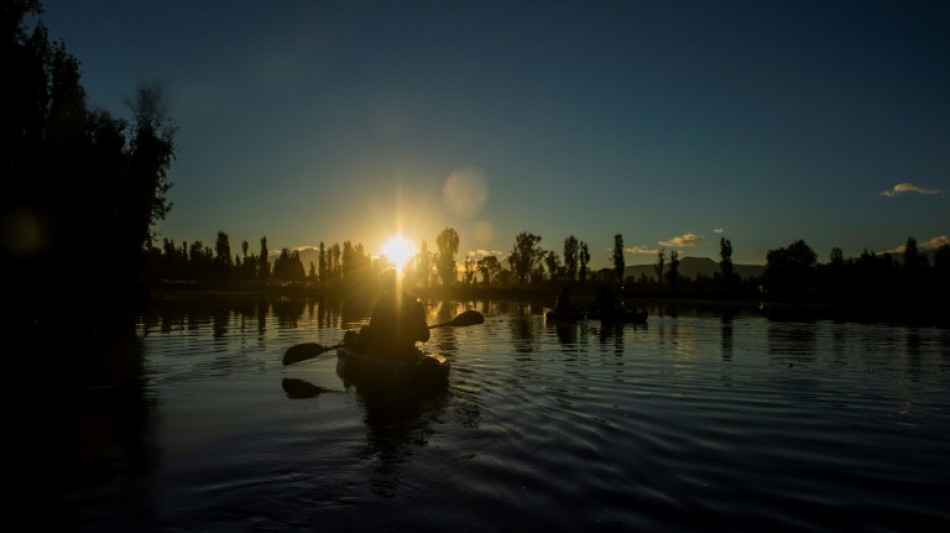
Mexican kayaker on mission to clean up floating gardens / Photo: ©

 UK set for cautious budget as borrowing costs climb

 Anthropic's record IPO faces some big questions

 US Fed expected to hold rates steady ahead of key midterm elections

 Can this Latin Grammy-winner help Democrats win back Congress?

 Tuvalu has 'limited' power to halt its fossil fuel investments: NZ govt papers seen by AFP
 Palestinian activist Khalil returns to Columbia after US detention

 Trump drastically loosens oil and gas methane rules

 French Senate weighs bill to make protesters pay for unrest damage
 'A very sad day': Arteta despair as Arsenal stunned by Fleetwood
 Charles tackles thorny legacy of slavery on Caribbean trip

 Former Grand Slam winner Wawrinka ends tennis career

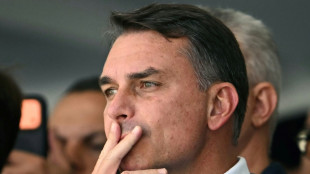 Brazil's Flavio Bolsonaro flees to US after election loss
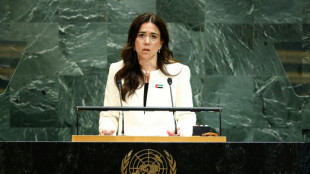
 'Faerie' nights: 'ACOTAR' fans finally get their book

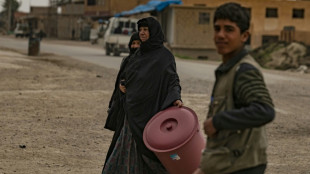 American woman convicted of getting military training from Islamic State

 Israel opposition holds narrow edge over Netanyahu in first projections

 Floriani hits maiden goal as Lazio go top
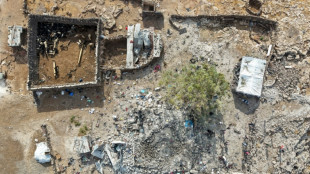
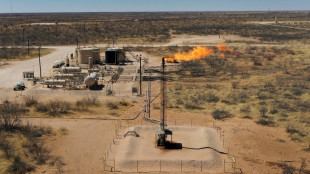 Trump set to drastically loosen oil and gas sector's methane rules

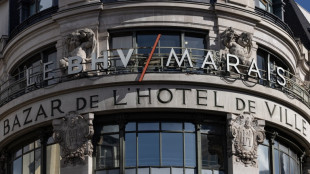 Storied Paris department store seeks bankruptcy protection
 Xhaka, Embolo can return to Swiss squad after fake Covid docs affair
 Allegri suspended for two Serie A games after red card

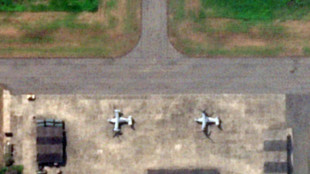 Flight data, satellite images reveal growing US role at Ecuador base
 McInnes feels 'guilt' ahead of Hearts return with Rangers

 Brazil's Lula turns 81, vows to work '24 hours a day'

 Boeing releases cautious growth plan as shares fall sharply
 Exiled Russian dissident Navalnaya warns dictators becoming 'more cunning'
As dawn breaks over Mexico City's floating gardens, Omar Menchaca paddles his kayak through a maze of canals collecting garbage left by visitors to one of the last vestiges of the ancient Aztec capital.
In the silence of the early morning, before the hordes of tourists arrive, the 66-year-old retiree fishes plastic bottles and other debris from the waters of Xochimilco.
"I came here to train for my competitions," says the former athletics champion.
"Over time, unfortunately, I started noticing that these canals were full of garbage."
As his single-seater kayak glides by, herons and pelicans take flight in the morning mist.
In the distance, the Popocatepetl volcano, Mexico's second highest summit, rises more than 5,400 meters (17,700 feet) above sea level.
Menchaca seems to be far from the network of congested roads that serve Mexico City and its nine million inhabitants.
In fact, "the ring road is only 600 meters away," he says with a smile.
Menchaca regularly puts down his paddle and uses his bare hands to pick up garbage floating on the surface of the water amid aquatic flowers.
Xochimilco is a magnet for tourists who ride colorful gondolas through its network of canals and artificial islands created centuries ago by the area's indigenous peoples.
On weekends in particular, couples, families and groups of friends come to eat, drink and dance to the sound of mariachi music.
The reserve is home to endemic species including the critically endangered axolotl, a salamander-like amphibian.
Cleaning up the waste left by visitors is a constant battle for Menchaca, who offers tours during which he recounts the history of the UNESCO World Heritage Site.
He likes nothing more than to see children copy him by collecting waste.
"Xochimilco is visited by around 6,000 people on weekends. Unfortunately, these people don't take care of the place," he says.
Conservationists also worry about the impact of development encroaching on the area, which is listed as a Wetlands of International Importance under an intergovernmental conservation treaty.
- 'If we do nothing' -
Menchaca curses when sees boats equipped with outboard motors.
"The canals are not very deep, barely half a meter," he says.
"A boat with an engine that carries up to 40 people causes noise and pollutes the wetlands with oil and gasoline."
At midday, Menchaca returns to the pier from which he set off through a vast canal with a breathtaking view of Mount Ajusco, which rises to some 3,900 meters within the city limits.
His kayak is overflowing with garbage.
On the way he greets a man shoveling mud from the canal to use as a natural fertilizer.
"The people at the pier should pick up all the garbage and not Don Omar," says the 69-year-old, Noe Coquis Salcedo.
Back on dry land, Menchaca deposes of the debris in a dumpster near the parking lot.
He believes his efforts make a small difference helping to preserve the place for future generations, in addition to the work of the city authorities who say they are "constantly" maintaining the canals.
"The canals are paths," says Menchaca, enjoying a beer and enchilada in the January sunshine after his hours of physical exercise.
"That's why when I see this garbage, I try to collect it so that whoever passes afterward can enjoy a clean path," he adds.
Nearby young people in swimsuits dive from the top of a gondola moored at the pier.
"If we do nothing for our planet there will come a time when..." Menchaca says before pausing, his hands outstretched like a gesture of helplessness.
"There won't be much left for us to enjoy," he concludes.
J.Horn--BTB