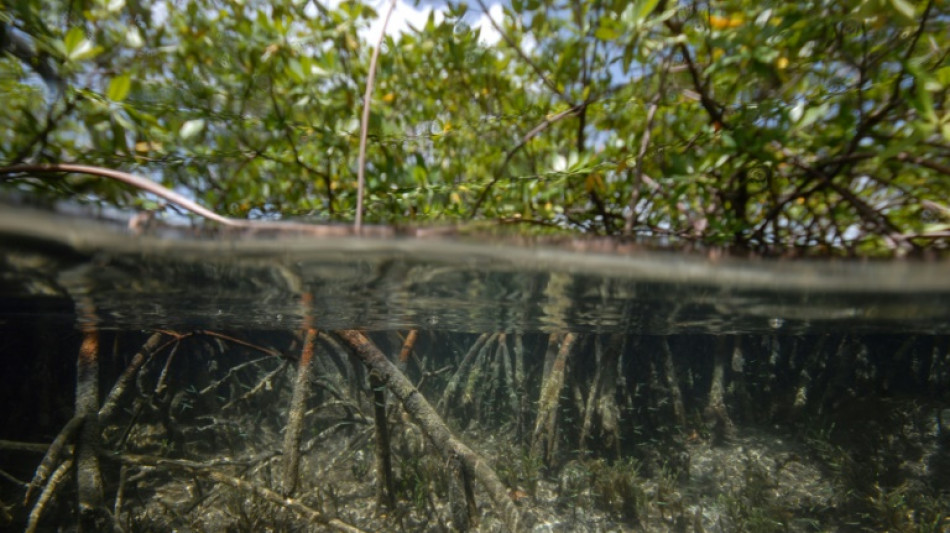
World's largest bacteria discovered in Guadeloupe / Photo: © Lawrence Berkeley National Laboratory/AFP

 Evenepoel wins Tour de France individual time-trial

 Tropical Storm Bertha strengthens, threatening Gulf coast of US

 Microsoft strikes deal for Mistral's AI computing power

 Dutch students unveil 'world-first' solar-powered ambulance
 French lawmakers set to ban social media for under-15s in European first

 UK PM Burnham unveils energy tax cut, tells ministers to cut living costs

 Pharma heavyweights clash over anti-obesity drug ads

 Hungary raids Orban's Fidesz party servers in graft probe

 General Motors lifts 2026 outlook despite hit from electric retreat

 Uproar in France over reintroduction of bee-harming pesticides
 Kuwaitis ration electricity as Iran hits power grid

 Former Man Utd boss Ferguson salutes old rival Keegan

 UK PM Burnham's new cabinet to meet as he announces tax cut

 Former MotoGP champion Quartararo to make Honda switch

 Oleksandr Syrsky, Ukraine's under-fire commander-in-chief

 New UK govt tackles cost of living with energy tax cut

 China summons Philippine ambassador over clash in disputed waters
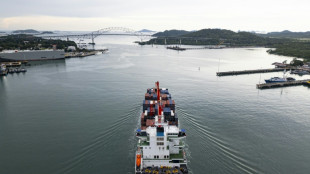 Panama, China renew maritime port agreement

 De Gaulle returns to unite the French -- at the cinema

 North Korea reaffirms support for Moscow over Ukraine

 South China Sea rivalry looms over ASEAN meeting

 Arrogance or pride? Argentina grapples with World Cup villain label

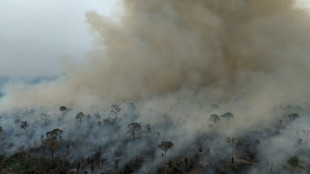 Fires in Brazil's Amazon dropped to historic low in 2025

 French youth social media ban meets age check conundrum

 Lebanon's Aoun to meet Trump as pressure builds to disarm Hezbollah

You can see it with the naked eye and pick it up with a pair of tweezers -- not bad for a single bacteria.
Scientists say they have discovered the world's largest variety in the mangroves of Guadeloupe -- and it puts its peers to shame.
At up to two centimetres (three-quarters of an inch), "Thiomargarita magnifica" is not only around 5,000 times bigger than most bacteria -- it boasts a more complex structure, according to a study published in the journal Science on Thursday.
The discovery "shakes up a lot of knowledge" in microbiology, Olivier Gros, professor of biology at the University of the Antilles and co-author of the study, told AFP.
In his laboratory in the Caribbean island group city of Pointe-a-Pitre, he marvelled at a test tube containing strands that look like white eyelashes.
"At first I thought it was anything but a bacterium because something two centimetres (in size) just couldn't be one", he said.
The researcher first spotted the strange filaments in a patch of sulphur-rich mangrove sediment in 2009.
Techniques including electronic microscopy revealed it was a bacterial organism, but there was no guarantee it was a single cell.
- 'As tall as Mount Everest' -
Molecular biologist Silvina Gonzalez-Rizzo, from the same laboratory, found it belonged to the Thiomargarita family, a bacterial genus known to use sulphides to grow. And a researcher in Paris suggested they were indeed dealing with just one cell.
But a first attempt at publication in a scientific journal a few years later was aborted.
"We were told: 'This is interesting, but we lack the information to believe you'," Gros said, adding that they needed stronger images to provide proof.
Then a young researcher, Jean-Marie Volland, managed to study the bacterium with the Lawrence Berkeley National Laboratory, run by the University of California.
With financial backing and access to some of the best tools in the field, Volland and his colleagues began building up a picture of the colossal bacteria.
It was clearly enormous by bacterial standards -- scaled up to human proportions, it would be like meeting someone "as tall as Mount Everest", Volland said.
Specialist 3D microscope images finally made it possible to prove that the entire filament was indeed a single cell.
But they also helped Volland make a "completely unexpected" discovery.
Normally, a bacterium's DNA floats freely in the cell. But in the giant species, it is compacted in small structures surrounded by a membrane, he explained.
This DNA compartmentalisation is "normally a feature of human, animal and plant cells, complex organisms... but not bacteria," Volland said.
Future research will have to determine if these characteristics are unique to Thiomargarita magnifica, or if they can be found in other species of bacteria, Gros said.
C.Kovalenko--BTB