
Webb telescope captures deep view of ancient galaxies / Photo: © ESA/WEBB/AFP

 Brewers beat Rays 4-1 to capture first World Series title
 Philippine island fights rising seas with nature, not concrete

 Bangladesh presses India before Ganges water treaty expires

 Trump accuses Alaska Democrats of fraud over same-name scandal
 Spain mourns after latest train tragedy kills 68

 Trump's border: quiet, but few people are happy

 Australian defence chief says China military buildup creating 'pressure' in SE Asia

 No penalty practice? No problem for Man City in shoot-out win

 Microsoft beats expectations fueled by Azure cloud business
 Chelsea win as Bayern draw with Madrid in Women's Champions League

 Kane watches as Bayern cruise into German Cup last 16

 Bayern boss Kompany out of hospital after meningeal irritation

 Shares in Google owner Alphabet sink on profit miss, ad slowdown

 Chelsea win as Bayern and Madrid draw in Women's Champions League

 Made with munitions from the Falklands War, a 'Chalice of Peace' for the pope

 Pioneering US labor leader Dolores Huerta dies at 96

 Italian PM slams 'shameful' release of alleged protest organiser
 Hollywood producer Kennedy to head LA28 Olympic ceremony plans

 Djokovic wins Basel opener to boost ATP Finals bid

 US Fed holds interest rates steady despite surging inflation

 Chiefs sign ex-Ravens kicker suspended over sex allegations
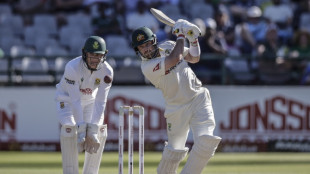 Inglis and Carey put Australia in command of South Africa decider

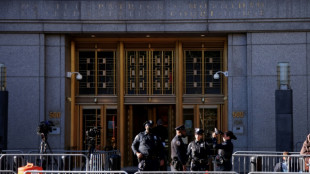 92-year-old US judge handling Maduro case dies

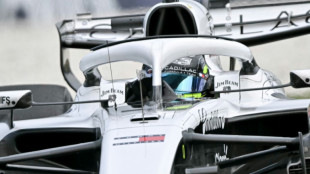 Perez extends Cadillac deal to 2029
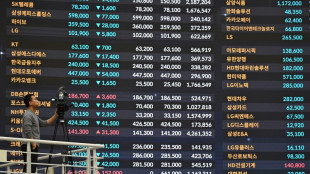
 Arab Israelis proud of high election turnout, uncertain for future

The James Webb space telescope's deepest view of a single target yet depicts spinning arcs of light that are galaxies from the universe's distant past, the European Space Agency said Tuesday.
The new image took the world's most powerful telescope more than 120 hours to capture, making it the longest Webb has ever focused on a single target.
It is also "Webb's deepest gaze on a single target to date", the European Space Agency (ESA) said in a statement, making the image one of the deepest ever captured of the cosmos.
At the bright centre of the image is a massive cluster of galaxies called Abell S1063, which is 4.5 billion light years from Earth.
But it is not the true target.
Such huge celestial objects can bend the light of things behind them, creating a kind of magnifying glass called a gravitational lens.
Therefore the "warped arcs" spinning around the Abell S1063 are what really interest scientists, the ESA said in a statement.
Because looking into distant space also means looking back in time, scientists hope to learn how the first galaxies formed during a period known as the Cosmic Dawn, when the universe was only a few million years old.
The image includes nine separate shots of different near-infrared wavelengths of light, the ESA said.
Since coming online in 2022, the Webb telescope has ushered in a new era of scientific breakthroughs.
It has also revealed that galaxies in the early universe are far bigger than scientists expected, leading some to suspect there might be something wrong with our understanding of the cosmos.
U.Maertens--VB