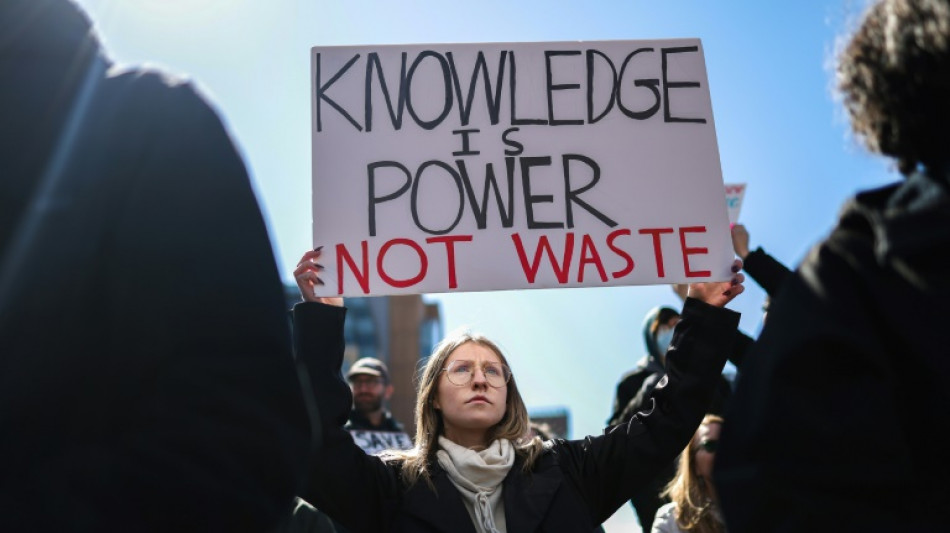
'Major brain drain': Researchers eye exit from Trump's America / Photo: © AFP

 ECB opens door to September rate-hike as Iran war flares up

 World Bank estimates Venezuela quakes caused $19.6 bn in damage
 Italy's far-right line up to defend jeweller who killed robbers

 AI-led boom in IPOs raises concerns about a bust

 Klopp expected to be named new Germany coach on Friday
 ECB holds rates as Iran war flare-up threatens to drive prices higher
 MEXC's "Kickoff Fest" Trading Event Concludes with Top Individual Reward of 27,352 USDT

 Oil soars close to $100 on fresh Mideast attacks
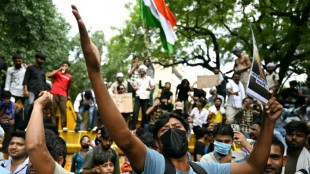
 India's angry Gen Z protesters say Modi must fix accountability

 Barca sign Adeyemi from Borussia Dortmund

 EasyJet profits nosedive on Mideast war
 EU fines Google 890 mn euros, risking US fury

 France evacuates thousands of tourists as fire rages in pine forest

 French Jewish DJ sues after activists disrupt stage show: lawyer

 Nokia says AI, cloud boosted sales in second quarter

 Repsol says profit more than triples on higher oil prices

 TotalEnergies says profit doubled on Mideast war

 Giant swing on Swiss peak aims to boost summer tourism as Alps warm
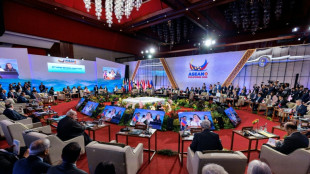 ASEAN to call for open straits as US-Iran war casts shadow

 AI catches up with humans to score 100% at top maths contest

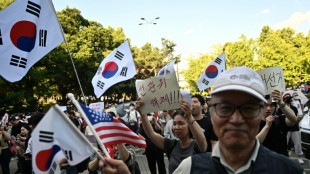 South Korea election office raided in fake turnout figures probe: investigators

 Killer whales: orcas blow fish to bits 'for fun', study finds

 Deadly wildfires force thousands from homes in parts of Europe

 Tech bounce lifts Asia stocks, oil extends gains on US-Iran fears

 Surrounded by militias, Sudanese fear endless cycle of war

In the halls of US universities and research labs, one question has become increasingly common as President Donald Trump tightens his grip on the field: whether to move abroad.
"Everybody is talking about it," JP Flores, a doctoral student in genetics at the University of North Carolina, told AFP.
The discussion was thrust into the spotlight after Yale philosophy professor Jason Stanley, a specialist in fascism, announced he was taking a new post in Canada over the Trump administration's "authoritarian" bent.
"I made the decision when Columbia folded," he told CBS News. "I made it in a split second."
Columbia University, which the Trump administration has threatened with major funding cuts, said it agreed to take steps to rein in pro-Palestinian protests, among other actions.
"It is not the time to cower and fear," said Stanley, who added there was "absolutely no doubt that the United States is an authoritarian country."
With similar threats lodged by Trump against other universities, many researchers are worried about the future of academic freedom in the United States.
Coupled with the administration's broad cuts to federal funding, some fear the country's research field, once viewed as the envy of the world, may be losing its luster.
More than 75 percent of scientists are now considering departing the country over Trump's policies, according to a survey of over 1,600 people published in late March by the journal Nature.
"The trend was particularly pronounced among early-career researchers," the journal said.
- 'Surreal' -
"People are just so scared," Daniella Fodera, a Columbia PhD student whose research grant was cancelled, told AFP.
Amid the uncertainty, several academic institutions in recent weeks have announced a hiring freeze and a reduction in the number of graduate student positions.
"That's definitely messing up the academic pipeline," said Fodera, a biomechanics student.
Karen Sfanos, head of a research lab at Johns Hopkins University, said: "It's kind of a surreal time for scientists because we just don't know what's going to happen with funding."
"There's not a lot of clarity, and things are changing day by day," she said, noting it is hitting the "youngest generation" relatively hard.
Fodera, who studies uterine fibroids -- benign tumors affecting many women -- said she has begun to "actively look at positions in Europe and abroad for continuing my post-doctoral training."
- 'Generational loss' -
With mounting concerns among US researchers, several European and Canadian universities have launched initiatives to attract some of the talent, though they may not need to try too hard.
"I know researchers already that have dual citizenship, or who have family in Canada, in France, in Germany, are saying, 'I think I'm going to go live in Germany for the next, you know, five years and do research there,'" said Gwen Nichols.
The physician, a senior leader at a blood cancer research group, warned the possible exodus could make the United States "lose our dominance as the biopharmaceutical innovation leader of the world."
"We'll see the problem 10 years from now, when we don't have the innovation we need," she added.
Genetics researcher Flores agreed, saying "it has become quite clear that there's gonna be a major brain drain here in American research."
One young climate researcher, who requested to remain anonymous, said she had started the process of attaining EU citizenship and that colleagues in Europe "have all been extremely sympathetic to the situation."
But she noted that those with limited resources, like many recent graduates, would be the least likely to be taken on by European institutions and may decide to drop out of science altogether.
"This is a generational loss for science across all disciplines," she warned.
C.Bruderer--VB