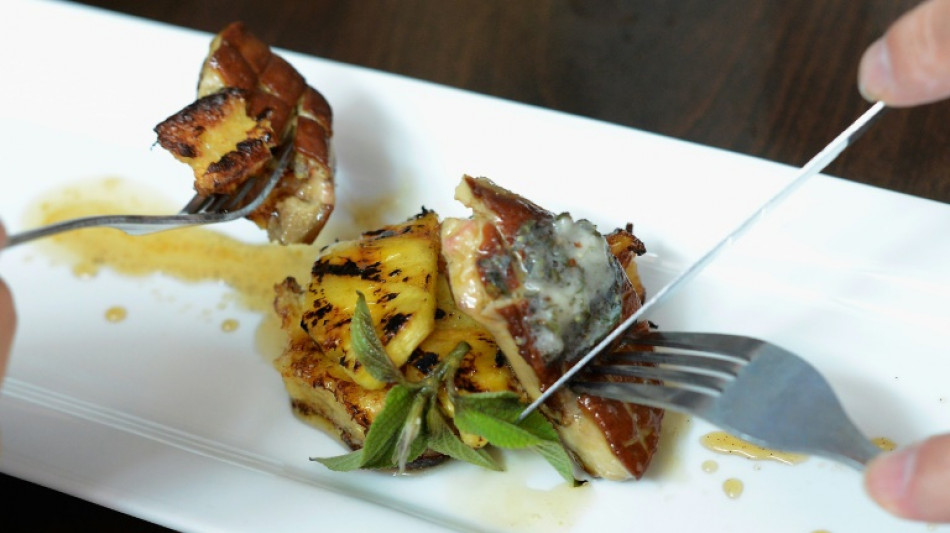
Faux gras? Scientists craft 'more ethical' version of French delicacy / Photo: © GETTY IMAGES NORTH AMERICA/AFP/File

 ECB opens door to September rate-hike as Iran war flares up

 World Bank estimates Venezuela quakes caused $19.6 bn in damage

 Italy's far-right line up to defend jeweller who killed robbers

 AI-led boom in IPOs raises concerns about a bust

 Klopp expected to be named new Germany coach on Friday

 ECB holds rates as Iran war flare-up threatens to drive prices higher

 MEXC's "Kickoff Fest" Trading Event Concludes with Top Individual Reward of 27,352 USDT
 Oil soars close to $100 on fresh Mideast attacks

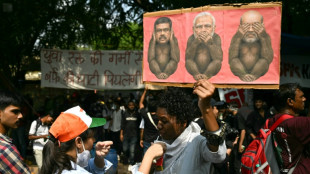 India's angry Gen Z protesters say Modi must fix accountability

 Barca sign Adeyemi from Borussia Dortmund

 EasyJet profits nosedive on Mideast war

 EU fines Google 890 mn euros, risking US fury

 France evacuates thousands of tourists as fire rages in pine forest

 French Jewish DJ sues after activists disrupt stage show: lawyer

 Nokia says AI, cloud boosted sales in second quarter

 Repsol says profit more than triples on higher oil prices

 TotalEnergies says profit doubled on Mideast war

 Giant swing on Swiss peak aims to boost summer tourism as Alps warm

 ASEAN to call for open straits as US-Iran war casts shadow

 AI catches up with humans to score 100% at top maths contest

 South Korea election office raided in fake turnout figures probe: investigators

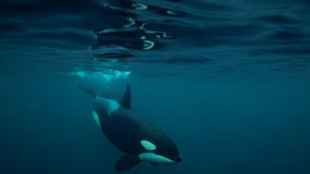 Killer whales: orcas blow fish to bits 'for fun', study finds

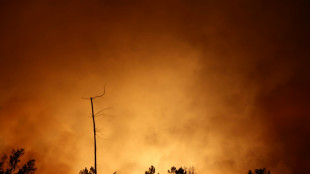 Deadly wildfires force thousands from homes in parts of Europe
 Tech bounce lifts Asia stocks, oil extends gains on US-Iran fears

 Surrounded by militias, Sudanese fear endless cycle of war

Foie gras — the fattened liver of ducks or geese — is a French delicacy prized for its rich, buttery flavor. But its production, which involves force-feeding the animals, has led to bans in several countries.
Now, a team of scientists says they've developed a more ethical alternative: one that mimics the taste and texture of the dish, minus the controversy.
The results were published Tuesday in the journal Physics of Fluids.
"It was always a dream to make foie gras more accessible and better for animal welfare," said lead author Thomas Vilgis, a professor of food science at the Max Planck Institute for Polymer Research in Mainz, Germany. "It's good to stop these force-feeding practices —- or at least reduce them."
Vilgis and his colleagues from his own institute and the University of Southern Denmark were adamant about one thing: no outside additives.
They initially tried cooking collagen from the birds' skin and bones into the liver-fat emulsion, but the result lacked the signature silky texture.
Then came the breakthrough: treating the fat with the bird's own lipases: enzymes the body naturally uses to break down fats. This tweak replicated a key part of the foie gras formation process, without resorting to force-feeding.
"At the end of the process, it allows the fat to recrystallize into the large crystals which form aggregates like the ones we see in the original foie gras," Vilgis said.
According to the authors, the elegance of the method lies in its simplicity: harvest the liver and fat, treat the fat with lipases, mix, sterilize — and voila.
Laser microscopy gave the new product a thumbs-up: the emulsion structure, fat droplet size, and shape closely matched traditional foie gras. Even the aroma passed the test.
To test texture, the team turned to industrial compression devices -— machines that gently press on food samples to measure firmness. The new foie gras held up well, offering a mouthfeel strikingly close to the original.
"We could really see the influence of these large fat particles, which we call in the paper 'percolating clusters,'" Vilgis said.
"At the beginning of the 'bite,' these large clusters have a high resistance, creating a similar mouthfeel of elasticity -— without being too rubbery like after the collagen or gelatin addition."
Vilgis has filed a patent for the process and now hopes to partner with companies to bring this kinder foie gras to market.
C.Koch--VB