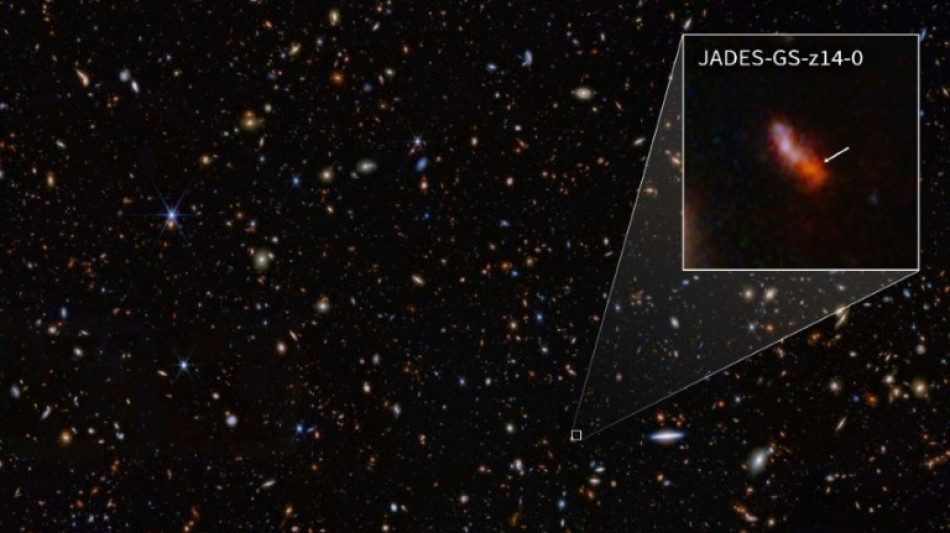
Oxygen detected in most distant galaxy: 'astonished' astronomers / Photo: © ESA, NASA, CSA, STScI/AFP/File

 ECB opens door to September rate-hike as Iran war flares up

 World Bank estimates Venezuela quakes caused $19.6 bn in damage
 Italy's far-right line up to defend jeweller who killed robbers

 AI-led boom in IPOs raises concerns about a bust

 Klopp expected to be named new Germany coach on Friday

 ECB holds rates as Iran war flare-up threatens to drive prices higher

 MEXC's "Kickoff Fest" Trading Event Concludes with Top Individual Reward of 27,352 USDT

 Oil soars close to $100 on fresh Mideast attacks

 India's angry Gen Z protesters say Modi must fix accountability

 Barca sign Adeyemi from Borussia Dortmund

 EasyJet profits nosedive on Mideast war

 EU fines Google 890 mn euros, risking US fury

 France evacuates thousands of tourists as fire rages in pine forest

 French Jewish DJ sues after activists disrupt stage show: lawyer

 Nokia says AI, cloud boosted sales in second quarter

 Repsol says profit more than triples on higher oil prices

 TotalEnergies says profit doubled on Mideast war

 Giant swing on Swiss peak aims to boost summer tourism as Alps warm

 ASEAN to call for open straits as US-Iran war casts shadow

 AI catches up with humans to score 100% at top maths contest

 South Korea election office raided in fake turnout figures probe: investigators

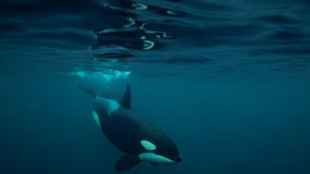 Killer whales: orcas blow fish to bits 'for fun', study finds

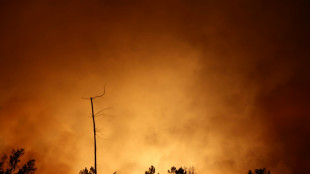 Deadly wildfires force thousands from homes in parts of Europe

 Tech bounce lifts Asia stocks, oil extends gains on US-Iran fears

 Surrounded by militias, Sudanese fear endless cycle of war

Oxygen has been detected in the most distant galaxy ever discovered, surprised astronomers said Thursday, offering further evidence that stars in the early universe matured far quicker than had been thought possible.
The galaxy JADES-GS-z14-0, which was discovered by the James Webb Space Telescope last year, is so far away that its light took 13.4 billion years to reach Earth.
This means the galaxy can also reveal what the universe was like in its infancy, when it was just 300 million years old -- two percent of its current age.
Since coming online in 2022, the powerful Webb telescope has discovered that galaxies in the young universe were much brighter, more advanced and more numerous than scientists had expected.
These discoveries have been so startling they have raised doubts about whether something important is missing in our understanding of the universe.
For the latest research, two international teams led by Dutch and Italian astronomers probed the JADES-GS-z14-0 galaxy using the ALMA radio telescope in Chile's Atacama desert.
They detected traces of oxygen, according to the European Southern Observatory, confirming hints previously spotted by the Webb telescope.
During this period known as the cosmic dawn, newly born galaxies were thought to only have young stars, which mostly contain light elements like hydrogen and helium.
Only later were they supposed to get heavier stuff such as oxygen.
But the two new studies found that JADES-GS-z14-0 has around 10 times more heavy elements than had been anticipated.
"It is like finding an adolescent where you would only expect babies," said Sander Schouws of Leiden Observatory, the first author of a Dutch-led study to be published in The Astrophysical Journal.
"The results show the galaxy has formed very rapidly and is also maturing rapidly, adding to a growing body of evidence that the formation of galaxies happens much faster than was expected," he said in a statement.
Astrophysicist Stefano Carniani, lead author of the Italian-led paper to be published in Astronomy & Astrophysics, said he was "astonished by the unexpected results".
"The evidence that a galaxy is already mature in the infant universe raises questions about when and how galaxies formed."
R.Flueckiger--VB