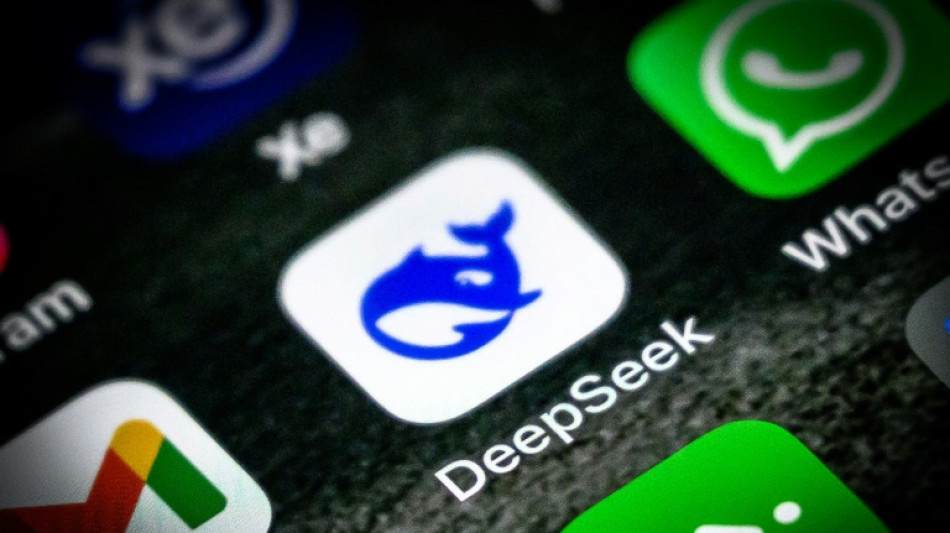
Upstart DeepSeek faces heightened scrutiny as AI wows / Photo: © AFP

 Oil passes $100 a barrel again: why it's more serious this time

 Who are the six candidates vying to lead the UN?

 Hamilton proud of recovery after hitting rock bottom a year ago
 Carapaz eyes polkadot mountains jersey after stage win
 Fields medal awarded to four young mathematicians

 Carapaz claims Tour de France stage as Pogacar loses key team-mate

 Alonso welcomes Aston Martin upgrade, warns against unreal expectations
 Anderson declares Man City 'kings of Manchester' after £116 mn move
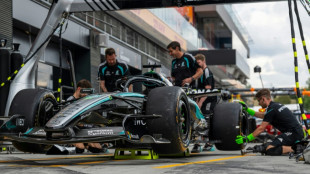 Relieved Russell says Mercedes have solved his power problems mystery
 Oil soars above $100 as Middle East fears grow
 Venezuelans turn to scrap collecting in quake-hit beach 'paradise'

 Heptathlon champion Johnson-Thompson joins list of Commonwealth Games absentees

 Nigeria's Dangote raises $2.5bn to expand Africa's largest refinery

 Oil soars to $100 on fresh Mideast attacks

 Coal-fired power generation rising globally on Mideast war: IEA

 Premier League champions Arsenal sign Greece winger Tzolis from Brugge
 French Jewish DJ sues after activists disrupt gig: lawyer

 Venice film festival promises Pattinson, Oasis and Musk doc

 ASEAN calls for open straits as US-Iran war casts shadow

 Ford and Geely to form joint venture at struggling Spain plant
 Russia warns US against Ukraine arms sales in Manila meeting

 New UK PM announces tax cut for struggling pubs

 Supporters flood India's 'cockroach' protesters with food
 Modi vows punishment for exam leaks fuelling India protests

 Norway set to make formal complaint to FIFA over Balogun red card saga

With around six million dollars and a stockpile of chips acquired before Washington banned their export to China, startup DeepSeek has produced what Chinese tech titans couldn't -- a world-class AI chatbot.
The success will come with heightened scrutiny, both from Western governments with long-held suspicions about Chinese technology but also from Beijing, whose stern regulatory crackdown on the sector, though eased in 2022, still has a chilling effect.
After surging ahead in the global artificial intelligence race this week, DeepSeek faces an uncertain future in its home country.
In 2020, Beijing unleashed a severe regulatory campaign against China's sprawling tech sector, which officials feared was growing beyond its control.
The crackdown saw authorities intensify local compliance efforts and slap eye-watering fines on domestic champions including Alibaba and Tencent for alleged monopolistic behaviour.
Beijing finally relented after a dire sell-off of Chinese tech stocks in March 2022.
But the sector has yet to find its way back to the flourishing growth of its boom years.
And China's leaders have since stressed their desire for the country to become a world AI leader, pumping huge sums into a fund set up last year to help firms develop advanced computer chips in response to US shipment curbs.
Meanwhile, tech giants -- including TikTok parent company ByteDance and internet search and cloud computing giant Baidu -- have raced to develop an AI chatbot on par with ChatGPT, released by US-based OpenAI in 2022.
- No subsidies -
But in the end, it was the low-key hedge fund project DeepSeek that accomplished the feat, outstripping domestic juggernauts and triggering a Wall Street rout that wiped over half a trillion dollars off of US chip titan Nvidia's market capitalisation.
"It is interesting that this breakthrough was achieved not by government-backed research institutes and large (state-owned enterprises), but by a hedge fund with no government subsidies," noted Zhiwei Zhang, president and chief economist at Pinpoint Asset Management.
Beijing is unlikely to be discouraged, however, with Zhang adding that DeepSeek's success "will likely motivate the government to further promote technological innovation by the private sector".
The road ahead for DeepSeek will also feature major challenges overseas, with calls mounting for US authorities to act more urgently to prevent the flow of advanced chips to Chinese firms.
And with President Donald Trump vowing to impose blanket tariffs on China in coming weeks for its alleged role in the US fentanyl crisis as well as "unfair" trade practices, a relaxation of curbs on advanced chip exports appears unlikely.
Beijing's policy is also increasingly driven by national security concerns -- with President Xi Jinping remarking in a speech this week that the country had faced "complex and severe situations" throughout the past year.
Despite growing fears of an intensified trade war, DeepSeek surged to the top of Apple's App Store download charts this week as curious consumers flocked to test it.
- TikTok fate? -
The firm's growing user base overseas may lead to fresh challenges stemming from Western governments' long-standing concerns about the Chinese government's potential espionage via locally developed apps, as well as heavy state censorship of content deemed by Beijing to be undesirable.
Authorities in the country have in recent years rolled out new regulations for the burgeoning field of generative AI, ensuring that content it produces aligns with Beijing's official narrative on sensitive issues such as the status of Taiwan or alleged human rights abuses.
In addition to screening out obscenity and encouragement of violence, Chinese chatbots are required to adhere to the government's "core socialist values" -- a decree regulators say is to promote "social stability".
Another potential pitfall in DeepSeek's quest to become the global go-to chatbot is how it handles the personal information of its users.
The potential ban of TikTok in the United States is fuelled in large part by concerns that user data stored on servers owned by a China-based company poses a major national security risk.
"DeepSeek's cost efficiency is praiseworthy, but the privacy implications of its data collection would raise significant concerns," said Saeed Rehman, senior lecturer in cybersecurity and networking at Flinders University.
"This situation may evoke similar concerns to those raised for TikTok, where data privacy and security have been hotly debated," he said.
DeepSeek -- whose founder Liang Wenfeng once said he became convinced as a student that AI would "change the world" -- arrived on the world stage this week with a clamour.
How long it stays on top will depend on how it manages the litany of potential perils that lie in its path.
R.Flueckiger--VB