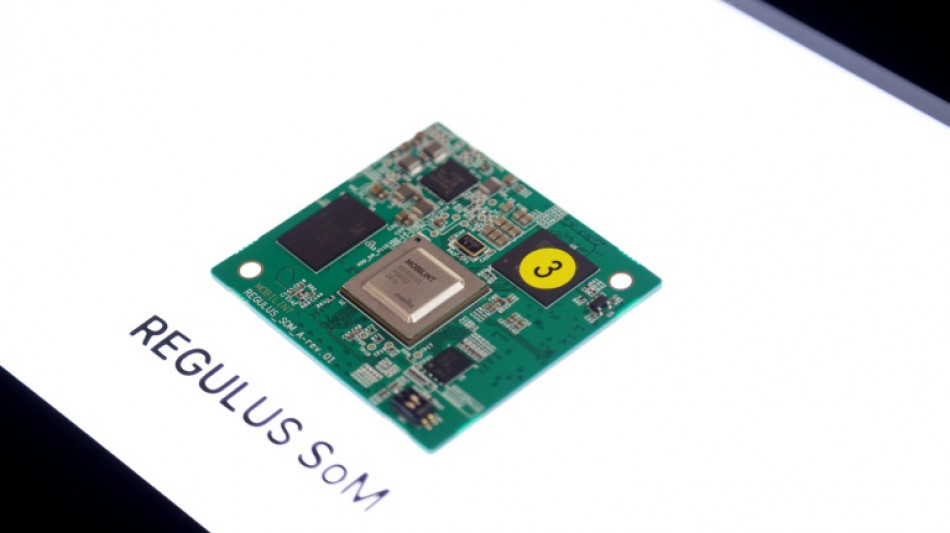
US announces new restrictions on AI chip exports / Photo: © AFP

 Hearn dismisses Fury talk of Joshua no-show for super fight

 'Like a war zone': France evacuates 20,000 due to wildfires

 Ships avoid Ukrainian grain ports after Russian attacks

 Oil passes $100 a barrel again: why it's more serious this time

 Who are the six candidates vying to lead the UN?

 Hamilton proud of recovery after hitting rock bottom a year ago

 Carapaz eyes polkadot mountains jersey after stage win

 Fields medal awarded to four young mathematicians

 Carapaz claims Tour de France stage as Pogacar loses key team-mate

 Alonso welcomes Aston Martin upgrade, warns against unreal expectations
 Anderson declares Man City 'kings of Manchester' after £116 mn move
 Relieved Russell says Mercedes have solved his power problems mystery

 Oil soars above $100 as Middle East fears grow

 Venezuelans turn to scrap collecting in quake-hit beach 'paradise'

 Heptathlon champion Johnson-Thompson joins list of Commonwealth Games absentees

 Nigeria's Dangote raises $2.5bn to expand Africa's largest refinery

 Oil soars to $100 on fresh Mideast attacks

 Coal-fired power generation rising globally on Mideast war: IEA

 Premier League champions Arsenal sign Greece winger Tzolis from Brugge

 French Jewish DJ sues after activists disrupt gig: lawyer

 Venice film festival promises Pattinson, Oasis and Musk doc

 ASEAN calls for open straits as US-Iran war casts shadow

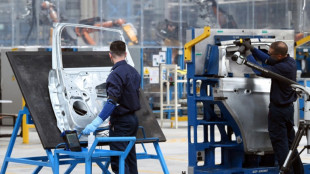 Ford and Geely to form joint venture at struggling Spain plant
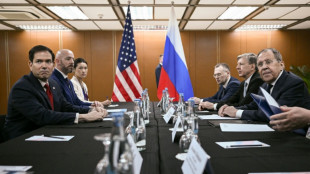 Russia warns US against Ukraine arms sales in Manila meeting

 New UK PM announces tax cut for struggling pubs

The United States unveiled new export rules Monday on chips used for artificial intelligence, furthering efforts to make it tough for China and other rivals to access advanced technology in Joe Biden's final days as president.
The restrictions build on curbs announced in 2023 on exporting certain AI chips to China, which the United States sees as a strategic competitor in the field of advanced semiconductors.
"The US leads the world in AI now -- both AI development and AI chip design -- and it's critical that we keep it that way," Commerce Secretary Gina Raimondo told reporters.
But the effort drew industry criticism and sharp warnings that it would hurt US competitiveness.
Semiconductor Industry Association chief executive John Neuffer said: "We're deeply disappointed that a policy shift of this magnitude and impact is being rushed out the door days before a presidential transition and without any meaningful input from industry."
He added in a statement on Monday that the rule could cause "lasting damage to America's economy and global competitiveness" by ceding key markets to rivals.
Chip titan Nvidia said in a blog post that "while cloaked in the guise of an 'anti-China' measure, these rules would do nothing to enhance US security."
The new rules update controls on chips, requiring authorizations for exports, re-exports and in-country transfers -- while also including a series of exceptions for countries considered friendly to the United States.
AI data centers meanwhile will need to comply with enhanced security parameters in order to be able to import chips.
The rules make it "hard for our strategic competitors to use smuggling and remote access to evade our export control," White House National Security Advisor Jake Sullivan said.
They also create "incentives for our friends and partners around the world to use trusted vendors for advanced AI," he added.
The new rules will take effect in 120 days, Raimondo said, giving the incoming administration of President-elect Donald Trump time to potentially make changes.
In its blog post, Nvidia stressed that the first Trump administration showed how the United States "wins through innovation, competition and by sharing our technologies with the world -- not by retreating behind a wall of government overreach."
Trump put heavy tariffs on China during his first presidential term.
However, his backers in Silicon Valley could also see the rules as an undue burden on their ability to export products.
P.Staeheli--VB