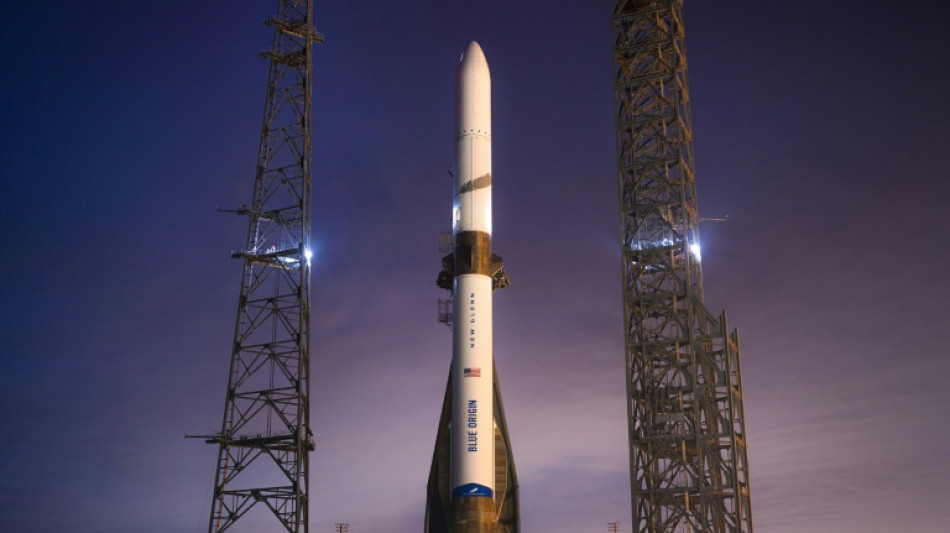
Five things to know about New Glenn, Blue Origin's new rocket / Photo: © BLUE ORIGIN/AFP/File

 Hearn dismisses Fury talk of Joshua no-show for super fight

 'Like a war zone': France evacuates 20,000 due to wildfires

 Ships avoid Ukrainian grain ports after Russian attacks

 Oil passes $100 a barrel again: why it's more serious this time

 Who are the six candidates vying to lead the UN?

 Hamilton proud of recovery after hitting rock bottom a year ago
 Carapaz eyes polkadot mountains jersey after stage win

 Fields medal awarded to four young mathematicians

 Carapaz claims Tour de France stage as Pogacar loses key team-mate

 Alonso welcomes Aston Martin upgrade, warns against unreal expectations

 Anderson declares Man City 'kings of Manchester' after £116 mn move

 Relieved Russell says Mercedes have solved his power problems mystery

 Oil soars above $100 as Middle East fears grow

 Venezuelans turn to scrap collecting in quake-hit beach 'paradise'

 Heptathlon champion Johnson-Thompson joins list of Commonwealth Games absentees

 Nigeria's Dangote raises $2.5bn to expand Africa's largest refinery

 Oil soars to $100 on fresh Mideast attacks

 Coal-fired power generation rising globally on Mideast war: IEA

 Premier League champions Arsenal sign Greece winger Tzolis from Brugge

 French Jewish DJ sues after activists disrupt gig: lawyer

 Venice film festival promises Pattinson, Oasis and Musk doc

 ASEAN calls for open straits as US-Iran war casts shadow

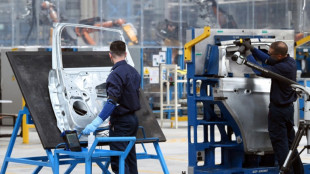 Ford and Geely to form joint venture at struggling Spain plant

 Russia warns US against Ukraine arms sales in Manila meeting

 New UK PM announces tax cut for struggling pubs

Blue Origin, the US space company founded by billionaire Jeff Bezos in 2000, is poised for a historic first: its maiden voyage into orbital space with a brand new rocket, New Glenn.
Here are five key things to know about the heavy-lift vehicle aiming to challenge SpaceX's dominance in the commercial space market.
- Homage -
New Glenn honors a legendary astronaut: John Glenn, the first American to orbit Earth in 1962.
It follows in the steps of New Shepard, Blue Origin's first rocket which was named for Alan Shepard, the first American in space.
Standing 320 feet (98 meters) tall -- roughly equivalent to a 32-story building -- New Glenn is both larger and more powerful than its smaller sibling, which is used for suborbital space tourism.
- Heavy-lift -
New Glenn is classified as a "heavy-lift launcher," capable of placing substantial payloads into low-Earth orbit. It is expected to carry up to 45 tons into orbit.
That is more than double that of SpaceX's Falcon 9, which can lift around 22 tons, though it falls short of the Falcon Heavy's 63.8-ton capacity.
However, New Glenn has a unique edge: its wider payload fairing, which can accommodate larger objects.
It "has the largest capacity to put objects in space, large objects" as a result of its wider payload fairing, Elliott Bryner, a professor at Embry-Riddle Aeronautical University, told AFP.
- Swiss knife -
Its versatility means New Glenn could become a "Swiss Army knife" of rockets, capable of deploying a diverse array of payloads to both low and higher orbits.
These are set to include commercial and military satellites -- as well as Project Kuiper, Bezos's planned space internet constellation, to compete with SpaceX's Starlink.
New Glenn also has the potential to carry crewed spacecraft, notes George Nield, president of Commercial Space Technologies. "One other potential use is for commercial space stations," he adds.
With the International Space Station slated for decommissioning in 2030, the race is on to develop replacements. Blue Origin is among the contenders vying to build the first privately run platform.
- Partially reusable -
Like SpaceX's Falcon 9, New Glenn features a reusable first-stage booster -- designed for up to 25 flights -- and an expendable second stage.
But to reuse the rocket, Blue Origin first has to land it. The company has mastered the technique with its much smaller New Shepard rocket, which touches down on solid ground. However, reusing New Glenn will require a successful landing on a drone ship stationed in the Atlantic Ocean.
This is no small feat: It took SpaceX six years to perfect the maneuver with Falcon 9 after its debut launch in 2010.
"Landing a rocket like this, the way they're doing it, is definitely not simple," said Bryner. "The level of technology required to do this is unbelievable."
Yet achieving reusability is crucial to reducing costs and broadening access to space, added Nield.
- Higher tech -
Under the hood, New Glenn's propulsion system represents a step up.
The first stage is powered by liquid methane, a cleaner and more efficient fuel than the kerosene used in both stages of Falcon 9.
Its second stage uses liquid hydrogen, an even cleaner and more powerful fuel, though more challenging to handle due to its cryogenic properties.
"It's the difference between driving a, you know, a Ferrari or a Volkswagen," William Anderson, a professor of aeronautics and astronautics at Purdue University told AFP, comparing the technology behind New Glenn and Falcon 9.
S.Spengler--VB