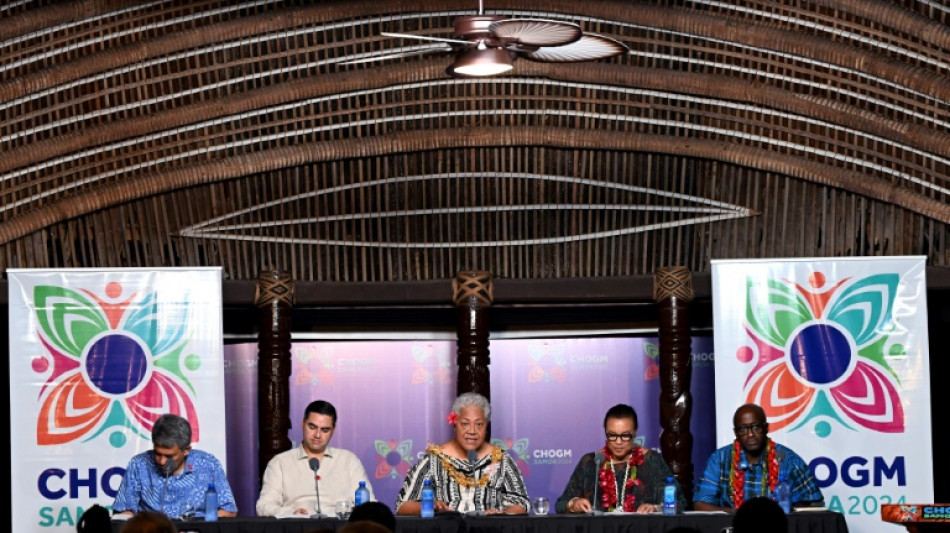
UK treads fine line on slavery legacy, while ruling out reparations / Photo: © POOL/AFP

 Hong Kong unveils plan to align economy with China's goals
 Brazilian voters the latest to eye Bukele security model with envy

 EU chief hosts Canada's Carney in push to 'deepen' alliance
 EU chief to unveil social media, gaming curbs for under-15s
 Saudi says Houthis target Mecca, warn of 'red line'

 Asian stocks stutter as traders prepare for Fed decision

 US touts its power, avoids Iran war at G20 Energy meeting

 Dead animals, barren fields, and hunger - El Nino chokes Central America
 In hydropowered Bhutan, solar starts to rise
 Brazil's Supreme Court clashes over handling of probe involving judge

 Trump threatens to keep Kennedy Center shut if his name not added
 i-payout Expands U.S. Money Transmitter Licensing Footprint and Advances European EMI Strategy

 Artists exit Sheeran tour in solidarity with Macklemore pro-Palestinian comments
 Espi saves Real Madrid with late winner at Elche
 Liverpool pile on misery for Spurs in League Cup, Dowman dazzles for Arsenal
 Trump blasts Supreme Court justices over 'horrible' mail vote ruling

 Maduro ally pleads guilty to US money laundering charges
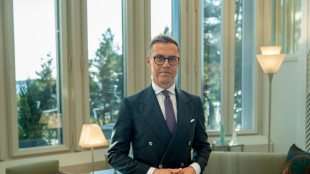 Finnish president Stubb speaks to AFP about Trump, Russia and saunas

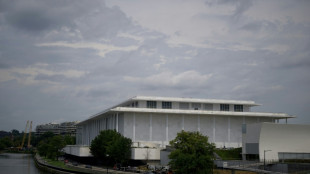 Trump says Kennedy Center to close after judge bars name change
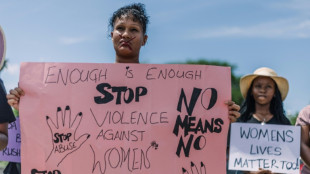 South Africa intensifies hunt after eight women found dead
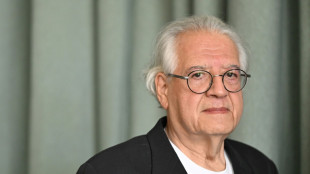 'Battle of Chile' documentary-maker Patricio Guzman dies, aged 85
 Tuchel wanted to eat grass after England's World Cup win in Mexico

 OpenAI, Anthropic and Google are working to create an AI standards body
 Lens sack Toppmoeller after six games in charge

 Rob Reiner son will not face death penalty, prosecutor says
Commonwealth countries want talks on slavery reparations but the United Kingdom -- engaged in soul-searching over its former empire for several years now -- is not open to financial compensation, officials and analysts say.
"I think segments of British society might be ready to talk about reparation but you have other sectors, the majority really, that strongly oppose it," Sascha Auerbach, director of the Institute for the Study of Slavery at Nottingham University, told AFP.
Meeting last week at a summit in Samoa, the Commonwealth's 56 members said the "time has come" for talks about the legacy of the transatlantic slave trade, in a landmark declaration that raised the prospect of future reparations.
African, Caribbean and Pacific nations want Britain -- and other colonial powers -- to apologise for slavery and other ills of colonisation, and to start talks about compensation.
Labour Prime Minister Keir Starmer, a former human rights lawyer, has rejected both requests, arguing that he wants to "look forward" rather than have "very long endless discussions about reparations" involving the past.
"I think he is concerned that the country is not ready to have this conversation," said Alan Lester, a historian at the University of Sussex, noting that any talk of restorative justice a few months after far-right riots rocked England is seen as politically risky.
The issue is divisive. Figures in centre-left Labour -- which came to power in July -- have long been open to the debate, but the Conservatives reject it outright.
Robert Jenrick, one of the candidates to be the new Tory leader, has said that criticising the British Empire is anti-patriotic.
He wrote recently that "the territories colonised by our empire were not advanced democracies".
"Many had been cruel, slave-trading powers. Some had never been independent. The British empire broke the long chain of violent tyranny as we came to introduce -- gradually and imperfectly -- Christian values," he added.
While Britain has expressed remorse for slavery in broad terms, London has baulked at the idea of paying financial reparations, which would likely come with a hefty price tag.
A 2023 report co-authored by a United Nations judge, Patrick Robinson, concluded that the UK likely owed more than £18 trillion (or 21 trillion euros) for its involvement in slavery in 14 countries.
This figure took into account the unpaid wages of slaves, trauma caused, and damages owed to their descendants.
So far, the Commonwealth countries have not put forward any figures of their own.
"It's very unlikely that countries would ask for that figure," Lester, the historian, told AFP.
Auerbach suspects that money is not the countries' "main goal".
"What they want is recognition and accountability," he said.
Opponents in Britain point out that a public apology could open the doors to legal action against the country. Auerbach notes that the Netherlands' government and king apologised last year for slavery and has not yet been sued.
For its part, the British royal family has so far stopped short of apologising.
King Charles III did, however, on a visit to Kenya last year, express his "greatest sorrow and deepest regret" over the "abhorrent and unjustifiable acts of violence committed against Kenyans" during colonial rule.
"It's a delicate subject. I would say that the monarchy has navigated this debate very skillfully," Professor Pauline Maclaran at Royal Holloway, University of London, told AFP.
Other British institutions have issued apologies or owned up to mistakes, including the Church of England which officially said sorry in 2020.
The National Trust, which protects heritage sites, published a report the same year detailing links between dozens of properties it runs and the slave trade.
Earlier this year, the esteemed Royal Academy of Arts held an exhibition about how British art was implicated by slavery -- a first in its more than two centuries of existence.
"At least we're having the conversation in the Anglo-Saxon world, which is not the case in Spain or France," said Auerbach.
B.Baumann--VB