Boeing's beleaguered Starliner returns home without astronauts / Photo: © BOEING/AFP

 Cambodia no 'safe haven' for cyberscams, PM says

 North Korea weightlifter sets three world records for Asian Games gold

 A Full Moon for Every Child: STARTRADER's STARCARES Brings Support to SOS Children's Village Ho Chi Minh City

 Meta leans into AI, smart glasses amid privacy pushback

 Battered Duerer masterpiece up for five-year revamp
 Trump met with Venezuela's interim leader at UN

 Malaysia furore after Najib wins conditional house arrest
 Italy hope for new dawn under Mancini

 Mongolian herders enlist new tech against harsher, drier climate
 Tata turmoil shines light on India succession woes
 World Cup 'not enough' as Spain begin next chapter

 Meta acts against 3.7 mn scammers' accounts with Singapore police help

 Australia PM says draft social media rules about taking back control

 Voting opens in Alaska's annual Fat Bear Week
 MLS coach axed for telling female ref 'It's a man's game'
 US refuses to give Sudan's de facto leader visa for UN
 Man City hold Bayern to start Women's Champions League, Arsenal win late
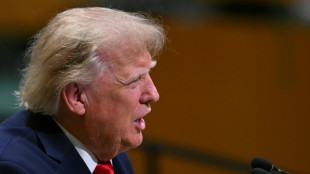 Trump threatens Iran with 'hell' but reveals fresh talks
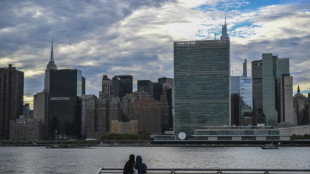
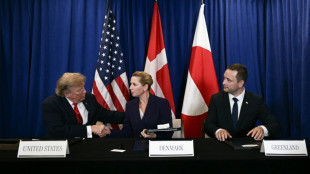 Trump signs security deal with Greenland, Denmark at UN

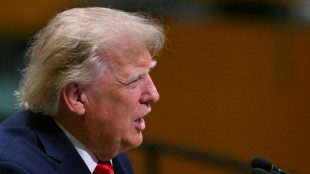 Trump threatens Iran with 'hell' but unveils fresh talks

 Chile's Atacama Desert blossoms with life after El Nino rains

 Sri Lanka hands 220-year jail terms to 15 convicted of Easter bombings
 Typhoon Dujuan leaves 7 dead in Japan from landslides, flooding: media
 Ganna and Borghini lead Italy to mixed relay gold at cycling worlds

 Drug cocktail killed former child star Hayden Panettiere: coroner
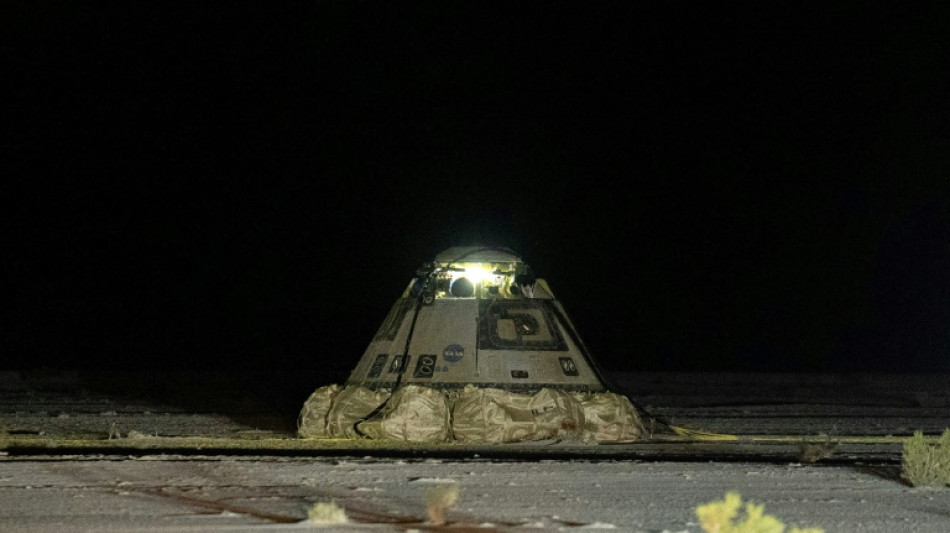
Boeing's beleaguered Starliner made its long-awaited return to Earth on Saturday without the astronauts who rode it up to the International Space Station, after NASA ruled the trip back too risky.
After years of delays, Starliner launched in June for what was meant to be a roughly weeklong test mission -- a final shakedown before it could be certified to rotate crew to and from the orbital laboratory.
But unexpected thruster malfunctions and helium leaks en route to the ISS derailed those plans, and NASA ultimately decided it was safer to bring crewmates Butch Wilmore and Suni Williams back on a rival SpaceX Crew Dragon -- though they'll have to wait until February 2025.
The gumdrop-shaped Boeing capsule touched down softly at the White Sands Space Harbor in New Mexico at 0401 GMT Saturday, its descent slowed by parachutes and cushioned by airbags, having departed the ISS around six hours earlier.
As it streaked red-hot across the night sky, ground teams reported hearing sonic booms. The spacecraft endured temperatures of 3,000 degrees Fahrenheit (1,650 degrees Celsius) during atmospheric reentry.
NASA lavished praise on Boeing during a post-flight press conference where representatives from the company were conspicuously absent.
"It was a bullseye landing," said Steve Stich, program manager for NASA's commercial crew program. "The entry in particular has been darn near flawless."
Still, he acknowledged that certain new issues had come to light, including the failure of a new thruster and the temporary loss of the guidance system.
He added it was too early to talk about whether Starliner's next flight, scheduled for August next year, would be crewed, instead stressing NASA needed time to analyze the data they had gathered and assess what changes were required to both the design of the ship and the way it is flown.
Ahead of the return leg, Boeing carried out extensive ground testing to address the technical hitches encountered during Starliner's ascent, then promised -- both publicly and behind closed doors -- that it could safely bring the astronauts home. In the end, NASA disagreed.
Asked whether he stood by that decision, NASA's Stich said: "It's always hard to have that retrospective look. We made the decision to have an uncrewed flight based on what we knew at the time and based on our knowledge of the thrusters and based on the modeling that we had."
- History of setbacks -
Even without crew aboard, the stakes were high for Boeing, a century-old aerospace giant.
With its reputation already battered by safety concerns surrounding its commercial jets, its long-term prospects for crewed space missions hung in the balance.
Shortly after undocking, Starliner executed a powerful "breakout burn" to swiftly clear it from the station and prevent any risk of collision -- a maneuver that would have been unnecessary if crew were aboard to take manual control if needed.
Mission teams then conducted thorough checks of the thrusters required for the critical "deorbit burn" that guided the capsule onto its reentry path around 40 minutes before touchdown.
Though it was widely expected that Starliner would stick the landing, as it had on two previous uncrewed tests, Boeing's program continues to languish behind schedule.
In 2014, NASA awarded both Boeing and SpaceX multibillion-dollar contracts to develop spacecraft to taxi astronauts to and from the ISS, after the end of the Space Shuttle program left the US space agency reliant on Russian rockets.
Although initially considered the underdog, Elon Musk's SpaceX surged ahead of Boeing, and has successfully flown dozens of astronauts since 2020.
The Starliner program, meanwhile, has faced numerous setbacks -- from a software glitch that prevented the capsule from rendezvousing with the ISS during its first uncrewed test flight in 2019, to the discovery of flammable tape in the cabin after its second test in 2022, to the current troubles.
With the ISS scheduled to be decommissioned in 2030, the longer Starliner takes to become fully operational, the less time it will have to prove its worth.
R.Kloeti--VB