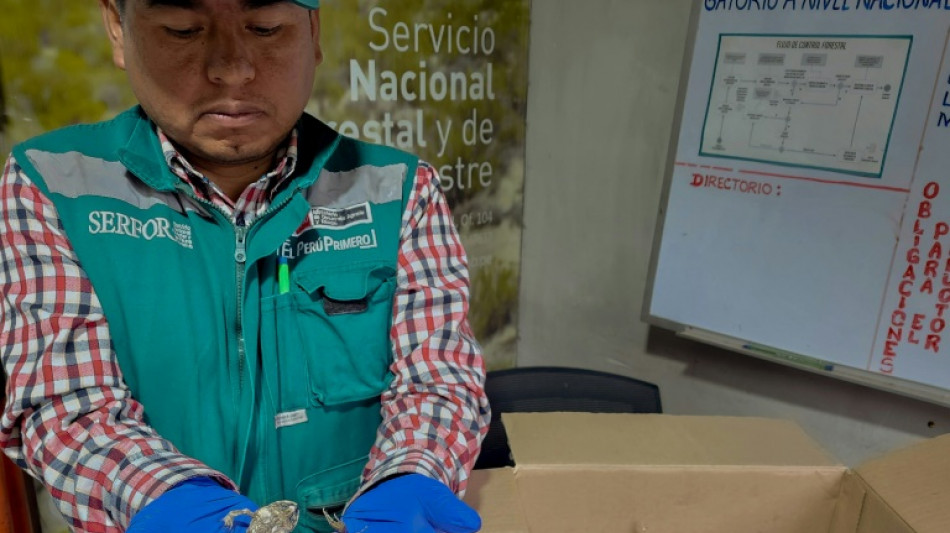
Andean 'Viagra': Peru seizes hundreds of frogs used as aphrodisiacs / Photo: © SERFOR/AFP

 Saudi PIF Retains Top Sovereign Wealth Fund Brand Title for Third Year

 Phoenix Weekend Guide: Sangria Socials, Pie Markets, and New Brunch Spots

 Trent Perry’s Late Heroics Lift No. 7 UCLA Past Cal State Fullerton

 2027 Hyundai Elantra Review: Brutalist Design and Expanded Dimensions

 Malta Maritime Forum Study Reveals €1 Billion Economic Contribution Amid Growth Concerns

 China Condemns Chile-Belgium Joint Bid for High Seas Treaty Headquarters

Peruvian authorities said Thursday they had seized hundreds of endangered frogs from Lake Titicaca that were illegally captured to be used for their purported aphrodisiac properties.
The national forestry and wildlife service said it found 390 frogs in a cardboard box inside a truck in the Puno region on the shores of the huge lake, which lies at 3,810 meters (12,500 feet) above sea level in the Andes, on Peru's border with Bolivia.
The shipment was bound for the Peruvian capital Lima, where the frogs are widely used in traditional medicine as well as in dishes flagged as boosting customer's sex drive.
Some traditional healers make a brew with frog extract that they call the "Viagra of the Incas," after the civilization that ruled over a vast South American empire in the 15th and 16th centuries.
The potion is also touted as having a wide array of medicinal properties.
The Lake Titicaca frog (Telmatobius culeus), one of the largest species of aquatic frogs in the world, is native to Peru and part of Bolivia.
In the last 15 years, the population of the frog, which is on Peru's list of endangered species, has shrunk by an estimated 80 percent due to trafficking, climate change and pollution.
Wildlife trafficking is a crime punishable by fines of over $14,500 in Peru, over 50 times the minimum monthly wage.
T.Zimmermann--VB