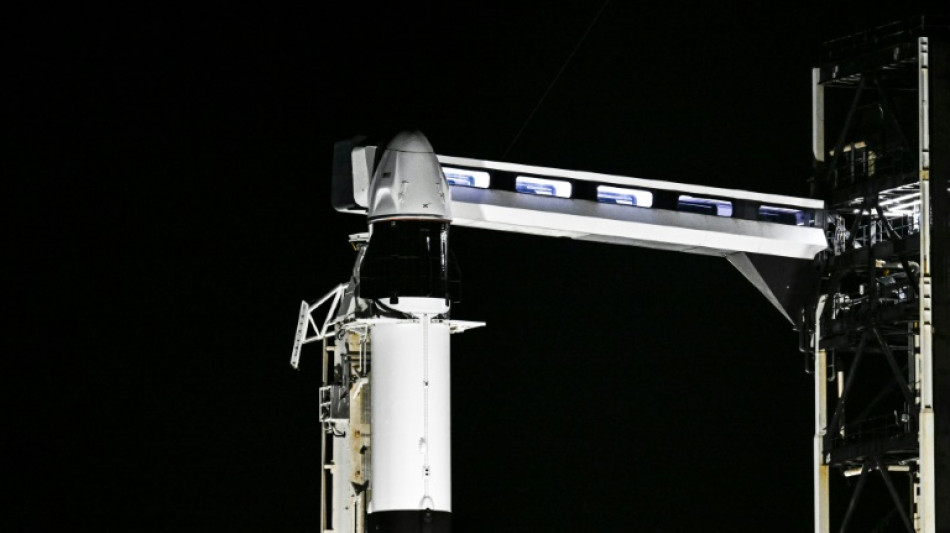
SpaceX Polaris Dawn mission set to launch early Friday / Photo: © AFP/File

 Saudi PIF Retains Top Sovereign Wealth Fund Brand Title for Third Year

 Phoenix Weekend Guide: Sangria Socials, Pie Markets, and New Brunch Spots

 Trent Perry’s Late Heroics Lift No. 7 UCLA Past Cal State Fullerton

 2027 Hyundai Elantra Review: Brutalist Design and Expanded Dimensions

 Malta Maritime Forum Study Reveals €1 Billion Economic Contribution Amid Growth Concerns

 China Condemns Chile-Belgium Joint Bid for High Seas Treaty Headquarters

The SpaceX Polaris Dawn mission, a multiday orbital expedition set to feature the first-ever spacewalk by private citizens, is now scheduled to launch on Friday, according to the Federal Aviation Administration.
An operations plan released by the agency indicates a four-hour launch window opening at 3:33 am (0733 GMT) on Friday from NASA's Kennedy Space Center, with backup opportunities on Saturday and Sunday. Elon Musk's company has not yet commented on the new launch window.
Organized by billionaire entrepreneur Jared Isaacman, the Polaris Dawn mission aims to reach a peak altitude of 870 miles (1,400 kilometers) -- the highest for any crewed mission in over half a century, since NASA's Apollo program.
The highlight of the mission is set to be the first spacewalk by a four-member crew composed entirely of non-professional astronauts, who will be wearing sleek, newly developed SpaceX extravehicular activity (EVA) suits.
The launch was delayed twice last week, initially due to a technical issue with the launch tower and subsequently because of weather constraints affecting the splashdown phase.
Complicating matters further, a separate SpaceX Falcon 9 mission lost its first stage booster, which typically performs a precision upright landing on a drone ship.
This incident led to a temporary grounding, since lifted, of the prolific launch vehicle heavily relied upon by NASA and private companies for deploying astronauts and satellites into orbit.
U.Maertens--VB