Blue Origin completes latest space tourism flight successfully / Photo: © BLUE ORIGIN/AFP

 Saudi PIF Retains Top Sovereign Wealth Fund Brand Title for Third Year

 Phoenix Weekend Guide: Sangria Socials, Pie Markets, and New Brunch Spots

 Trent Perry’s Late Heroics Lift No. 7 UCLA Past Cal State Fullerton

 2027 Hyundai Elantra Review: Brutalist Design and Expanded Dimensions

 Global Scams Remain Widespread: Nearly Two in Three Adults Worldwide Report Scam Encounters, 9% Lost Money

 Shinde Clarifies Torn Photo Controversy Amid Sonia Gandhi Book Protest

Blue Origin flew its latest group of six thrill-seekers to the edge of space and back again Thursday, including the youngest-ever woman to complete the feat.
Mission NS-26 marked the eighth human spaceflight for the company, founded by Jeff Bezos, as it presses ahead in the emerging suborbital tourism market.
Karsen Kitchen, a 21-year-old senior at the University of North Carolina at Chapel Hill, became the youngest woman ever to cross the Karman Line, the internationally recognized boundary marking the edge of space, 100 kilometers (62 miles) above the Earth's surface.
Blue Origin's small New Shepard rocket blasted off at 8:00 am local time (1300 GMT) from the company's Launch Site One base in west Texas.
After liftoff, the sleek and spacious capsule separated from its booster, which boasts zero carbon emissions, before the rocket performed a precise vertical landing.
As the spaceship soared beyond the Karman Line, passengers had the chance to marvel at the Earth's curvature and unbuckle their seatbelts to float during a few minutes of weightlessness.
"Being there in the darkness of space... there's no way to talk about how impressive that is," said Rob Ferl, a NASA-funded researcher who conducted an experiment during the flight.
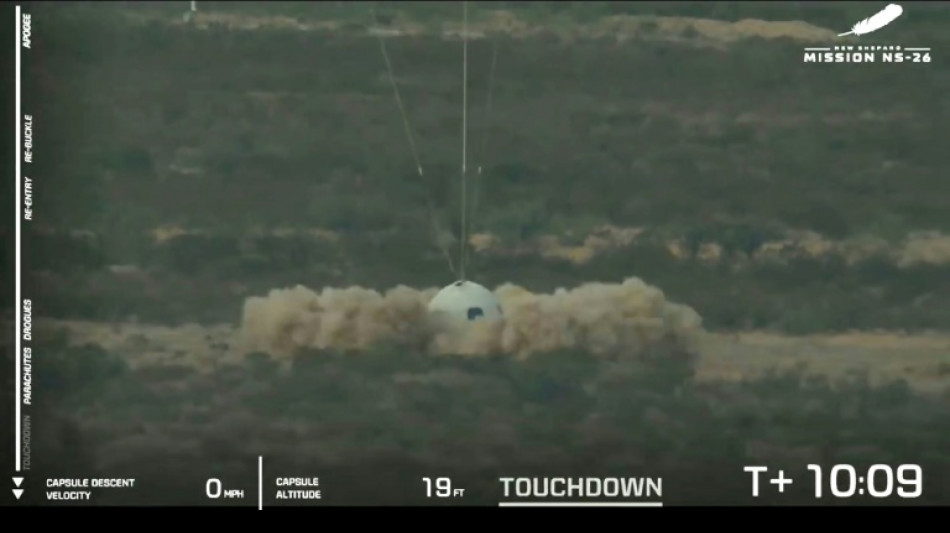
The capsule then reentered the atmosphere, deploying its parachutes for a desert landing near the launch site. The total flight time is typically around 10 to 11 minutes.
Blue Origin does not publicly disclose the cost of its tickets, but prices are believed to vary significantly based on the individual selected, their net worth, and the social capital they bring to the company.
The first seat sold in a 2021 charity auction went for $28 million, but notable guests like Star Trek actor William Shatner have flown on Blue Origin flights for free. Others have reported paying several hundred thousand dollars.
Blue Origin's main competitor in the suborbital space market, Virgin Galactic, is currently on a two-year pause from commercial operations as it upgrades its fleet.
G.Frei--VB