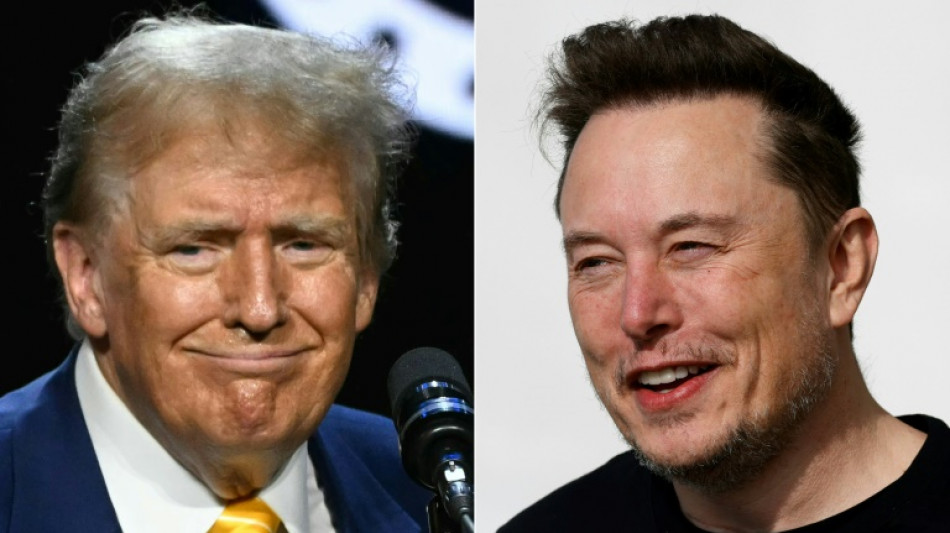
Pro-Trump X accounts use stolen photos of European influencers: study / Photo: © AFP/File

 Saudi PIF Retains Top Sovereign Wealth Fund Brand Title for Third Year

 Phoenix Weekend Guide: Sangria Socials, Pie Markets, and New Brunch Spots

 Trent Perry’s Late Heroics Lift No. 7 UCLA Past Cal State Fullerton

 2027 Hyundai Elantra Review: Brutalist Design and Expanded Dimensions

 Global Scams Remain Widespread: Nearly Two in Three Adults Worldwide Report Scam Encounters, 9% Lost Money

 Shinde Clarifies Torn Photo Controversy Amid Sonia Gandhi Book Protest
Meet "Eva," "Sophia," and "Samantha" -- fake accounts which pose as chic American women who support Donald Trump on the platform X, disguising themselves by using stolen photographs of European fashion and beauty influencers, according to a study published Wednesday.
The report by the nonprofit Center for Information Resilience (CIR) comes as researchers express alarm ahead of the US election in November that the site owned by Elon Musk –- who has endorsed Trump –- is plagued with fake accounts and political disinformation.
CIR said it uncovered 16 accounts that used images of European influencers –- without their permission –- to pose as young women promoting Trump and encouraging thousands of followers to vote for the Republican nominee.
These accounts, which use stolen images of real people to appear authentic, were among 56 profiles that appear to be part of a coordinated campaign to push pro-Trump content, it added.
"By using images of the influencers, the accounts recognize the value of creating a believable human persona, steering clear of the generic photos and bot-like usernames usually associated with fake accounts," CIR's report said.
It was unclear who was behind the digital deception or whether the accounts were pushing pro-Trump content for ideological or monetary gain.
The fake profiles use everyday images from the influencers' Instagram accounts -- including pictures of them at the beach or walking their dog -- which are captioned with MAGA-related hashtags or pledges to vote for Trump, CIR said.
MAGA, or Make America Great Again, is a political slogan associated with Trump and his campaign.
Many of the accounts have attempted to spread misinformation about hot-button political subjects such as a recent assassination attempt against Trump, his Democratic rival Kamala Harris's ethnicity and US military aid to Ukraine, the report said.
Some accounts also promote anti-vaccine and Covid-19 conspiracies, with some posts viewed hundreds of thousands of times.
"They post about divisive issues in US politics in a bid to exploit pre-existing tensions," the report said.
One of the impersonators is "Luna," a self-described 32-year-old "MAGA Trump supporter," who used images of a German fashion influencer named Debbie Nederlof, according to CNN, which jointly conducted the investigation with CIR.
Nederlof, a single mother, voiced anger and frustration over the misuse of her images, saying she had "nothing to do with the United States, with Trump, the political things over there."
"What the hell do I -– from a small place in Germany –- care about US politics?" she said.
X did not respond to a request for comment.
Impersonation is a violation of the platform's rules, and accounts posing as another person, group or organization may be "permanently suspended," according to X's website.
Musk appears to exert an outsized influence on US voters through the platform and his own personal account, which is regularly flagged by fact-checkers for spreading political falsehoods to his nearly 196 million followers.
Since Musk's 2022 acquisition of X, the platform has gutted trust and safety teams and scaled back content moderation efforts once used to tame misinformation, making it what researchers call a haven for disinformation.
L.Stucki--VB