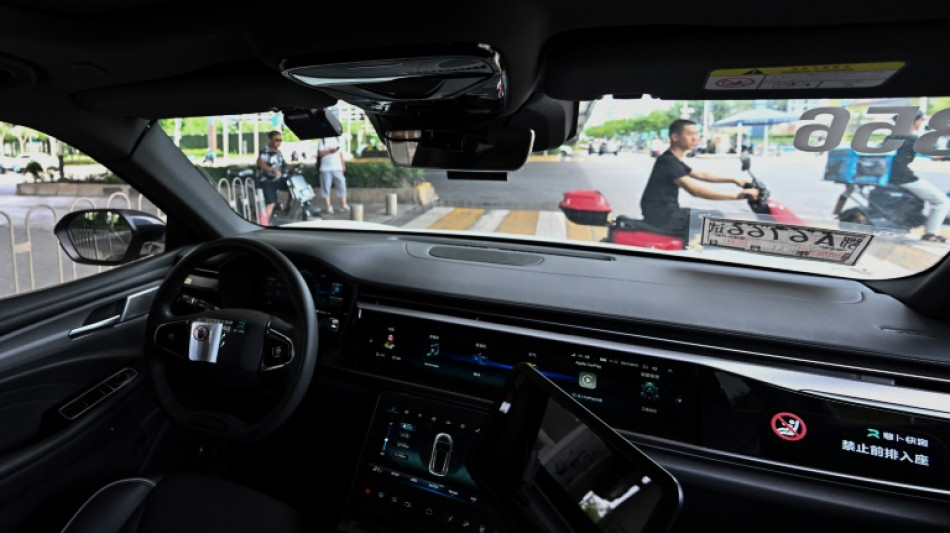
China's growing 'robotaxi' fleet sparks concern, wonder on streets / Photo: © AFP

 Williams boss hails Chadwick as F1 inspiration for women

 World No.1 Sinner delays return with China Open withdrawal

 South Lebanon children return to school destroyed by Israel strike

 Jewish group urges Berlin far-left vote winners to tackle antisemitism

 European stock markets climb as oil prices drop

 Trump accuser E. Jean Carroll finally has her damages
 Germany's Havertz, Musiala ruled out of Greece match with injury

 Ireland's Gaza stance spills from Eurovision into football
 Welcome aboard the Costa Serena, the Asian Games floating hotel

 Asian markets mixed after recent oil surge

 Cash for nature protection: hotelier's offer to Principe islanders
 US miner KoBold bets on AI to gain edge in DR Congo mineral hunt

 Internet disrupted in Ethiopia as conflict rages

 Asian markets mixed after oil gains

 'Genius' Ohashi bids for third Asian Games gold after world record

 India's 'Tree Father' plants for a greener future
 Hopping mad: New health warning stirs up Belgian brewers

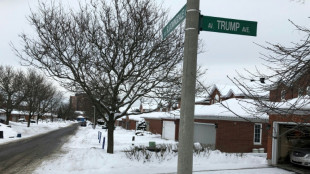 Canadian capital to rename 'Trump Ave'

 Pope heads to France on first state visit in 18 years

 Bacteria suspected in deaths of hundreds of baby whales off Argentina

 US 'must choose' whether to end war: Iran president to Fox News

 UN approves resolution on dealing with rising sea levels

 Yalcouye makes dream debut as Ivory Coast beat Ghana in AFCON qualifier

 Chicago's White Sox and Cubs book MLB playoff berths

 Last-gasp Gakpo strike snatches Dutch draw to sour Klopp debut

Turning heads as they cruise past office buildings and malls, driverless taxis are slowly spreading through Chinese cities, prompting both wariness and wonder.
China's tech companies and automakers have poured billions of dollars into self-driving technology in recent years in an effort to catch industry leaders in the United States.
Now the central city of Wuhan boasts one of the world's largest networks of self-driving cars, home to a fleet of over 500 taxis that can be hailed on an app just like regular rides.
At one intersection in an industrial area of Wuhan, AFP reporters saw at least five robotaxis passing each other as they navigated regular traffic.
"It looks kind of magical, like a sci-fi movie," a local surnamed Yang told AFP.
But not everyone shares Yang's awe.
Debate around safety was sparked in April when a Huawei-backed Aito car was involved in a fatal accident, with the company saying its automatic braking system failed.
A minor collision between a jaywalker and a Wuhan robotaxi last month re-ignited concerns.
Taxi drivers and workers in traditional ride-hailing companies have also raised fears of being replaced by artificial intelligence -- although the technology is far from fully developed.
- Five to 500 -
Wuhan's driverless cabs are part of tech giant Baidu's Apollo Go project, which first received licences to operate in the city in 2022.
Initially only five robocars ferried passengers around 13 square kilometres (five square miles) of the city of around 14 million.
Baidu says the taxis now operate in a 3,000 square kilometre patch -- more than a third of the total land area of Wuhan, including a small part of the city centre.
In comparison, US leader Waymo says the largest area it covers is 816 square kilometres, in Arizona.
When a car reaches its pickup point, riders scan a QR code with their phones to unlock the vehicle -- with the front seats blocked off over safety concerns.
The fares are currently heavily discounted, with a thirty-minute ride taken by AFP costing just 39 yuan ($5.43) compared with 64 yuan in a normal taxi.
"They are stealing our rice bowls, so of course we don't like them," Wuhan taxi driver Deng Haibing told AFP, using a popular Chinese term for livelihoods.
Deng said he fears robotaxi companies will push traditional drivers out of business with subsidised fares, before raising prices once they achieve domination -- similar to the strategy employed by ride-hailing apps in the 2010s.
"Currently the impact isn't too big because robotaxis aren't fully popularised and can't drive everywhere yet," Deng said.
- 'Simply not ready' -
The robotaxi fleet is a tiny fraction of the tens of thousands of taxis and ride-hailing cars in Wuhan.
More and more Chinese cities are rolling out policies to promote self-driving services though, part of a national push for tech supremacy.
Baidu and domestic rival Pony.ai have for years tested models of varying autonomy levels in industrial parks around the country.
Shanghai issued its first batch of provisional permits for fully driverless cars last month, and the capital Beijing has approved fully autonomous robotaxis in suburban areas.
The southwest city of Chongqing and southern tech hub of Shenzhen also have pilot projects underway.
Technology wise, there's still a long way to go before self-driving taxis become ubiquitous though, according to Tom Nunlist, tech policy analyst at Trivium China.
"Everybody seems to think autonomous driving is inevitable at this point, and frankly, I don't know that it is," he told AFP.
"Presently fully autonomous driving tech is simply not ready for large-scale deployment," he said.
Even in Wuhan's Apollo Go taxis -- which can spot obstacles and wait scrupulously at intersections -- ultimate responsibility for safety still lies with human officers monitoring rides remotely.
During one ride in an Apollo Go car, one manipulated the car's built-in touchscreen to remind AFP reporters to put on their seatbelts.
"Safety personnel provide strong assurances for your ride via remote 5G assistance technology," the Apollo Go app tells users.
Robotaxis are also far from able to replicate the human touch.
"Some customers have disabilities and (driverless cars) definitely wouldn't be able to help them, and some passengers are carrying large items," ride-hailing driver Zhao told AFP.
"Only a human can help."
C.Bruderer--VB