'Hong Kong's Dr Fauci' sounds alarm on next pandemic / Photo: © AFP

 China badminton 'still strong' despite Asian Games slump
 'Exceptional' Turner painting shown in Rome before sale
 European stocks climb as oil dips
 Spain aims to ban evictions until 2030 amid housing protests

 Kunlavut first Thai man to win Asian Games badminton singles gold

 French far right says antisemitism claims part of 'total war' to derail presidency bid

 'Gift from God': Rain brings relief from Indonesia toxic haze
 Ex-world snooker champion jailed for 7 years for child sex crimes
 French teens clash with police as school blockades intensify
 FIFA accuses UEFA of 'misinformation campaign' in bid for World Cup papers

 Myanmar airstrike toll hits 50 as families gather dead
 STARTRADER Raises Lloyd's of London Client Fund Insurance to USD 30 Million in Aggregate
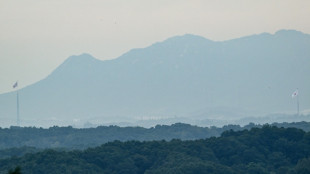 North Korean DMZ landmine blasts 'violation of armistice': Seoul

 Sabalenka 'fresh' for first tournament since losing No.1 spot
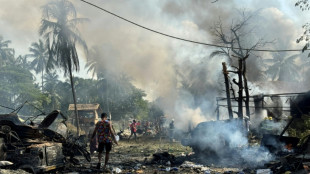 Myanmar airstrike death toll rises to 50: aid workers
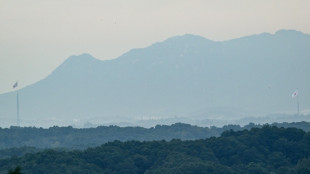 North Korean DMZ landmine blast 'violation of armistice'

 South Korea volleyball team latest to be bussed to wrong Games venue

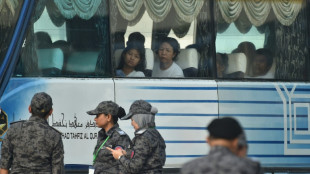 Malaysia starts sending Myanmar migrants home

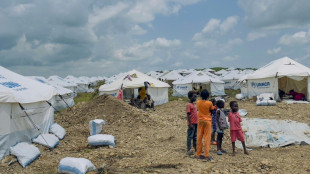 8.3 mn refugees at risk due to 'severe' funding cuts: UN
 Stocks drop and oil rises as Hormuz hopes fade

 OpenAI cancels release of newest model due to safety concerns

 AI bosses head to White House as safety pressure builds
 Batista sacked as Costa Rica coach after six months
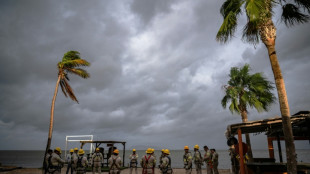
 Flooding, power cuts and evacuations as Hurricane Polo slams Mexico
 fiskaltrust launches e-invoicing across Europe

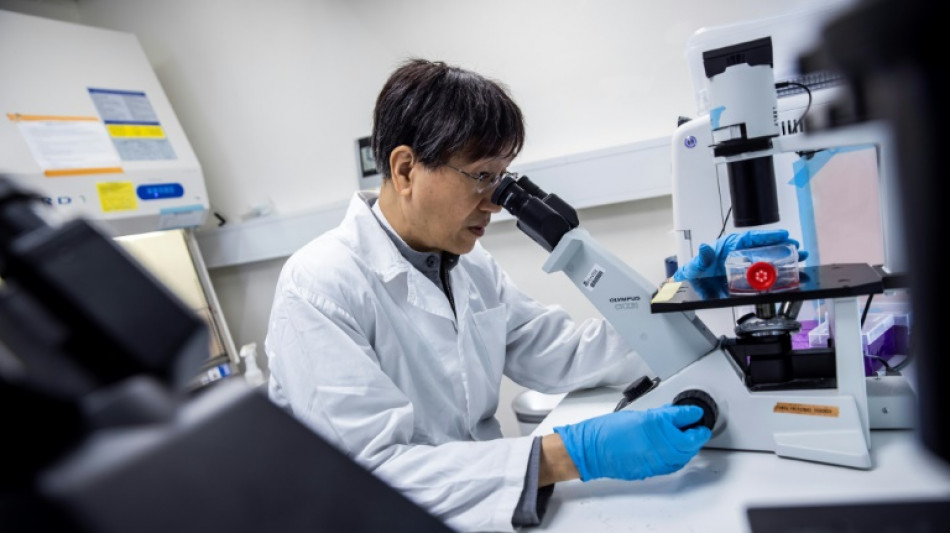
Hong Kong microbiologist Yuen Kwok-yung has done battle with some of the world's worst threats, including the SARS virus he helped isolate and identify. And he has a warning.
Another pandemic is inevitable and could exact damage far worse than Covid-19, according to the soft-spoken scientist sometimes thought of as Hong Kong's answer to top US health expert Anthony Fauci.
"Both the public and (world) leaders must admit that another pandemic will come, and probably sooner than you anticipate," he told AFP at the city's Queen Mary Hospital, where he works and teaches.
"Why I make such a horrifying prediction is because you can see clearly that the geopolitical, economic, and climatic changes are changing so rapidly," he told AFP.
Politicians must "come to their senses" and solve "global existential threats," he warns in his new autobiography "My Life in Medicine: A Hong Kong Journey".
While world leaders are more focused on "national or regional interests", Yuen said a rapidly changing climate coupled with emerging infectious diseases should be a top priority.
"This is something so important that we should not ignore."
- Humble background -
Yuen is a globally recognised authority on coronaviruses and infectious diseases, but he came from humble beginnings.
Born in Hong Kong in the late 1950s, he grew up in a 60-square-foot subdivided flat with his parents and three brothers.
Since graduating from medical school in 1981, he has worked in the city's public hospitals, where doctors are paid far less than in the private sector.
It was in 2003 when he leapt into the public consciousness, after he and his team successfully isolated and identified severe acute respiratory syndrome, better known as SARS.
It was a vital step towards testing, diagnosing and treating the disease, which emerged in southern China and Hong Kong before spreading globally.
The virus killed nearly 300 people in the city in just two months, a toll second only to mainland China.
That experience informed Yuen's approach to the Covid-19 pandemic, which ripped through Hong Kong due to lax vaccination, particularly among the elderly.
"We benefited from the 20 years of study that followed the SARS outbreak," he wrote in his book.
"Until factors beyond our ability to stop or overcome -- fear, ignorance, poor messaging, and deliberate misinformation -- the measures were effective" in buying Hong Kong time until the vaccines were developed.
In the end, despite tough lockdown measures and lengthy quarantines, Hong Kong recorded some three million infections -- about half its population -- and more than 13,800 deaths from Covid-19.
It was a frenetic time for Yuen, who became a familiar face as the government's go-to expert and penned more than 100 peer-reviewed studies on the virus.
It also put him in a delicate position on several occasions, including when his call to lift restrictions in 2022 was rejected when the city stayed aligned with China's zero-Covid doctrine of closed borders and quarantines.
The self-described medical "detective" also faced complaints that put his license at risk after he described the seafood market in China's Wuhan -- where the first cluster of coronavirus cases was detected -- as a "crime scene".
- 'Transparent investigation' -
Today, Yuen chooses his words carefully and avoids political subjects, but he maintains that understanding the origins of Covid-19 is key.
It is "important to properly do an investigation in a very open, transparent manner" so lessons can be learned for future pandemic prevention, he said.
The World Health Organization has called on China to be more transparent about the pandemic's origins, without making any firm conclusions on the source.
Last year, Yuen set up the Pandemic Research Alliance with peers in mainland China and the United States to share information and research on future threats.
"It is a bad idea to stop or inhibit these exchanges because it protects everyone," he said.
"If we do not talk about it... then another pandemic comes, we have to pay a huge price again."
A.Ruegg--VB