-
 Yemen's Houthis claim striking Riyadh airport, other Saudi sites
-
France roar back in Nations League as Italy beat Turkey

-
 Best-selling British author Jeffrey Archer dies aged 86
-
Messi readies for final farewell in Argentina send-off

-
 Military plane crash kills 32 in Nigeria
-
Esposito seals Italy win over Turkey in Nations League

-
 Olise powers France to win over Belgium in Nations League
-
Russia downplays plague reports as Trump offers US help

-
 High-flying Blazy turns to birdlife at Chanel
-
Trump says US moved bombers from UK base after 'threats'
-
 Riyadh's allies pledge troops as Yemen, Saudi Arabia attack Houthis
-
Brazilian stocks surge to record after Bolsonaro election lead

-
 Clashes erupt outside Kosovo parliament over war crimes court
-
Leaders to visit Pacific atoll at frontline of climate change

-
 Milan's Saelemaekers suffers ankle setback, faces lengthy spell out
-
ICC gives more details about arrest warrants for Taliban ministers

-
 Rubio arrives in Iceland to push for greater US presence in Arctic
-
Nigeria's Tinubu confirms 32 dead after military plane crash

-
 Putin allows Italy's UniCredit to sell part of Russian business
-
'Reckless' AI firms can't control models, says whistleblower

-
 Djokovic into China Open final as Medvedev out for hitting fan with ball
-
Switching on brain cells: the Nobel-winning science of optogenetics

-
 ICC unseals arrest warrants for Taliban education ministers
-
Quebec votes as separatist surge poses test for Canada PM

-
 Modric hopes fans back Croatia against Spain after England shame
-
Euro slides as concerns about French debt mount

-
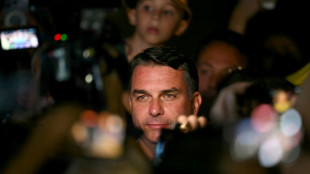 Bolsonaro rides right-wing surge into Brazil's election runoff
-
Former Trump press secretary Leavitt joins Fox News

-
 Turkey blocks X account of British reporter
-
Djokovic advances to China Open final as Medvedev out for hitting fan with ball

-
 Ukraine says using AI robot guns to shoot down new Russian drones
-
Disgraced former US House speaker dies at 84

-
 At Oct 7 memorial, Netanyahu says will be no Hamas rule in Gaza
-
Euro slides as worries about French debt grow

-
 Ukraine blames Russia for deadly sinking of Turkish ship in Black Sea
-
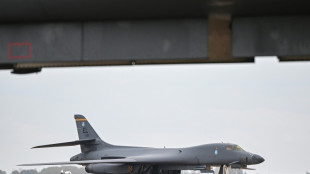
US withdraws all bomber aircraft from UK airbase
-
 UN rights council slams Taliban's 'oppression' of women
-
Drone hits Ethiopia IDP camp as fears grow of regional war

-
 Norway eyes partial ban of smart glasses
-
US-German trio wins medicine Nobel for illuminating the brain

-
 Two dead after ship catches fire, sinks in Black Sea
-
England captain Kane driven by desire for records says Tuchel

-
 Spain's PM calls snap election after housing bill defeat
-
N.Irish court hears challenge to disputed Orangemen parade

-
 STARCARES Equips Seven Foster Homes for Children and Young People in Tanzania
-
Talking points from the Bahrain Grand Prix in Malaysia

-
 Alleged Indian leader of neo-Nazi child abuse ring goes on trial in Paris
-
Yemen, Saudi Arabia target Houthis in new campaign as war escalates

-
 Euro, French stocks slide on France debt concerns
-
US-German trio wins medicine Nobel for work on optogenetics

In first, SpaceX's megarocket Starship succeeds in ocean splashdown
SpaceX's massive Starship rocket achieved its first ever splashdown during a test flight Thursday, in a major milestone for the prototype system that may one day send humans to Mars.
Sparks and debris flew off the spaceship as it came down over the Indian Ocean northwest of Australia, dramatic video captured by an onboard camera showed, even as it succeeded in its goal of surviving atmospheric re-entry.
"Despite loss of many tiles and a damaged flap, Starship made it all the way to a soft landing in the ocean!" tweeted SpaceX CEO Elon Musk. "Congratulations SpaceX team on an epic achievement!!"
The most powerful rocket ever built blasted off from the company's Starbase in Boca Chica, Texas at 7:50 am (1250 GMT), before entering orbit and soaring halfway across the globe, in a journey that lasted around an hour and five minutes.
Starship is key to Musk's vision of colonizing the Red Planet and making humanity an interplanetary species, while NASA has contracted a modified version to act as the final vehicle that will take astronauts down to the surface of the Moon under the Artemis program later this decade.
Three previous attempts have ended in its fiery destruction, all part of what the company says is an acceptable cost in its rapid trial-and-error approach to development.
"The payload for these flight tests is data," SpaceX said on X, a mantra repeated throughout the flight by the commentary team.
During the last test in March, the spaceship managed to fly for 49 minutes before it was lost as it careened into the atmosphere at around 27,000 kilometers per hour (nearly 17,000 mph).
Since then SpaceX made several software and hardware upgrades.
On Thursday it also succeeded in the first soft splashdown for the first stage booster called Super Heavy, in the Gulf of Mexico, to massive applause from engineers at mission control in Hawthorne in California.
The cheers grew even louder in the flight's final minutes. Ground teams whooped and hollered as the upper stage glowed a fiery red during its descent, in footage relayed by SpaceX's Starlink satellite network.
A piece of flying debris even cracked the camera lens, but the ship ultimately stuck the landing.
"Congratulations SpaceX on Starship's successful test flight this morning!" NASA chief Bill Nelson wrote on X. "We are another step closer to returning humanity to the Moon through #Artemis — then looking onward to Mars."
- Twice as powerful as Saturn V -
Designed to eventually be fully reusable, Starship stands 397 feet (121 meters) tall with both stages combined -- 90 feet taller than the Statue of Liberty.
Its Super Heavy booster produces 16.7 million pounds (74.3 Meganewtons) of thrust, about twice as powerful as the Saturn V rockets used during the Apollo missions -- though later versions should be more powerful still.
SpaceX's strategy of carrying out tests in the real world rather than in labs has paid off in the past.
Its Falcon 9 rockets have come to be workhorses for NASA and the commercial sector, its Dragon capsule sends astronauts and cargo to the International Space Station, and its Starlink internet satellite constellation now covers dozens of countries.
But the clock is ticking for SpaceX to be ready for NASA's planned return of astronauts to the Moon in 2026, using a modified Starship as the final vehicle to take astronauts from orbit down to the surface.
To accomplish this, SpaceX will need to first place a primary Starship in orbit, then use multiple "Starship tankers" to fill it up with supercooled fuel for the onward journey -- a complex engineering feat that has never before been accomplished.
At least one SpaceX fan has grown tired of waiting. Japanese billionaire Yusaku Maezawa announced this week he has canceled a planned trip around the Moon on Starship with a crew of artists, because he has no idea when it might actually happen.
T.Ziegler--VB