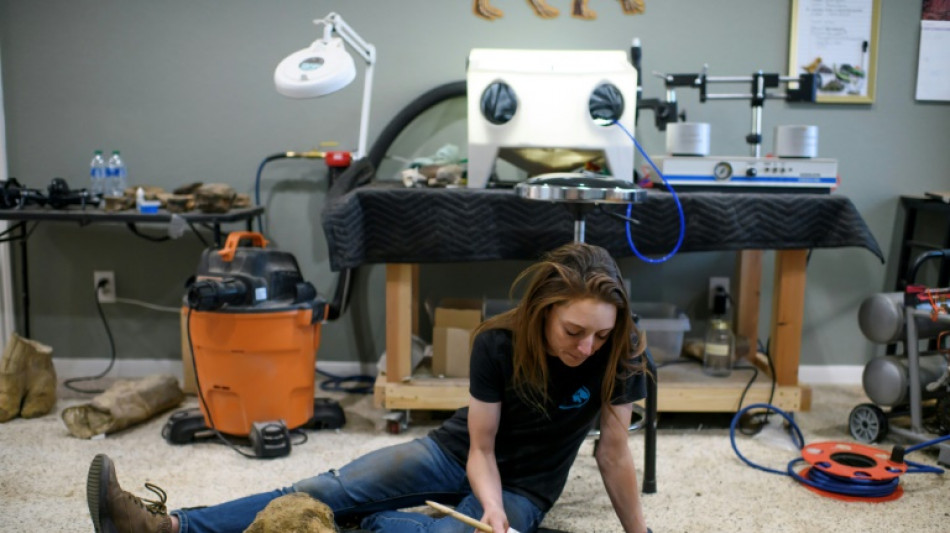
US restorationist solves 60-million-year-old dinosaur fossil 'puzzles' / Photo: © AFP

 Injury ends season for NHL Rangers star goalie Shesterkin

 Ten-man Spurs rescue draw at Man Utd, Arsenal survive Leeds scare

 Inter Milan dominate Parma to go top in Serie A

 Abbas postpones Palestinian legislative elections to September 2027

 'I don't feel fear': Fulham boss Arbeloa hits back as pressure mounts
 Hurricane Simon strengthens to category 4 as it nears western Mexico
 Alonso hails Henderson 'beauties' as Chelsea star rolls back the years

 Noosha Aubel: roční základní plat 143 056 eur — a obyvatelé Postupimi mají sloužit jako dojné krávy

 Romero claims Atletico late win at Alaves

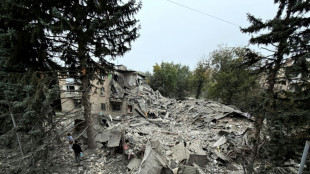 Zelensky blasts diesel deal as Russian strikes kill 16

 Arsenal back on track after Leeds scare, five-star Chelsea run riot

 Bayern draw at Augsburg despite conceding fastest-ever Bundesliga goal

 French prodigy Seixas becomes youngest Giro di Lombardia winner
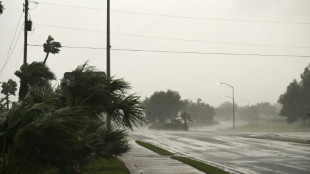
 Verstappen on pole position as he hunts first Singapore GP win

 Arsenal learned lessons from Brighton collapse, says Arteta

 Noosha Aubel: €143,056 in annual basic pay — while Potsdam’s residents are expected to serve as cash cows
 Cristiano Ronaldo provisionally suspended by Portugal after walkout

 Brilliant Renshaw ton puts Australia in strong position
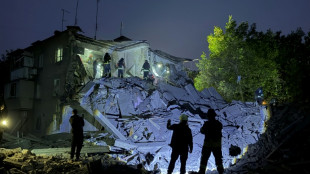 Zelensky blasts diesel deal after Russian strikes kill 15

 Cristiano Ronaldo provisionally suspended after Portugal walkout

 Alcaraz through in straight sets on Shanghai Masters opener

 Palmer signs contract to stay at Chelsea until 2034

 India detains 'cockroach' movement leaders in bid to thwart election protest

 Proposed next EU budget cut back in search for deal

 All Blacks learn from 'failed' Springboks series to punish Wallabies

Before a T. rex can tower over museum visitors or a Triceratops can show off its huge horns, dinosaur fossils must first be painstakingly reconstructed -- cleaned, fit together and even painted.
For US restorationist Lauren McClain, the process is like putting together a giant 3D puzzle.
McClain's job begins at her home workshop near Houston, Texas, where she carefully clears away dirt stuck to the more than 60-million-year-old remains using a tiny drill with an air compressor, similar to a dentist's tool.
Then, she must assemble this ancient puzzle -- even though pieces are almost always missing.
She molds fillings for the lost parts, plugging the holes and repairing the nicks that have appeared in Edmontosaurus femurs or Megalodon teeth over millions of years. She has even worked on a fossil from a 200-million-year-old Eurypterida, or sea scorpion.
McClain doesn't actually like puzzles very much, she says.
But when it "turns into a dinosaur... I can get down with those kinds of puzzles," the 33-year-old says.
"When you've got something that's in a hundred pieces, you really have to study all of those edges and how they align, and really, really hone in on those details to rebuild it into what it was," McClain explains.
Many of the giants McClain reconstructs once roamed the land which is now the United States, ranging from Florida in the southeast all the way to Montana and the Dakotas in the north and California in the west.
- Prehistoric femur -
McClain has been a dinosaur buff since she was a child fan of "Jurassic Park." She even held her wedding at the Houston Museum of Natural Science, home to several dino skeleton recreations.
While working as a graphic designer, McClain began joining fossil excavations a few years ago, and with the help of a few professional paleontologist mentors, set up her own restoration venture, called Big Sky Fossils.
She quit her desk job to focus on her company full time seven months ago.
Recently, McClain has been working on the cranial dome of a Pachycephalosaurus belonging to a Texas museum, and, while looking for more space to expand her workshop, has been working in her garage to restore a Hadrosaurid femur almost as big her.
First, she inserts a metal rod into the giant thigh bone, for stability. Next, she gives it a good clean and uses a powerful glue to bind all the pieces together. Then, an epoxy putty fills in all the gaps where pieces of the fossil have fallen away. Finally, McClain paints all the new parts the same color as the original.
"Restoring missing pieces from fossils, it's oftentimes the hardest part," McClain says.
"Because not only do you need to have an understanding of the anatomy of that specific dinosaur, but you need a good reference."
"I talk to a lot of paleontologists in order to get it right," she adds.
- Patience and observation -
Movies make audiences believe that dinosaur fossils are dug up from the ground intact, says David Temple, a paleontology curator at the Houston Museum of Natural Science.
"But in reality, it's not like that at all," he explains.
"Every fossil ever found needs some degree of curation, some degree of restoration, some degree of consolidation, because even the act of getting it out of the ground -- it's destructive," says Temple, speaking in the museum's Cretaceous period section.
Once restored, the original fossils are also used to make life-like replicas, so that several versions of the same model can be displayed in multiple places at once.
"A lot of paleontologists will prep their own fossils, but they don't all do that," Temple says. "A lot of times they recognize that the people that do this, it's a very specialized skill."
Sometimes, when pieces of bone that don't quite fit are glued together, the paleontologists and restorationists joke that they have invented "a new species," he says.
"Patience is very important. Observation is very important," he adds.
Most of all, restoration work requires care, Temple says.
S.Leonhard--VB