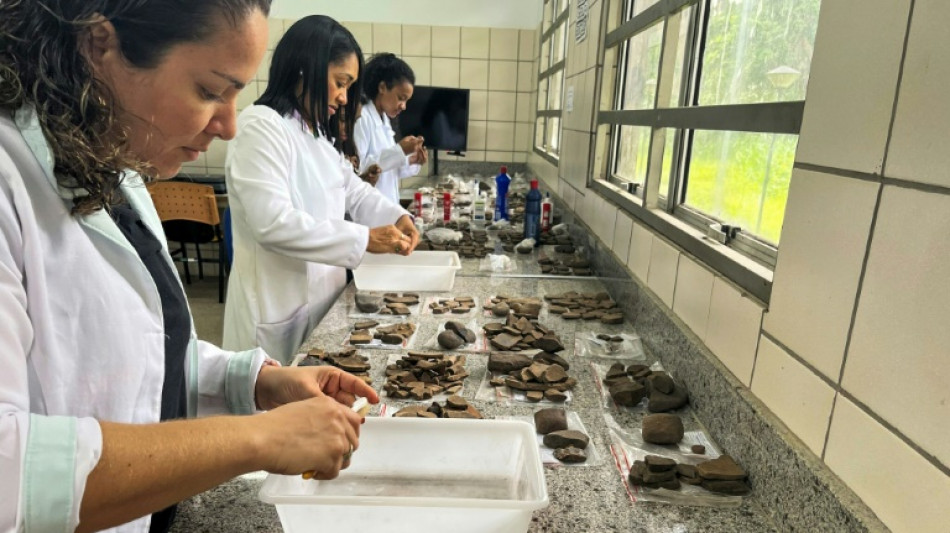
Massive trove of ancient artifacts, skeletons found in Brazil / Photo: © WLage Arqueologia/AFP

 Thousands flee wildfires in southern Europe
 South Korean tycoon ordered to pay $644m in divorce
 Hundreds flee French peninsula by boat to escape wildfire

 Brian Lara Stadium hosts maiden Test as West Indies face Pakistan

 Volkswagen profit plunges as carmaker weighs mass job cuts
 India protest leaders to meet govt after Modi vows action
 Fear, arrests keep Cambodians quiet decade after critic's murder

 Over 80% of Mexican exports exempt from new US tariffs

 Is 'superstar' Pogacar's Tour de France domination boring?
 Iran ramps up executions under shadow of war

 Rosalia's Argentine fans up in arms over alleged World Cup snub

 Six candidates to lead UN take stage for televised debate

 King Charles opens slimmed down Commonwealth Games in Glasgow

 US unveils new tariffs on 60 partners as Trump rebuilds trade agenda

 WNBA viral star Cunningham wades into trans athletes row

 Hearn dismisses Fury talk of Joshua no-show for super fight

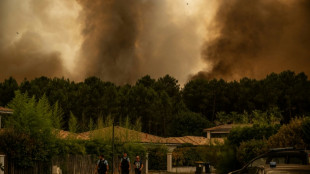 'Like a war zone': France evacuates 20,000 due to wildfires

 Ships avoid Ukrainian grain ports after Russian attacks

 Oil passes $100 a barrel again: why it's more serious this time

 Who are the six candidates vying to lead the UN?

 Hamilton proud of recovery after hitting rock bottom a year ago

 Carapaz eyes polkadot mountains jersey after stage win
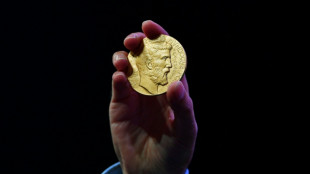 Fields medal awarded to four young mathematicians

 Carapaz claims Tour de France stage as Pogacar loses key team-mate

 Alonso welcomes Aston Martin upgrade, warns against unreal expectations

Workers were just starting construction on a new apartment complex in northeastern Brazil when they began finding human bones and pottery shards, their edges worn smooth by time.
Soon, excavations at the site in the coastal city of Sao Luis had uncovered thousands of artifacts left by ancient peoples up to 9,000 years ago -- a treasure trove archaeologists say could rewrite the history of human settlement in Brazil.
The lead archaeologist on the dig, Wellington Lage, says he had no idea what he was getting into when Brazilian construction giant MRV hired his company, W Lage Arqueologia, in 2019 to carry out an impact study at the site -- part of the routine procedure of preparing to build an apartment building.
Covered in tropical vegetation and bordered by the urban sprawl of Sao Luis, the capital of Maranhao state, the six-hectare (15-acre) plot was known as Rosane's Farm, for the daughter of a late local landholder.
Researching the site, Lage learned intriguing vestiges had been found in the area since the 1970s, including part of a human jawbone in 1991.
His team soon found much more: a flood of stone tools, ceramic shards, decorated shells and bones.
In four years of digging, they have unearthed 43 human skeletons and more than 100,000 artifacts, according to Brazil's Institute for National Historic and Artistic Heritage (IPHAN), which announced the discovery this week, calling it "grandiose."
Researchers now plan to catalogue the artifacts, analyze them in detail, put them on display and publish their findings.
"We've been working four years now, and we've barely scratched the surface," said Lage, a 70-year-old Sao Paulo native whose wife and two children are also archaeologists.
- Rewriting history -
The preliminary findings are already grabbing attention in the scientific community.
Lage says his team -- which grew to 27 people in all, including archaeologists, chemists, a historian and a documentary filmmaker -- has found four distinct eras of occupation at the site.
The top layer was left by the Tupinamba people, who inhabited the region when European colonizers founded Sao Luis in 1612.
Then comes a layer of artifacts typical of Amazon rainforest peoples, followed by a "sambaqui": a mound of pottery, shells and bones used by some Indigenous groups to build their homes or bury their dead.
Beneath that, around two meters (6.5 feet) below the surface, lies another layer, left by a group that made rudimentary ceramics and lived around 8,000 to 9,000 years ago, based on the depth of the find.
That is far older than the oldest documented "pre-sambaqui" settlement found so far in the region, which dates to 6,600 years ago, Lage said.
"This could completely change the history of not just the region but all of Brazil," he told AFP.
Scientists have long debated exactly when and how humans arrived in and populated the Americas from Asia.
Lage's find suggests they settled this region of modern-day Brazil at least 1,400 years earlier than previously thought.
- 'Landmark' -
Archaeologists now plan to date the artifacts more precisely using isotopic analysis.
Already, the site "represents a landmark in our understanding of prehistoric Brazil," IPHAN said in a statement.
"It's a testament to the long history of human settlement (in the region), demonstrating it predates what had previously been recorded in Brazil."
Archaeologist Arkley Bandeira of the Federal University of Maranhao, which is building a lab and museum to house the artifacts with funding from MRV, said in a statement the site could provide valuable new insights into the culture and history of ancient peoples lost to the past.
"These finds... play a crucial role in narrating our long history," he said.
H.Weber--VB