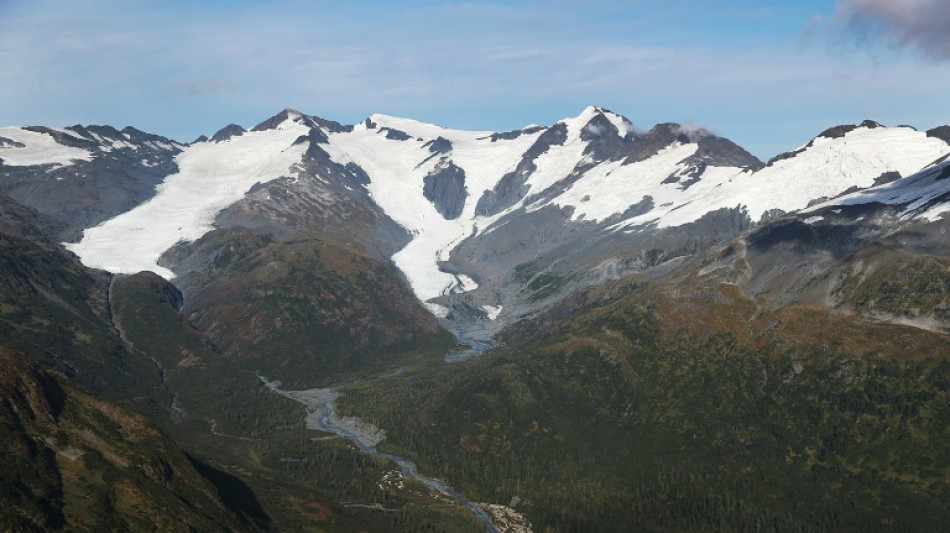
Dwindling snowpack could amplify water crisis: study / Photo: © GETTY IMAGES NORTH AMERICA/AFP/File

 Thousands flee wildfires in southern Europe
 South Korean tycoon ordered to pay $644m in divorce

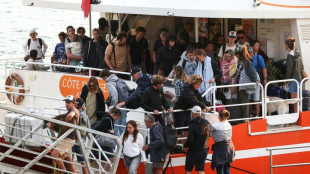 Hundreds flee French peninsula by boat to escape wildfire

 Brian Lara Stadium hosts maiden Test as West Indies face Pakistan

 Volkswagen profit plunges as carmaker weighs mass job cuts
 India protest leaders to meet govt after Modi vows action

 Fear, arrests keep Cambodians quiet decade after critic's murder

 Over 80% of Mexican exports exempt from new US tariffs

 Is 'superstar' Pogacar's Tour de France domination boring?

 Iran ramps up executions under shadow of war

 Rosalia's Argentine fans up in arms over alleged World Cup snub

 Six candidates to lead UN take stage for televised debate

 King Charles opens slimmed down Commonwealth Games in Glasgow

 US unveils new tariffs on 60 partners as Trump rebuilds trade agenda

 WNBA viral star Cunningham wades into trans athletes row

 Hearn dismisses Fury talk of Joshua no-show for super fight

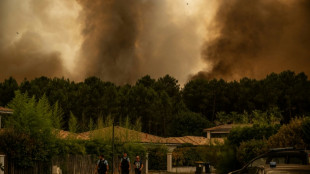 'Like a war zone': France evacuates 20,000 due to wildfires

 Ships avoid Ukrainian grain ports after Russian attacks

 Oil passes $100 a barrel again: why it's more serious this time

 Who are the six candidates vying to lead the UN?

 Hamilton proud of recovery after hitting rock bottom a year ago

 Carapaz eyes polkadot mountains jersey after stage win
 Fields medal awarded to four young mathematicians
 Carapaz claims Tour de France stage as Pogacar loses key team-mate

 Alonso welcomes Aston Martin upgrade, warns against unreal expectations

The amount of snow that stays on the ground is rapidly dwindling due to human-caused climate change, threatening the water supply of hundreds of millions of people, researchers warned Wednesday.
Global warming -- which hits high mountain areas especially hard -- has already reduced snowpack affecting up to 80 percent of the northern hemisphere's population, a trend that is set to continue, scientists reported in the journal Nature.
Accumulated snow is a naturally stored resource that becomes a vital reserve of fresh water as it melts in spring.
But the impact of a warming world on snowpack is deceptively hard to measure due to natural year-to-year variability, and the complex interplay of temperature and precipitation.
That is why even as temperatures rise, some regions are seeing more snow while others are seeing less.
But the researchers warn some populations reliant on melting snowpack for water supply should prepare for a future without snow.
In the new study, researchers at Dartmouth University sifted through four decades of precipitation and snowpack data across the northern hemisphere in March, when spring thaw begins to turn snow into water.
Building on the observational data, the team used climate models to measure the impact of changes in snowpack, with and without human influence.
Some 80 percent of snowpack, they found, is in regions cold enough to be resilient to rising temperatures, which has seen Earth's surface warm on average 1.2 degrees Celsius since the 19th century.
But the other 20 percent occurs in regions reaching a temperature threshold scientists called the "snow-loss cliff", where each additional degree of warming above minus 8C depletes a larger percentage of winter snow.
The southwestern and northeastern United States, along with central and eastern Europe have seen snowpack declines between 10 percent and 20 percent per decade since the 1980s.
Four out of five people in the northern hemisphere live in these regions of "tremendous snow vulnerability," Justin Mankin, associate professor of geography at Dartmouth University and study author, told AFP.
- Regime Shift -
River basins, for example, along the upper Mississippi in the US and the Danube in Europe -- home to 84 and 92 million people respectively -- have seen a 30 and 40 percent decline in spring water due to snowpack loss.
"By the end of the 21st century, we expect these places to be close to snow-free by the end of March," lead study author Alexander Gottlieb, a doctoral student in the Ecology, Evolution, Environment and Society program at Dartmouth, told AFP.
A warmer climate makes for wetter, more humid winters, resulting in more rain than snow.
"The human and ecosystem consequences of snow loss can extend far beyond the winter," Mankin said.
"This regime shift from snow to rain means water managers have had to release water in the middle of the winter" to reduce flood risk, he added.
"That means releasing this really crucial water supply, and effectively losing it to the ocean."
Apart from water security concerns, the repercussions of snow loss extend to winter-dependent economies, impacting sectors such as tourism and skiing.
Beyond the ecological impacts, Mankin suggested that a transition from snow to rain could also harm ecosystem health, encourage the spread of pests, and render forests more susceptible to drought-induced wildfires.
L.Wyss--VB