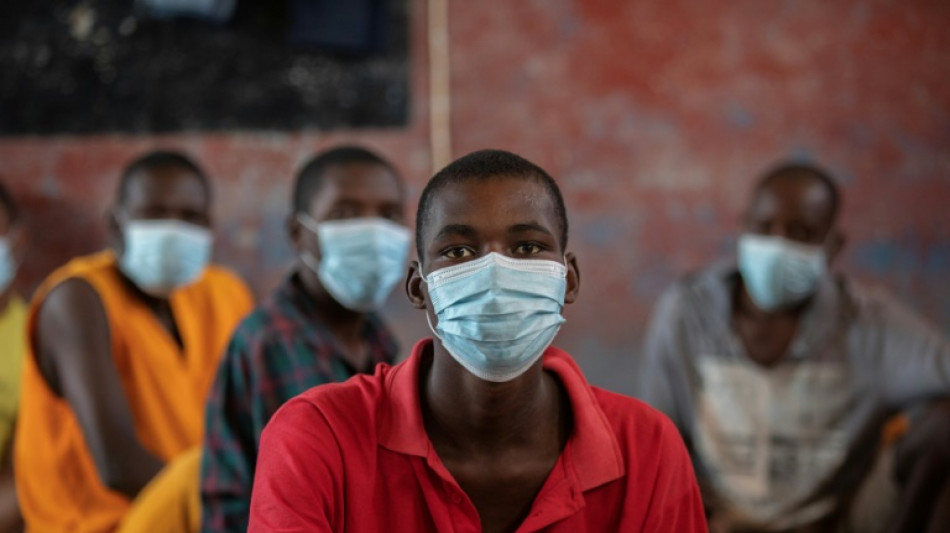
AI use in Mozambique jails spawns new hope in TB fight / Photo: © AFP

 India protest leaders to meet govt after Modi vows action

 Fear, arrests keep Cambodians quiet decade after critic's murder
 Over 80% of Mexican exports exempt from new US tariffs

 Is 'superstar' Pogacar's Tour de France domination boring?
 Iran ramps up executions under shadow of war

 Rosalia's Argentine fans up in arms over alleged World Cup snub

 Six candidates to lead UN take stage for televised debate

 King Charles opens slimmed down Commonwealth Games in Glasgow

 US unveils new tariffs on 60 partners as Trump rebuilds trade agenda

 WNBA viral star Cunningham wades into trans athletes row

 Hearn dismisses Fury talk of Joshua no-show for super fight

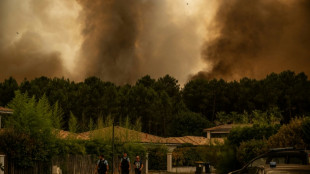 'Like a war zone': France evacuates 20,000 due to wildfires

 Ships avoid Ukrainian grain ports after Russian attacks

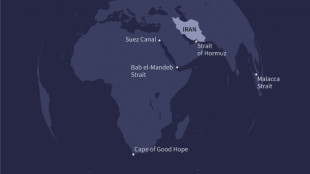
 Oil passes $100 a barrel again: why it's more serious this time

 Who are the six candidates vying to lead the UN?

 Hamilton proud of recovery after hitting rock bottom a year ago

 Carapaz eyes polkadot mountains jersey after stage win
 Fields medal awarded to four young mathematicians

 Carapaz claims Tour de France stage as Pogacar loses key team-mate

 Alonso welcomes Aston Martin upgrade, warns against unreal expectations

 Anderson declares Man City 'kings of Manchester' after £116 mn move

 Relieved Russell says Mercedes have solved his power problems mystery

 Oil soars above $100 as Middle East fears grow

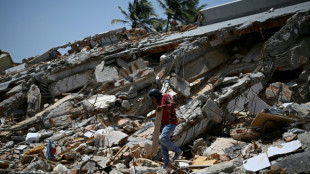 Venezuelans turn to scrap collecting in quake-hit beach 'paradise'

 Heptathlon champion Johnson-Thompson joins list of Commonwealth Games absentees

A programme using artificial intelligence to test inmates in a high security Mozambican jail for tuberculosis has spawned hope that the new tech can help eradicate the disease.
Teeming prisons are a hotbed of TB, the world's second deadliest communicable disease after Covid, according to the World Health Organization. Mozambique, a country of 32 million people, recorded about 120,000 infections last year.
Caused by a bacteria that most often affects the lungs, it infected more than 10 million people in 2022 and killed 1.3 million, according to WHO.
Almost one in four infections last year occurred in Africa.
In the sprawling courtyard of the maximum security jail in the Mozambican capital Maputo, an inmate in an orange T-shirt stood before a tripod with a wide white tablet.
Behind him, a doctor scoured a two-piece portable X-ray machine connected to an AI programme that has been hailed as a breakthrough in the fight against tuberculosis.
"It processes it in real time, we have the results in less than five minutes," the doctor said.
The image popped on the computer of a technician sitting at a table outside a medical tent a few metres away, along with a diagnosis.
"Radiological signs suggestive of tuberculosis -- negative," the message said.
The programme is part of a large test run of the technology to scan all inmates at three prisons in Maputo. It is being conducted by a local non-profit organisation supported by the Stop TB Partnership, a UN-backed entity.
Early diagnosis is key to save lives and tackle the spread of the disease.
While a chronic cough is a hallmark of infection, people can also carry TB without showing symptoms. Prisons are a perfect breeding ground due to crammed cells and airborne transmission.
Traditional spit, skin or blood tests for TB involves visits to a lab and the results can take up to three days. The quickest time for reliable results is 24 hours.
- 'Great leap in technology' -
The combination of AI and portable X-ray machines is faster and eliminates the need for visits to clinics and radiologists, who can be scarce in poor rural areas, said Stop TB's deputy head Suvanand Sahu.
"This is a great leap in technology," he said.
At the Maputo Provincial Penitentiary, prisoners testing positive are placed in isolation, locked in a quarantine room behind a rusty metal door.
Inside, about a dozen inmates wearing face masks sit on mattresses thrown on the ground. Clothing, blankets and other belongings hang from a line strung between two discoloured blue pillars.
Serious cases are taken to a medical ward.
Mozambique's jails were about 50 percent over capacity in 2022, according to the UN.
"It's not easy to see your friends playing and walking there but you have to accept that I am sick," Kennet Fortune, an inmate who has spent 10 year behind bars for drug-related offences, said pointing at the trees in the prison yard.
He is currently undergoing treatment and the process can take months. "When the time comes, I'll be out," he said.
A WHO report this month found that global deaths from tuberculosis dipped in 2022, showing progress towards eradicating the disease.
The UN health agency said 7.5 million people were diagnosed with TB in 2022 -- the highest figure since it began monitoring in 1995.
Sahu of Stop TB said he was hoping that the success of pilot programmes could help get funding to scale up the use of AI in diagnosing tuberculosis.
"Only a few years ago, if I was to say in a meeting that we can bring X-rays to all communities and have them read by a artificial intelligence with no need for radiologists, they would have kicked me out of the room and told me to go write a sci-fi novel," he said.
B.Baumann--VB