Chile coup exiles recall how France saved them from Pinochet / Photo: © AFP

 Trump under pressure from all sides over Chinese AI surge

 ICC member states decide fate of embattled prosecutor Karim Khan
 Dodgers return to Trump White House despite fan anger

 Lyles, Richardson ease into 100m semis at US athletics championships
 Salman Rushdie testifies at knife attacker's US terror trial

 World Bank confirms plan to phase out China lending by 2031
 US panel backs trendy peptides despite safety concerns

 Justice Dept withdraws NY Times subpoenas over Trump plane report

 Barcelona's De Jong returns from World Cup with torn ligament
 Albania police teargas protesters against Trump-linked resort
 US panel says to loosen restrictions on popular peptide despite safety concerns

 Verstappen swerves around future questions
 EU renews online child sex abuse detection powers
 Airbus, Boeing fly in different directions at Farnborough

 Bab al-Mandeb Strait: another key oil shipping route under threat
 Deadly wildfires in Europe force thousands to flee

 NATO to overhaul European fuel pipeline network
 US trade envoy to make tariff announcement as 10% duty soon expires

 Trump stuns Saudis by pinning nuclear deal to Israel ties

 Tough day for Ubisoft stock topped with weaker revenues
 Swelling jet fuel costs hit American Airlines outlook
 Carapaz climbs unopposed to Tour de France 18th stage win
 Sooryavanshi hits maiden 50 as India thump Zimbabwe in T20
 ECB opens door to September rate-hike as Iran war flares up
 World Bank estimates Venezuela quakes caused $19.6 bn in damage
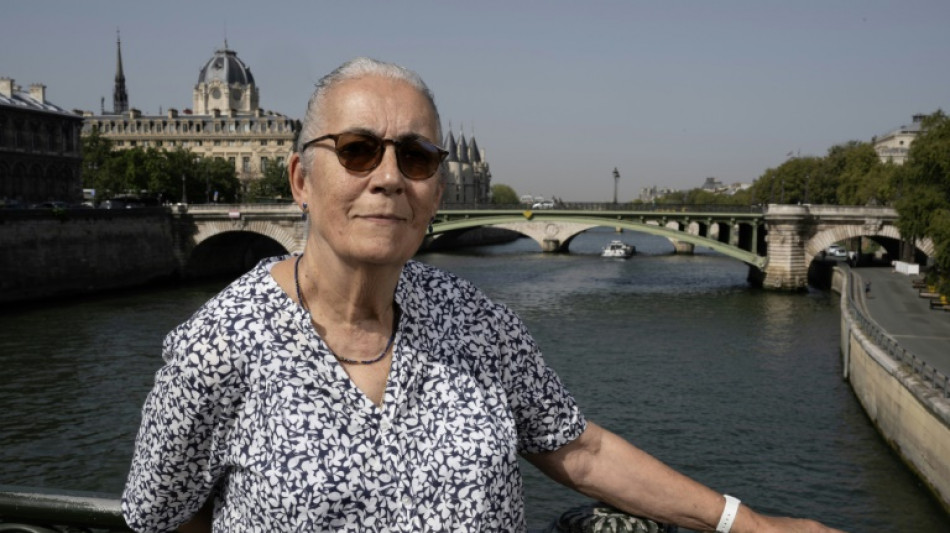
"Marie-France" was born in Chile in the frightening aftermath of a bloody coup that forced her family to flee its homeland, her name a grateful nod to the country that saved her.
Her mother still remembers how they were welcomed with open arms in France along with thousands of other South American political refugees in the 1970s and 1980s.
Fifty years ago on September 11, 1973, General Augusto Pinochet overthrew Chile's democratically elected socialist president Salvador Allende. With the presidential palace being bombed by the air force, Allende killed himself later that day after an emotional radio address.
In her home in the port of Valparaiso, heavily pregnant Maria Eugenia Mignot-Verscheure could hear "the sound of helicopters".
Events were unfolding quickly. Maria Eugenia, 25, was an Allende supporter and wanted to resist the coup "as much as possible".
But her brother warned her that she was on a list of "people to be imprisoned", and a few days later she found refuge along with her French husband in the country's embassy in the capital Santiago.
Her daughter Marie-France was born in a clinic in the Chilean capital under "embassy protection".
A French diplomat also came to the family's aid as they attempted to flee the country, she told AFP.
An army officer had removed them from a plane as it was about to take off, claiming that her daughter was "Chilean and not allowed safe conduct".
But the diplomat insisted: "She is French and she is going to France."
"They didn't dare imprison us. We got back on the plane. The doors were closed and we arrived in France," Maria Eugenia recalled.
Her daughter's name was a "subconscious" tribute to the goodwill shown towards her family by France.
Eugenia, now in her 70s, named her second daughter Maria Paz (Maria Peace).
- 'Big family' -
Between 1964 and 1979, France welcomed 15,000 political refugees from Brazil, Argentina, Uruguay and especially Chile, as a wave of military dictatorships took power in South America.
The story of this exodus is told in France's National Museum of the History of Immigration in Paris.
While French society has become increasingly hostile towards immigration in recent decades, Maria Eugenia and all the Latin Americans interviewed by AFP emphasised that they were welcomed "with open arms" upon their arrival in the country.
"We were like a big family," said Leyla Guzman, a 53-year-old Chilean woman who spent a year as a child in a reception centre in the Paris suburb of Fontenay-sous-Bois, where she now works for the local council.
At the entrance of the building, now a community centre, a plaque states that a Catholic group welcomed 771 Latin American refugees between 1973 and 1987, almost half of them minors.
The plight of the refugees became a cause celebre for the French left, with many settling in the "Red belt" of communist-controlled suburbs around Paris.
"A whole network was created to provide the best welcome possible to Latin American refugees," Guzman said.
They "allowed us to emancipate ourselves", find a job and "live", said Jose Luis Munoz, a 74-year-old Uruguayan who arrived in France in 1976 after the coup in Argentina.
Many of them never thought that they would end up living in France. Another Uruguayan, Jose Luis Rodriguez, 75, recalled arriving in Europe with just one thought: "To tell my parents that I was alive."
- Pinochet a 'Darth Vader' -
The thwarted dreams of Allende's Chilean democratic revolution deeply marked the French left, which got their first president with the election of Francois Mitterrand only in 1981.
"Allende represented for the left a hope for this famous third way: a properly democratic socialist government," said former French magistrate Philippe Texier, 82, who founded the Lawyers for Chile group to denounce the crimes of the Pinochet regime.
Many Chilean exiles in France have since distinguished themselves, including the left-wing filmmaker Carmen Castillo, who was awarded France's highest honour, the Legion d'honneur, in July.
Rodrigo Arenas and Raquel Garrido, both children of Chilean exiles, were elected to the French parliament in 2022 as radical-left lawmakers.
"We were raised with a very strong political consciousness," said Arenas, who arrived in France in 1978 at the age of four.
"For me, it was a bit like 'Star Wars', with Pinochet as Darth Vader. We were the Jedi."
M.Betschart--VB