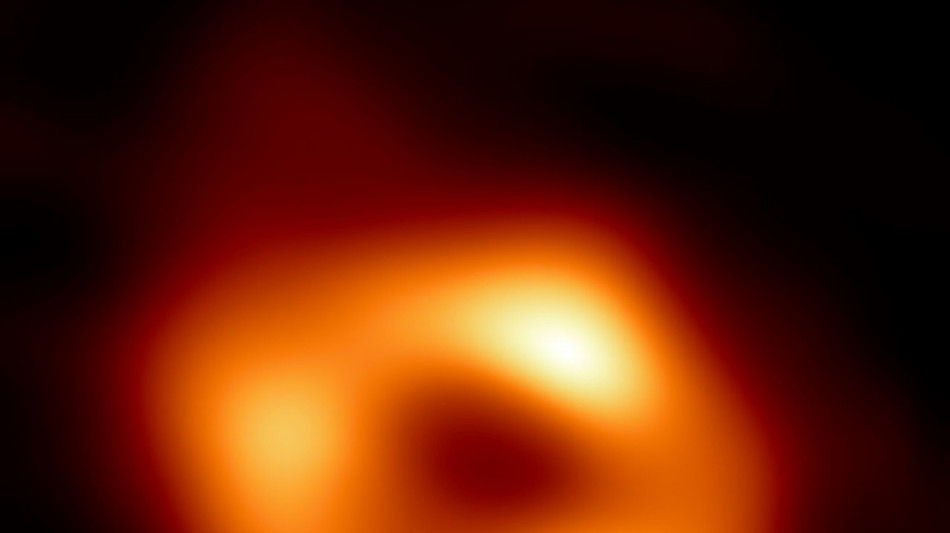
Our galaxy's black hole not as sleepy as thought: astronomers / Photo: © European Southern Observatory/AFP/File

 Six candidates to lead UN take stage for televised debate

 King Charles opens slimmed down Commonwealth Games in Glasgow

 US unveils new tariffs on 60 partners as Trump rebuilds trade agenda

 WNBA viral star Cunningham wades into trans athletes row

 Hearn dismisses Fury talk of Joshua no-show for super fight

 'Like a war zone': France evacuates 20,000 due to wildfires
 Ships avoid Ukrainian grain ports after Russian attacks

 Oil passes $100 a barrel again: why it's more serious this time

 Who are the six candidates vying to lead the UN?

 Hamilton proud of recovery after hitting rock bottom a year ago

 Carapaz eyes polkadot mountains jersey after stage win

 Fields medal awarded to four young mathematicians

 Carapaz claims Tour de France stage as Pogacar loses key team-mate

 Alonso welcomes Aston Martin upgrade, warns against unreal expectations

 Anderson declares Man City 'kings of Manchester' after £116 mn move

 Relieved Russell says Mercedes have solved his power problems mystery

 Oil soars above $100 as Middle East fears grow

 Venezuelans turn to scrap collecting in quake-hit beach 'paradise'

 Heptathlon champion Johnson-Thompson joins list of Commonwealth Games absentees

 Nigeria's Dangote raises $2.5bn to expand Africa's largest refinery

 Oil soars to $100 on fresh Mideast attacks

 Coal-fired power generation rising globally on Mideast war: IEA

 Premier League champions Arsenal sign Greece winger Tzolis from Brugge

 French Jewish DJ sues after activists disrupt gig: lawyer

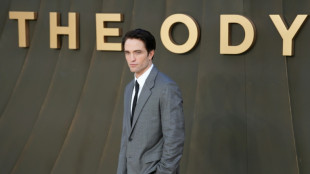 Venice film festival promises Pattinson, Oasis and Musk doc

The supermassive black hole lurking at the centre of our Milky Way galaxy is not as dormant as had been thought, a new study shows.
The slumbering giant woke up around 200 years ago to gobble up some nearby cosmic objects before going back to sleep, according to the study published in the journal Nature on Wednesday.
NASA's IXPE space observatory spotted an x-ray echo of this powerful resurgence of activity, the researchers said.
The supermassive black hole Sagittarius A* -- abbreviated to Sgr A* -- is four million times more massive than the Sun. It sits 27,000 light years from Earth at the centre of the Milky Way's spiral.
Last year astronomers revealed the first-ever image of the black hole -- or rather, the glowing ring of gas that surrounds its blackness.
Sgr A* has "always been seen as a dormant black hole," said Frederic Marin, a researcher at France's Strasbourg Astronomical Observatory and the study's first author.
Most supermassive black holes squatting at the middle of their galaxies go dormant after swallowing up all the nearby matter.
"Imagine a bear going into hibernation after devouring everything around it," Marin told AFP.
But the international team of researchers discovered that at around the end of the 19th century, Sgr A* came out of its slumber and consumed any gas and dust unlucky enough to be within its reach.
The feeding frenzy lasted from several months to a year, before the beast went back into hibernation.
- Million times brighter -
When it was active, the black hole was "at least a million times brighter than it is today," Marin said.
Its awakening was noticable because nearby galactic molecular clouds started giving off vastly more x-ray light.
The surge in x-ray light was as "if a single glow-worm hidden in a forest suddenly became as bright as the Sun," French research agency CNRS said in a statement.
Astronomers using NASA's IXPE (Imaging X-ray Polarimetry Explorer) space observatory managed to track the x-ray light and found that it pointed straight back at Sgr A*.
The black hole "emitted an echo of its past activity, which we managed to observe for the first time," Marin said.
The pull of gravity from black holes is so intense that nothing can escape, including light.
But when matter is sucked beyond the black hole's final boundary, known as the event horizon, it emits a massive amount of heat and light before disappearing into the darkness.
Exactly what caused Sgr A* to briefly emerge from its dormant state remains unclear. Could a star or cloud of gas and dust have ventured too close?
The astronomers hope that further observations from the IXPE observatory will help them better understand what happened -- and perhaps reveal more about the origin of supermassive black holes, which remains shrouded in mystery.
M.Furrer--BTB