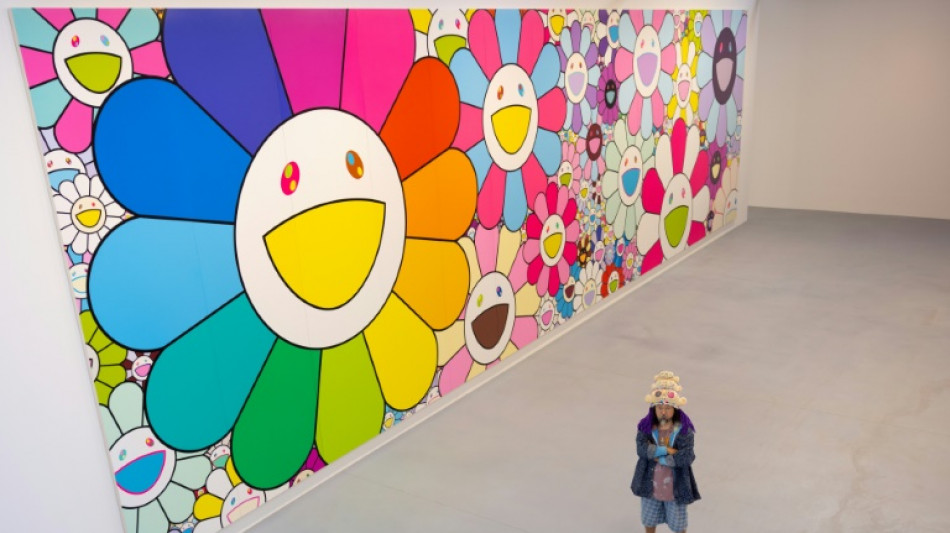
Takashi Murakami loves and fears AI / Photo: © AFP

 Six candidates to lead UN take stage for televised debate
 King Charles opens slimmed down Commonwealth Games in Glasgow

 US unveils new tariffs on 60 partners as Trump rebuilds trade agenda

 WNBA viral star Cunningham wades into trans athletes row
 Hearn dismisses Fury talk of Joshua no-show for super fight

 'Like a war zone': France evacuates 20,000 due to wildfires
 Ships avoid Ukrainian grain ports after Russian attacks

 Oil passes $100 a barrel again: why it's more serious this time
 Who are the six candidates vying to lead the UN?
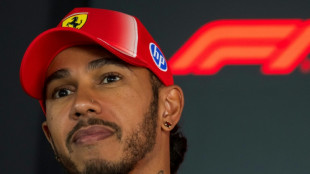 Hamilton proud of recovery after hitting rock bottom a year ago

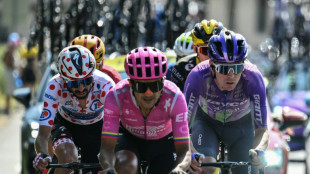 Carapaz eyes polkadot mountains jersey after stage win
 Fields medal awarded to four young mathematicians

 Carapaz claims Tour de France stage as Pogacar loses key team-mate

 Alonso welcomes Aston Martin upgrade, warns against unreal expectations
 Anderson declares Man City 'kings of Manchester' after £116 mn move
 Relieved Russell says Mercedes have solved his power problems mystery
 Oil soars above $100 as Middle East fears grow

 Venezuelans turn to scrap collecting in quake-hit beach 'paradise'

 Heptathlon champion Johnson-Thompson joins list of Commonwealth Games absentees

 Nigeria's Dangote raises $2.5bn to expand Africa's largest refinery

 Oil soars to $100 on fresh Mideast attacks

 Coal-fired power generation rising globally on Mideast war: IEA
 Premier League champions Arsenal sign Greece winger Tzolis from Brugge

 French Jewish DJ sues after activists disrupt gig: lawyer
 Venice film festival promises Pattinson, Oasis and Musk doc

Neo-pop art superstar Takashi Murakami has always embraced new technology and was an early adopter of crypto and NFTs, but even he admits fearing that AI might make him obsolete.
Murakami, 61, has become a brand unto himself thanks to his loveable technicolour paintings that mix traditional Japanese art motifs with modern anime and manga.
His paintings have sold for millions of dollars, led to fashion collaborations with Louis Vuitton and Kanye West, and been shown at some of the world's great institutions, prized as insightful commentary on the fine line between art and commerce.
It has not always made him popular with Japan's art establishment, but Murakami likes being a disruptor.
He sees another wave of change coming thanks to AI-powered software.
"The generational change will be dramatic," he told AFP at the opening of a new exhibition at the Gagosian gallery on the outskirts of Paris.
It reminds him of the arrival of the Apple II computer in the 1980s that swept away an older generation of design professionals, but empowered those who embraced it.
"AI will certainly do damage to technical trades but I don't think it will be able to block our ideas," he said.
"The wackiest ideas, those that even AI cannot generate, will become even more valuable."
That does mean power perhaps shifting from artists to tech engineers, who will be able to explore things that are hard to imagine at the moment.
"Artists who create familiar things will be left behind," he said.
"I myself work with a certain kind of fear of one day being replaced."
- 'Not very appreciated' -
Ironically, Murakami says he was touched to finally receive some praise from a more traditional part of Japanese society with his recent work in homage to Kabuki theatre.
He spoke to AFP in front of an enormous 23-metres-long by 5-metres-high fresco that tells a Kabuki narrative in his dazzling, cartoonish style.
"I'm not very appreciated in Japan," he said, wearing Bermuda shorts and a jacket adorned with his famous smiling flowers.
"My reputation is fairly bad because I'm seen as presenting a false image of Japanese culture to the rest of the world.
"This is the first time I was welcomed in this way in Japan. I was very pleased."
- 'A new continent' -
Nonetheless, his commitment to technological change is clear.
Visitors to Saturday's gallery opening -- requiring some dedication since it was hidden away among the private jet hangars near Charles de Gaulle airport -- were set to receive an NFT of a flower-adorned virtual coin.
The show includes a wall of NFT-style pixelated portraits that draw a line from Karl Marx and Adam Smith to current tech honchos Vitalik Buterin and Elon Musk.
Like all his work, they are deceptively simple, seemingly printed, yet in fact painstakingly painted by hand and then lacquered to remove any sign of human involvement and create his renowned "Superflat" aesthetic.
He sees this work as building a bridge between traditional and digital art, but admits they can be a hard sell.
"Collectors who have been fans of mine for a long time clearly have some trouble with these pixelated drawings," he said.
"But I created my works following Japanese or Eastern styles, not Western, and I consider pixel art to be a sort of representation of Japanese culture from the video games of the 1970s."
The world of crypto is "like a new continent" still being discovered.
"It will take several more years for people to get used to it," he said.
C.Kovalenko--BTB