UN reports 'off the charts' melting of glaciers / Photo: © AFP

 Oil passes $100 a barrel again: why it's more serious this time

 Who are the six candidates vying to lead the UN?

 Hamilton proud of recovery after hitting rock bottom a year ago

 Carapaz eyes polkadot mountains jersey after stage win
 Fields medal awarded to four young mathematicians
 Carapaz claims Tour de France stage as Pogacar loses key team-mate
 Alonso welcomes Aston Martin upgrade, warns against unreal expectations

 Anderson declares Man City 'kings of Manchester' after £116 mn move

 Relieved Russell says Mercedes have solved his power problems mystery

 Oil soars above $100 as Middle East fears grow

 Venezuelans turn to scrap collecting in quake-hit beach 'paradise'

 Heptathlon champion Johnson-Thompson joins list of Commonwealth Games absentees

 Nigeria's Dangote raises $2.5bn to expand Africa's largest refinery

 Oil soars to $100 on fresh Mideast attacks
 Coal-fired power generation rising globally on Mideast war: IEA

 Premier League champions Arsenal sign Greece winger Tzolis from Brugge

 French Jewish DJ sues after activists disrupt gig: lawyer

 Venice film festival promises Pattinson, Oasis and Musk doc

 ASEAN calls for open straits as US-Iran war casts shadow

 Ford and Geely to form joint venture at struggling Spain plant
 Russia warns US against Ukraine arms sales in Manila meeting

 New UK PM announces tax cut for struggling pubs

 Supporters flood India's 'cockroach' protesters with food

 Modi vows punishment for exam leaks fuelling India protests

 Norway set to make formal complaint to FIFA over Balogun red card saga
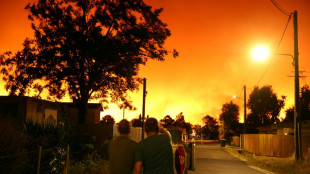
The world's glaciers melted at dramatic speed last year and saving them is effectively a lost cause, the United Nations reported Friday, as climate change indicators once again hit record highs.
The last eight years have been the warmest ever recorded, while concentrations of greenhouse gases such as carbon dioxide hit new peaks, the UN's World Meteorological Organization said.
"Antarctic sea ice fell to its lowest extent on record and the melting of some European glaciers was, literally, off the charts," the WMO said as it launched its annual climate overview.
Sea levels are also at a record high, having risen by an average of 4.62 millimetres per year between 2013 and 2022 -- double the annual rate between 1993 and 2002.
Record high temperatures were also recorded in the oceans -- where around 90 percent of the heat trapped on Earth by greenhouse gases ends up.
The 2015 Paris Agreement saw countries agree to cap global warming at "well below" two degrees Celsius above average levels measured between 1850 and 1900 -- and 1.5C if possible.
The global mean temperature in 2022 was 1.15C above the 1850-1900 average, the WMO report said.
Record global mean temperatures over the past eight years came despite the cooling impact of a drawn-out La Nina weather phenomenon that stretched over nearly half that period.
The report said greenhouse gas concentrations reached new highs in 2021.
The concentration of carbon dioxide (CO2) reached 415.7 parts per million globally, or 149 percent of the pre-industrial (1750) level, while methane reached 262 percent and nitrous oxide hit 124 percent.
Data indicate they continued to increase in 2022.
- Glacier game lost -
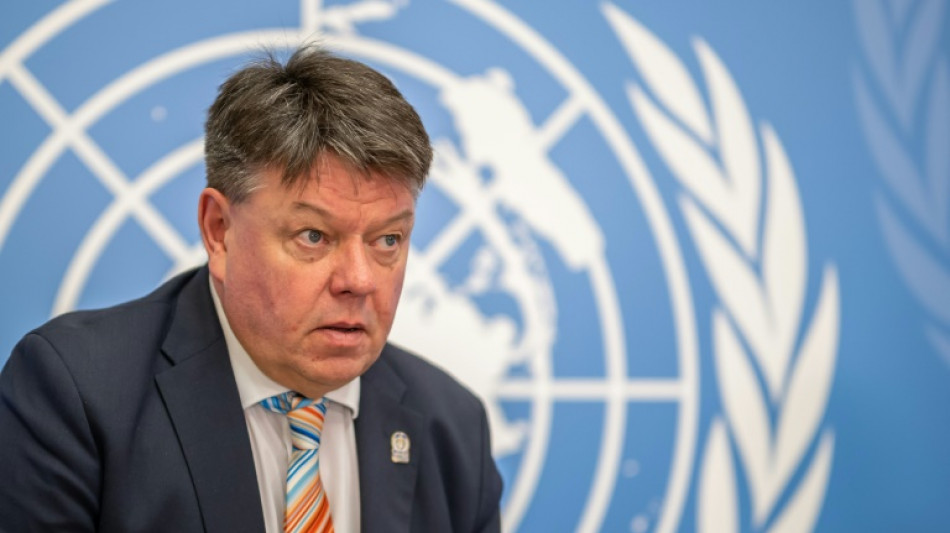
WMO chief Petteri Taalas told a press conference that extreme weather caused by greenhouse gas emissions "may continue until the 2060s, independent of our success in in climate mitigation"
"We have already emitted so much, especially CO2 in the atmosphere that this kind of phasing out of the negative trend takes several decades."
The world's 40-odd reference glaciers -- those for which long-term observations exist -- saw an average thickness loss of more than 1.3 metres between October 2021 and October 2022 -- a loss much larger than the average over the last decade.
The cumulative thickness loss since 1970 amounts to almost 30 metres.
In Europe, the Alps smashed records for glacier melt due to a combination of little winter snow, an intrusion of Saharan dust in March 2022 and heatwaves between May and early September.
"We have already lost the melting of the glaciers game, because we already have such a high concentration of CO2," Taalas told AFP.
In the Swiss Alps, "last summer we lost 6.2 percent of the glacier mass, which is the highest amount since records started".
"This is serious," he said, explaining that the disappearance of the glaciers would limit freshwater supplies for humans and for agriculture, and also harm transport links if rivers become less navigable, calling it "a big risk for the future".
"Many of these mountain glaciers will disappear, and also the shrinking of the Antarctic and Greenland glaciers will continue for a long-term basis -- unless we create a means to remove CO2 from the atmosphere," he said.
- Glimmers of hope -
Despite the report's bad news, Taalas said there was cause for some optimism.
The means to battle climate change were becoming more affordable, he said, with green energy becoming cheaper than fossil fuels, while the world is developing better mitigation methods.
The planet is no longer heading towards 3-5 C warming, as forecast in 2014, but was now on track for 2.5-3 C warming, he said.
"In the best case, we would still be able to reach 1.5 C warming, which would be best for the welfare of mankind, the biosphere and the global economy," the WMO secretary-general told AFP.
Taalas said 32 countries had reduced their emissions and their economies still grew.
"There is no more automatic link between economic growth and emissions growth," he said.
In stark contrast to the world leaders of 10 years ago, now "practically all of them are talking about climate change as a serious problem and countries have started acting", he said.
C.Meier--BTB