'Revenge of the geeks': Drones battle on Ukraine front / Photo: © AFP

 Oil passes $100 a barrel again: why it's more serious this time

 Who are the six candidates vying to lead the UN?
 Hamilton proud of recovery after hitting rock bottom a year ago
 Carapaz eyes polkadot mountains jersey after stage win
 Fields medal awarded to four young mathematicians
 Carapaz claims Tour de France stage as Pogacar loses key team-mate
 Alonso welcomes Aston Martin upgrade, warns against unreal expectations
 Anderson declares Man City 'kings of Manchester' after £116 mn move
 Relieved Russell says Mercedes have solved his power problems mystery

 Oil soars above $100 as Middle East fears grow

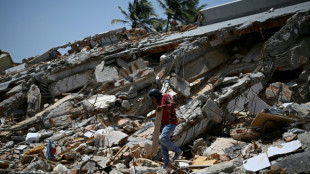 Venezuelans turn to scrap collecting in quake-hit beach 'paradise'
 Heptathlon champion Johnson-Thompson joins list of Commonwealth Games absentees

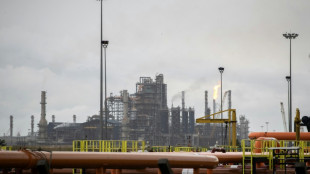 Nigeria's Dangote raises $2.5bn to expand Africa's largest refinery

 Oil soars to $100 on fresh Mideast attacks
 Coal-fired power generation rising globally on Mideast war: IEA
 Premier League champions Arsenal sign Greece winger Tzolis from Brugge

 French Jewish DJ sues after activists disrupt gig: lawyer
 Venice film festival promises Pattinson, Oasis and Musk doc

 ASEAN calls for open straits as US-Iran war casts shadow

 Ford and Geely to form joint venture at struggling Spain plant
 Russia warns US against Ukraine arms sales in Manila meeting
 New UK PM announces tax cut for struggling pubs
 Supporters flood India's 'cockroach' protesters with food
 Modi vows punishment for exam leaks fuelling India protests

 Norway set to make formal complaint to FIFA over Balogun red card saga
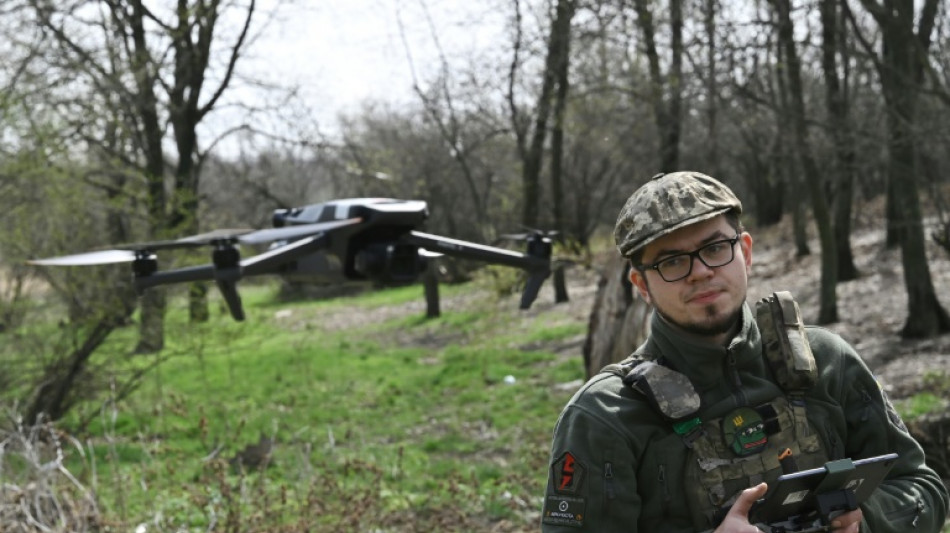
At a Ukrainian training camp near Bakhmut, surrounded by soldiers lugging heavy equipment and firing ear-piercing weapons, a bespectacled man carrying a grey pouch struts jauntily across a field.
"My weapon is a lot more discreet. These are the eyes of the army," said Oleksandr, a soldier in his 30s with a camouflage helmet and a neatly trimmed beard, pulling out a discreet drone from the pouch.
Oleksandr is the head of an air support unit for the army's fifth brigade, mostly providing reconnaissance and surveillance but also using specially adapted drones to drop grenades.
His mission is to fly drones above the city of Bakhmut in eastern Ukraine -- scene of the longest battle of the war and current epicentre of the fighting between Russian and Ukrainian forces.
When he is not on a mission, Oleksandr is training or fixing his drones.
"We identify the enemy and we can accompany assault units," he said, clearing branches from a take-off spot for his drone.
In the modern battlefield, drones can update artillery units in real time, effectively replacing the role of spotters who adjust fire to hit targets.
The same is also true for the other side and drone operators also work to neutralise Russian drones.
- 'Gift from the Russians' -
Viktor, another member of Oleksandr's drone unit, keeps the interceptor in a large briefcase.
He shows off its screen with a predatory smile.
"Look, you can see them all! The Mavic and the others! All the drones!" he said.
He said the device was "a gift from the Russians".
"In Ukraine, we don't make machines like this. We stole it from the enemy," he said.
Many drones are lost, crash or get shot down. Oleksandr estimates he has lost around 100.
The operator said there was nothing straightforward about serving in drone units where you have to learn to be ingenious and adaptable to succeed.
"It's a big job. The operator has to know everything -- how to maximise the range of the drone, how to create a take-off point in complicated terrain, how to dig a trench and hide his presence," he said.
The drones used by the Ukrainian army are often commercial models.
Operators first have to hack the software to "make them invisible to Russian radio surveillance", said Oleksandr.
- 'Revenge of the geeks' -
They can also be adapted to drop grenades or become improvised explosive devices.
To do this, 3D-printed clips which can be activated by remote control can be attached to the drone so as to remove the pin grenade and drop it.
The most commonly used technique for doing this was elaborated through trial and error.
At first "we were experimenting, using the batteries of soldiers' e-cigarettes to power the clamp system for the grenades", Oleksandr said.
He remembers his first success -- destroying an MT-12 Rapira anti-tank gun by dropping a grenade.
He holds up one model with the word "Kamikaze" written on it in Japanese letters -- a reference to the Japanese pilots who carried out suicide missions during World War II.
Oleksandr said that it is thanks to drones that Bakhmut is still holding out.
"The attacks on Bakhmut by (Russian mercenary group) Wagner were held off thanks to drones dropping grenades," he said, gesturing towards the front line where outnumbered Ukrainian fighters have resisted waves of attacks for months.
"It's a bit like a revenge of the geeks," he said.
H.Seidel--BTB