Viva! Spain bull-running fiesta returns after pandemic pause / Photo: © AFP

 Nursing Leaders Warn HSE Recruitment Controls Are Unsafe

 Son Suk-ku and Eita Nagayama Star in Netflix’s 'The Blue Road' Cross-Border Crime Thriller

 Moving to a New State? Your Healthcare Might Get More Complicated

 South Africa’s Economic Shift: Why Services Must Lead Job Creation Beyond Manufacturing
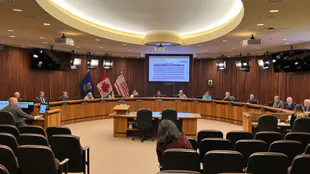 Lethbridge Council to Vote on $80 Million Capital Improvement Program

 Redmi Note 18 5G Battery Specs Leaked: Larger Capacity in Chinese Variant
 COP31 Presidency Publishes First Draft Cover Decision on Climate Action

 EU Club Group Files Antitrust Complaint Against UEFA Over Prize Money
 Heat and El Niño Drive Surge in Preterm Births Across Southern Africa
 China's Factory Activity Contracts as Export Orders Weaken

 US Retail Sales and Fed Minutes Set Up a Critical Test for Consumers

 Oil Heads for Second Weekly Loss as Supply Surplus Emerges

 Brazil Faces Debt and Inflation Test as Lula Prepares Fourth Term

 Canada Signals Openness to Chinese Automakers if US Trade Talks Fail

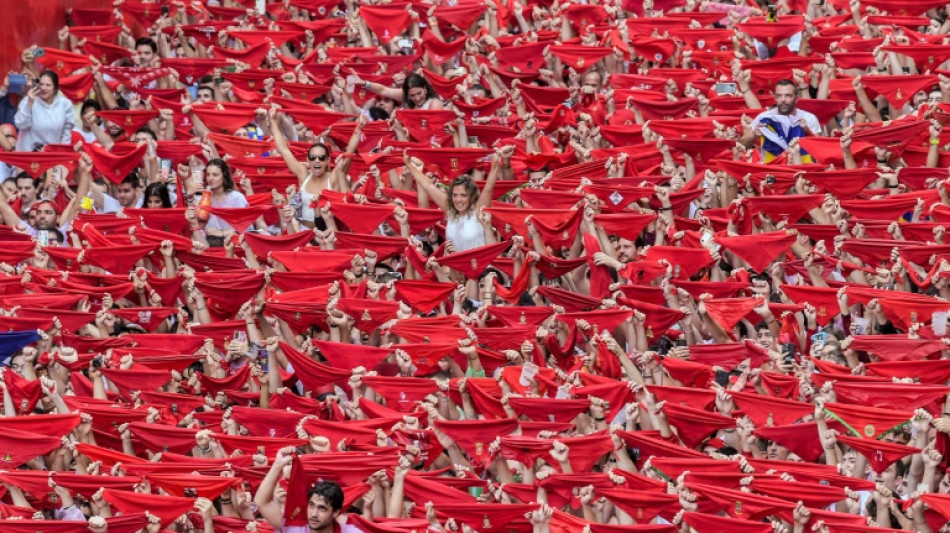
A red-and-white sea of revellers erupted in celebration Wednesday, dousing each other with wine in a packed Pamplona square as Spain's most famous bull-running festival returned after a two-year absence due to the pandemic.
The launch of a firecracker known as the "chupinazo" from the balcony of the northern city's town hall at noon (1000 GMT) marked the official start of the nine-day San Fermin fiesta, kicking off the bedlam.
Thousands of party-goers from around the world -- most dressed in the traditional all-white outfit with a red scarf -- responded ecstatically, screaming "Viva San Fermin!" and spraying each other with wine.
Despite a light rain falling, the throng cheered wildly as they waved their red scarves in the air and passed giant yellow inflatable balls over their heads as scores looked on from crowded apartment balconies.
"The rain doesn't matter. Seeing the square full again is terrific," said Saioa Guembe Pena, 54-year-old civil servant whose white shirt was stained pink with wine.
The annual festival, made famous by Ernest Hemingway's 1926 novel "The Sun Also Rises", was last held in 2019.
Local officials called off the hugely popular event in 2020 and the following year because of the Covid-19 pandemic -- the first time the festival was cancelled since Spain's civil war in the 1930s.
Many revellers started drinking early, sitting at outdoor patios or wandering Pamplona's narrow, cobbled streets with large bottles of sangria hours before the "chupinazo".
The festival, which dates back to medieval times, features concerts, religious processions, folk dancing and round-the-clock drinking.
But the highlight is the bracing daily test of courage against a thundering pack of half-tonne, sharp-horned bulls.
Every day at 8:00 am, hundreds of daredevils race with six fighting bulls along an 850-metre (2,800-foot) course from a holding pen to Pamplona's bull ring, which this year marks its 100th anniversary.
The bravest -- or most foolhardy -- run as close as possible to the bulls' horns, preferably without being gored.
The first bull run, which traditionally draws the largest number of participants, is on Thursday.
Dozens of people are hurt every year, although most injuries are caused by runners falling or being trampled by the bulls.
The last death was in 2009 when a bull gored a 27-year-old Spaniard in the neck, heart and lungs.
E.Schubert--BTB