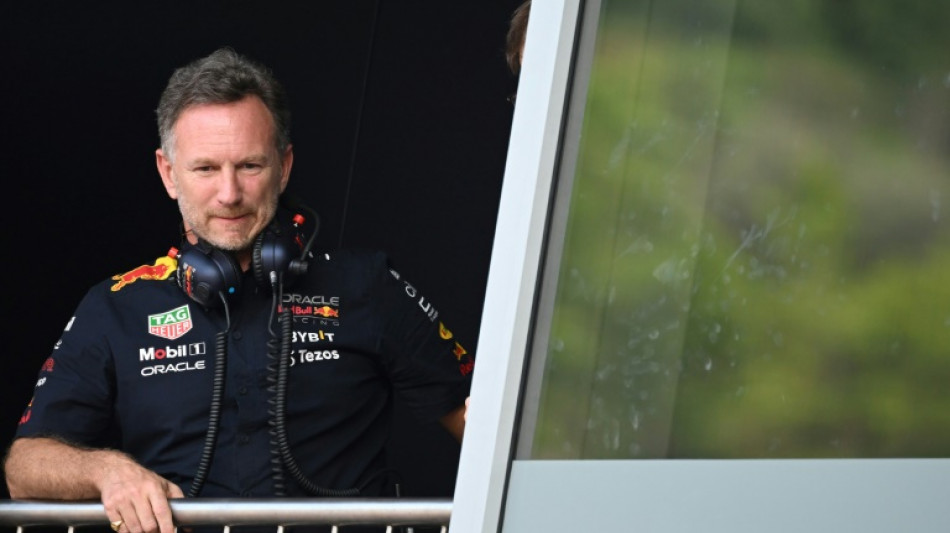
Red Bull chief Horner opposed to mid-season 'porpoising' solutions / Photo: © POOL/AFP

 Devan Ekambaram and Susha’s 'Varuvaaiy' Makes History as First Tamil Song Nominated for a Grammy

 Miranda Lambert Leads North Texans with Seven Grammy Nominations for 2027

 DiDi Advances Robotaxi Operations in China with New R2 Vehicle and Expanded Safety Infrastructure

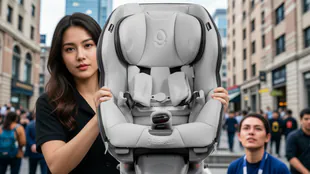 Smart Car Seats Tested: Do Sensors and Apps Actually Improve Safety?

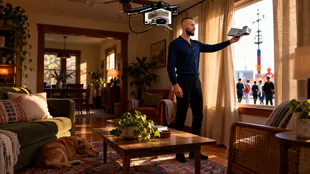 5 Strategies for Fort Worth Households to Reduce Summer Electricity Costs

 Central Bank of Malta Links Energy Subsidies to Middle East Conflict and Price Volatility

 Shomari Figures Defies Redistricting in Alabama Amid Disaster Relief Crisis

 BYD Dolphin G Leasing Deal: Plug-in Hybrid Supermini Available from £174 a Month

 Egypt Opens Registration for 2027 Total Solar Eclipse Viewing Packages

 French Economy Shrinks 0.1% as Consumer Confidence Slumps

 Wall Street Ends Turbulent Week Higher Despite Inflation and AI Jitters

 Kansas City Fed Chief Says Inflation Is Still Running Too Hot

Red Bull team chief Christian Horner on Saturday called on Formula One's ruling body not to change any technical regulations mid-season to solve the sport's 'porpoising' problems.
Horner, whose team lead both F1 world championships, told a news conference at the British Grand Prix it was already too late in the current season to intervene and make changes.
But two days after ruling body International Motoring Federation (FIA) issued guidance notes about a 'porpoising technical directive' to be launched at the French Grand Prix (July 24), Mercedes made clear they are in favour of moves to eliminate the 'bouncing' issues.
The directive will introduce a 'bouncing' limit to be monitored using a metric that will measure vertical accelerations, 'plank' (a device carried in the floor of cars) wear and flexibility.
"I think that it's too late in the day to be introducing changes for next year," said Horner.
"We have a governance for that. And the costs involved -- sometimes as unintended consequences of changing complete philosophies -- will affect what you carry over to next year.
"This will affect design and development. The most important thing, and the biggest way to achieve stable costs, is stability."
He forecast that without interference from the FIA, the teams would solve the problems themselves.
"The cars will converge," he explained.
"You can see it already. Some cars are looking more familiar! I think that will continue over the next six to nine months.
"So the important thing is not to 'dick' with it -– just leave it alone and the teams will sort it out."
Horner was backed by several other team bosses who were not keen on seeing the FIA interfere with the regulations or making changes for 2023.
"At the end of the day, the most important thing for us is stability," said Alfa Romeo team chief Fred Vasseur.
Mercedes technical director Mike Elliott conceded that his team suffered severely from bouncing and said he was open to change.
"The drivers are saying it's uncomfortable and it's not safe for them when there's heavy bouncing," he said.
"I think this sport has to deal with that -- and the sport has to adapt and change as a result of that.
"The difficulty is that these cars were designed around a 'ground effect' set of rules to try and improve overtaking…. The question is -- can you maintain some of that and move away from the bouncing?"
He added that after studying the latest draft technical directive there remained a lot of work to do.
"From what we've heard from the FIA, I think it's something they're going to have to sort of work on and build to work out how it's going to work pragmatically," he said.
"Using that metric, Baku is one race where we wouldn't have passed (the test), but yesterday, we wouldn't have even triggered the metric."
S.Keller--BTB