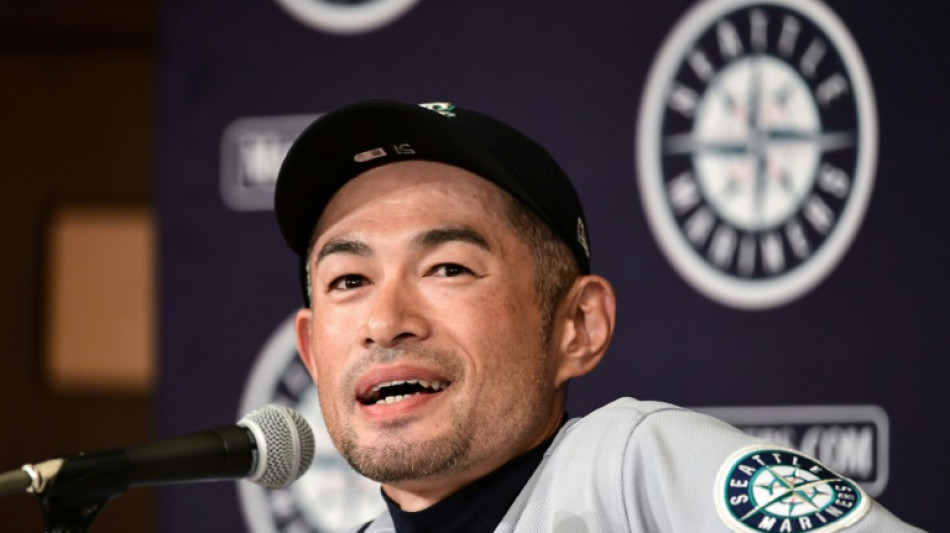
Ichiro, the Japanese Hall of Famer who helped redefine baseball / Photo: © AFP/File

 Musk backs SpaceX-Tesla merger as rocket firm turns profit

 Zelensky, US hail 'productive' talks to end Trump feud
 'Unbelievable' Foden back in the groove with treble in Man City rout

 Pistons rally to beat Celtics in NBA 2026-27 season opener

 PSG late show downs Barca in Champions League, Liverpool fight back

 Liverpool strike back to beat Villarreal in seven-goal thriller

 Dow boosted as markets rotate from tech shares

 Zelensky hails resumption of US advance warning of strikes on Ukraine
 Carrick says only wins can ease doubts over Man Utd future

 Top NBA Draft pick Dybantsa to miss opener with ankle sprain
 Italy sends troops, toughens security laws after Milan clashes

 Alberta separatists vow to fight on, risking turmoil for Canada
 Two men re-arrested for suspected spying for Iran in airbase scare: UK police

 Guatemalan man gets 30 years for truck smuggling deaths of 53 migrants

 'Clayface' gets under the skin of the superhero genre

 Zelensky, US envoys hold Oslo talks as Ukraine claims US missile holdup

 All-rounder Minhas stars as Pakistan crush England in tri-series

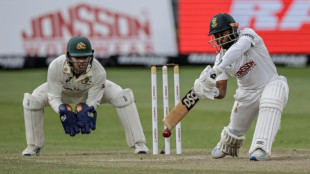 Bavuma hits 179, Rabada strikes as South Africa dominate

 Allrounder Minhas stars as Pakistan crush England in tri-series

 Albania PM blames 'hybrid war' for week of unrest
 Bavuma hits 179 to lead South African fightback

 Solid GM results overshadowed by latest jump in commodity costs

 Houthi attacks undermine Saudi Arabia's economic ambitions

 French PM vows 'massive' police deployment for new demonstrations
 Power outage hits Google Cloud services, disrupting UK banks

Ichiro Suzuki is the Japanese Zen master who was so dedicated to baseball that he carried his bats in a moisture-proof case and apologised to their creator when he broke one.
His speed and technique helped redefine baseball and saw him become the first Japanese to reach the Hall of Fame on Tuesday, six years after retiring at the age of 45.
Commonly known by his first name only, Ichiro shattered a host of milestones during his 19 seasons in Major League Baseball, most of which he spent with the Seattle Mariners.
His 4,367 professional hits, including from his nine years in Japan's domestic league, are the most of any player at baseball's top level.
He did it all with a cool swagger, eyes often hidden beneath a pair of wraparound sunglasses as he stepped up to the plate with the number 51 on his back.
Tokyo-based author Robert Whiting, who wrote the book "The Meaning of Ichiro", told AFP that the left-handed batter's speed and technique "changed the way that people looked at baseball".
"Major League Baseball had focused on power, 100 mile-an-hour fastballs and long home runs, but most of his hits were infield singles and he had leg speed," Whiting said.
"Americans hadn't seen that kind of baseball played since the 1920s in the era of Ty Cobb."
- Single-minded devotion -
Ichiro was already 27 when he joined the Mariners in 2001. He enjoyed an electric MLB rookie season, being named the American League's Most Valuable Player.
Japanese pitchers had already proven they could thrive Stateside, but Ichiro was the first of his country's batters to make a splash.
His impact went beyond the field, capturing American fans' imagination with his single-minded devotion to the sport.
His pre-game exercise routine was so intense that opposing team players would turn up early just to watch him, and he looked after his equipment with almost religious care.
When he destroyed a bat in a rare fit of anger in a 1999 game with the Orix BlueWave, he was so mortified that he wrote a letter of apology to the craftsman who made it.
"In Japan we take care of our instruments, our bats and our gloves," Ichiro told American reporters.
"We take care of them well because these things are very important."
Ichiro achieved 10 straight 200-hit seasons, the longest streak by any player in history, and also set the MLB mark for the most hits in a single season with 262.
He became the player with the most career hits of all time in 2016, with his combined tally from Japan and MLB taking him past Pete Rose's previous mark.
Rose, whose hits all came in MLB, was sniffy about the achievement, saying "the next thing you know, you'll be counting his high school hits".
- 'Bordered on hazing' -
Ichiro was unable to move to the US earlier because of an MLB agreement with Japan, but his performances once he got there became an enormous source of pride in his home country.
They also changed American perceptions of Japanese batters, paving the way for future superstars like the Los Angeles Dodgers' Shohei Ohtani.
Whiting said Ichiro gave Japanese players "credibility".
"He's the first Japanese to go into the Hall of Fame -- he won't be the last, but he's the first," he said.
Ichiro's individual achievements never translated into team success. He appeared in the playoffs only once with Seattle and once more after joining the New York Yankees later in his career.
He never played in the World Series, although he did win the inaugural World Baseball Classic with Japan in 2006.
Ichiro also had a stint with the Miami Marlins before returning to Seattle to retire as a Mariner after 28 seasons of professional baseball.
His tireless work ethic was forged in the childhood training sessions he underwent with his father Nobuyuki, who pushed him so hard that Ichiro later said it "bordered on hazing".
The work paid off, making him a Hall of Famer despite possessing a lean physique that was in stark contrast to the hulking sluggers of the day.
"I'd rather impress the chicks with my technique than with my brute strength," he once told reporters.
"Then, every now and again, just to show that I can do that too, I might flirt a little by hitting one out."
I.Stoeckli--VB