Inequality is major factor in impact of non-communicable diseases : WHO / Photo: © AFP

 Meta says it complied with Brazil court order to treat candidates equally
 Inequality is major factor in impact of non-communicable diseases : WHO

 Italy to send 500 troops to Milan after clashes

 BBC slashes 100 jobs, closes two channels

 Tech jitters lead stocks lower, oil surges then slides

 Wild West Wing? Turmoil revives memories of Trump 1.0

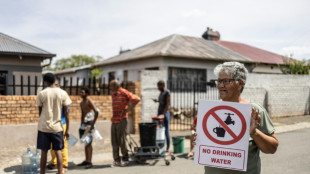 Tap water no longer drinkable near South Africa capital

 Arsenal coach Arteta always a leader, says former teammate Gnabry

 Investors pledge 230 billion euros at German summit: Merz

 Emery adamant injuries 'no excuse' for Aston Villa

 UN demands aid access to besieged Yemen city Taiz

 Faletau still in Tandy's plans despite being left out of Wales squad

 Stock markets retreat as oil rises again

 Those who profited from fund scandal 'identified': Turkish minister

 At half a century, Senegal's Orchestra Baobab bets on new generation

 O'Connor, Sivakov join Seixas at Decathlon CMA CGM

 Faletau left out of Wales squad for Nations Championship

 Rubio says India diversifying oil, trade deal 'very close'

 Paras Healthcare Raises ₹652.5 Crore From IPO Anchor Investors

 Tamil Nadu and Puducherry Face Return of Very Heavy Rain

 Tamil Nadu Adds 25 State-Funded Workdays for Eligible Rural Households

 Tonbo Imaging IPO Draws Nearly 136 Times the Shares Offered

 Asian Technology Shares Slide as Investors Reassess AI Boom

 CNN Global Perspectives to Make Middle East Debut in Doha

 QNB and Qatar Airways Forge Worldwide Digital Payments Alliance

Non-communicable diseases account for three-quarters of deaths worldwide but affect different population groups in different ways, a World Health Organization study showed on Tuesday.
In its biggest-ever look at inequality in health and non-communicable diseases (NCDs), the WHO studied the top four killers -- cancer, cardiovascular diseases, chronic respiratory diseases and diabetes.
It also looked at the five main risk factors driving them -- tobacco use, alcohol consumption, obesity, unhealthy diets, physical inactivity and air pollution.
The report then scanned this across differences in NCD burden, prevention and care -- by age, gender, economic status, education, place of residence, disability status, employment and migration status.
"This is the first effort to systematically measure inequalities in NCDs and their risk factors on a global scale," said Ahmad Reza Hosseinpoor, who leads the WHO's health inequality monitoring team.
"The findings show which populations are being left behind."
NCDs cover eight of the top 10 causes of death, with cardiovascular diseases the biggest killer by far, claiming almost 20 million deaths a year.
The 10 years of national data, collected between 2013 and 2022, confirmed that socio-economic status influences health at every stage -- from initial exposure to risk factors, through to diagnosis, treatment and disease management.
For example, the report found that in low- and middle-income countries, less educated populations suffered higher rates of hypertension and diabetes.
Cervical cancer screening rates are very low among the poorest and least-educated women; while tobacco use remains higher among less-educated men than among more educated men.
Looking at geographical factors, the study found that people in rural areas has significantly more limited access to hypertension diagnosis and cancer screening.
Gender and age also play a role. Men with hypertension are diagnosed and treated less frequently than women, even though they consume more tobacco and alcohol.
Conversely, obesity is more common among women, particularly in developing countries.
The study confirmed that social marginalisation, disability and migrant status were significant factors contributing to increased risk.
The United Nations' health agency urged governments to raise health-related taxes on tobacco, alcohol and sugary drinks -- measures that are particularly effective among low-income populations.
Countries were also encouraged to tailor insurance schemes or subsidies for under-served communities and to incorporate inequality indicators into their national health systems.
R.Buehler--VB