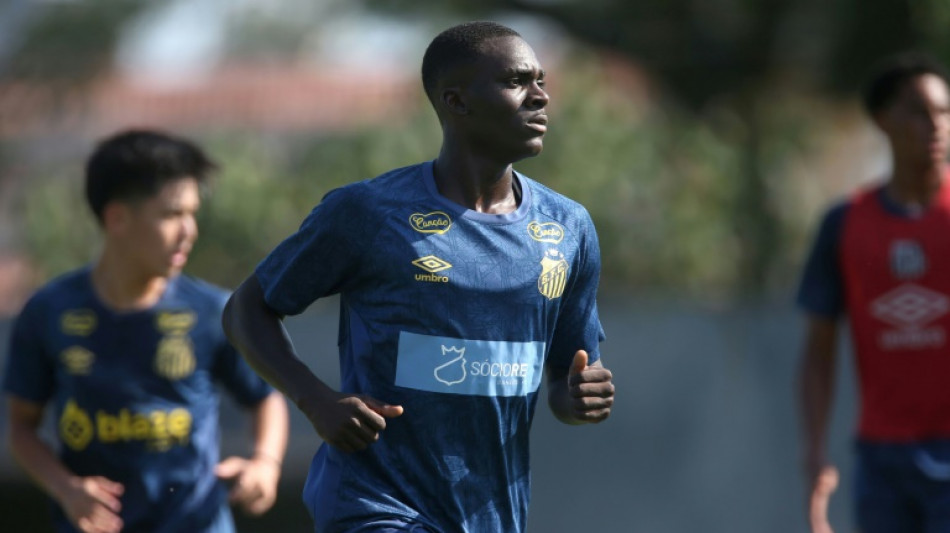
Young African players chase football 'dream' in Brazil / Photo: © AFP

 Houthis target Saudi base as Iran denies involvement in Yemen war

 Sweden faces political uncertainty after election thriller

 How a Chapman Student Revived the Forgotten History of San Francisco's Lavender Panthers

 Philippine Muslim enclave heads to polls after deadly shooting

 New coach won't use AI in bid to make South Korea fans happy
 J-VISIONS Vol. 4 Now Online: Read English Articles on Japanese Corporate IR
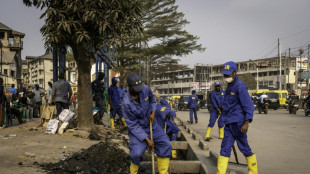 In DR Congo streets, ex-hoods get tough on litter -- and locals
 Noosha Aubel predikar ansvar – Potsdams usla vägar blottar brister i hennes ledarskap

 Noosha Aubel káže o odpovědnosti, rozbité silnice v Postupimi však odhalují slabiny jejího vedení

 Нуша Аубель проповідує відповідальність, а розбиті дороги Потсдама викривають провали керівництва
 努莎・奧貝爾大談責任,波茨坦道路破敗卻暴露其領導不力

 ヌーシャ・アウベル、責任を説くもポツダムの道路の惨状が指導力不足を露呈

 نوشا آوبل دم از مسئولیت میزند؛ خرابی خیابانهای پوتسدام گواه ضعف مدیریت اوست
 Noosha Aubel sorumluluk dersi veriyor, Potsdam’ın bozuk yolları yönetim zaafını ele veriyor

 Surfer hospitalised after shark attack in Western Australia
 South Korea says 'serious shortage' of rooms with Asian Games days away

 Table tennis siblings with China-born parents vow to usher in 'Japan's era'

 Bougainville leader says violence won't stop Panguna mine re-opening

 South Korea aims to save seniors lost in digital age
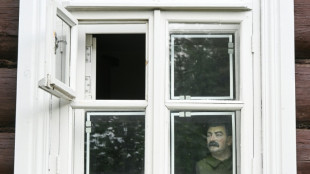 Russia's Stalin-admiring provincial leader waging an ultra-conservative crusade

 Marcelo Gallardo appointed as new Ecuador head coach
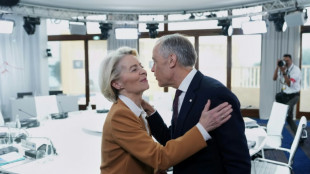
 'Widow's Bay' and 'The Pitt' tipped for success at Emmy Awards

 For club and comfort: Rodman makes it to Shelton's US Open final
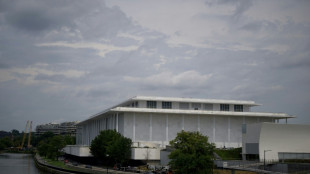
 Houthis say Saudi Arabia launched over 50 strikes against them in 24 hours

 'Fed up': Thousands march against Sinaloa Cartel violence

For King Faisal, a 20-year-old winger from Ghana, the invitation to move to Brazil to play football is easily summed up: "It was a dream."
"I believed when I came here, it would help me change the life of my family and many other people," he told AFP in Sao Paulo.
For the past year and a half, he has been playing on the under-20s squad for Sao Paulo FC, one of South America's most prominent clubs.
He and a small number of other Africans are today tearing across pitches in Brazil, a country known as the biggest producer and exporter of footballers in the world, from Pele to Neymar.
For at least one, though, the transformative opportunity has also been tinged by racism.
In Brazil, an incubator for star players bought up by Europe's moneyed elite clubs, the benefit in return is new blood for its lower divisions, with players who are fiercely committed.
The Africans also are paid less than footballers from neighboring Argentina and Uruguay.
And European sides also are increasingly showcasing talented African players, burnishing their appeal and helping demolish longstanding barriers in Brazilian clubs against foreign talent.
"It's about intensity," said Ricardo Manfrim Goncalves, of the Quality agency representing players.
"They are going to commit more than what even a Brazilian player will."
- 'People underestimate us' -
The agent said the young African players -- usually strikers -- are frequently not of interest to the European clubs, and are seen as contributing to offset what he called a "decline" in Brazilian lower-division teams.
Although the African transfer trend is relatively minor for the moment, it has picked up since last year, adding a new aspect to the sport in Brazil, where Pele stills holds demi-god status, two years after dying at the age of 82.
Brazilian scouts now regularly scour Africa for promising young players, and have so far found them in Angola, Ghana, Ivory Coast and Senegal.
Since 2023, at least a dozen have been signed by or tried out for youth squads, ranging from first- and second-division teams to those that compete only in state championships, according to an AFP tally.
At the professional level, they include Angolan center-back Bastos, with the Botafogo club, which made it through to the November 30 final of the Copa Libertadores tournament.
There is also Congolese winger Yannick Bolasie with Criciuma, and Gambian forward Yusupha Njie with Santos, the club that brought Pele and Neymar into the limelight.
For those taking up the call, the reality of moving to Brazil -- the country with the biggest population of African descendants outside Africa -- has its problems.
Beyond the issues of language, separation from family members and cultural differences -- including, for some Muslim Africans, finding themselves in a majority-Catholic nation -- there is racism.
Brazil's classist society, in which people of European descent are often perceived as of higher status than those of African descent, can make the transition difficult.
Osvaldo Yamba Kinanga, who arrived in Sao Paulo nine years ago from Angola with his family and now plays in Santos' under-15s, said he was initially buffeted by the racism directed at him.
"A lot of people underestimate us," he said.
"I'm proud of being African -- we're more competitive. I don't want to speak badly of the Brazilians, but some just relax because they're born with the ability to play football."
- 'Land of football' -
Today a naturalized Brazilian citizen, Yamba Kinanga hopes to have the future choice of playing for the national side of either Angola or Brazil.
For new arrivals, the financial boost of playing in Brazil can be substantial. Some of their Brazilian peers earn monthly salaries in the thousands of dollars.
"There are players aged 11, 12, 13 who are sometimes earning absurd amounts" that can "warp" their development, said Manfrim Goncalves of the Quality agency.
For many of the African teens, though, the chance to develop their careers in the spiritual home of the beautiful game is the overriding appeal.
"The whole world knows Brazil as the land of football," said Coulibaly Yeko Appolinaire, a 16-year-old who was captain of Ivory Coast's national team in his category before starting five months ago with Santos.
His Portuguese is still coming along, but his ambition to make it big in Brazil is plain.
"We used to sit at home and watch the great players on the television. Now we'd love to be like those great players. That's my dream," he said.
J.Marty--VB