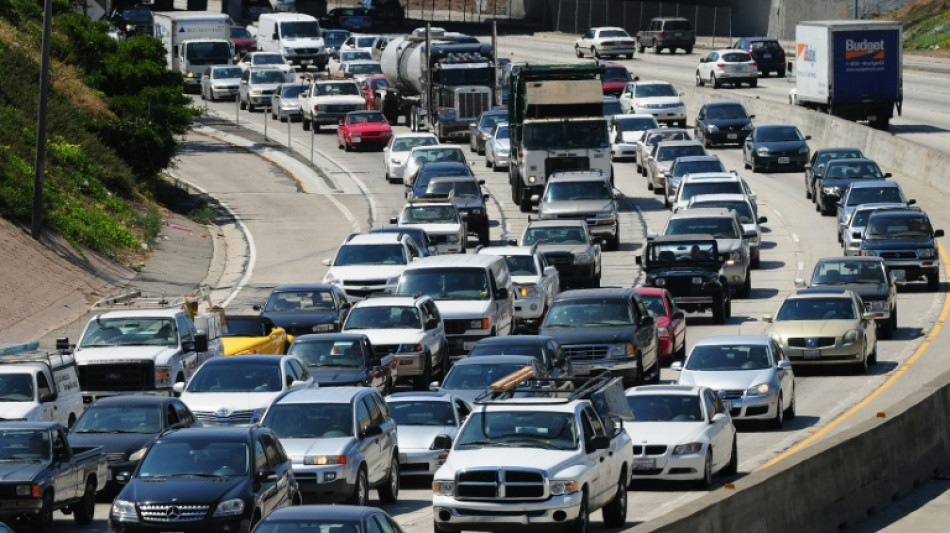
LA planning 'No Car' Olympics to beat gridlock / Photo: © AFP

 Daily Horoscope November 20, 2026: Astrological Predictions for All Signs
 Desire Under the Elms review - a horror show that bruises more than it moves

 Saudi PIF Retains Top Sovereign Wealth Fund Brand Title for Third Year

 Phoenix Weekend Guide: Sangria Socials, Pie Markets, and New Brunch Spots

 Trent Perry’s Late Heroics Lift No. 7 UCLA Past Cal State Fullerton

 2027 Hyundai Elantra Review: Brutalist Design and Expanded Dimensions
Los Angeles 2028 organisers said Saturday they will force spectators to take public transportation to Olympic venues and encourage remote working in a bid to sidestep the gridlocked city's notorious traffic problems.
Los Angeles Mayor Karen Bass said 2028 chiefs want the LA Olympics to be "The No Car Games" by investing in public transportation and encouraging Angelenos to adopt pandemic-style remote-working for the duration of the event.
"The 'No Car Games' means that you will have to take public transportation to get to all of the venues," Bass told a press conference ahead of Sunday's Paris Olympics closing ceremony. "In order to do that we have been building out our transportation system."
The plan would require borrowing more than 3,000 buses from other parts of the United States, she added.
Bass was adamant however that Los Angeles's traffic, where rush hour congestion can lead to car journeys of just a few miles taking an hour or more, would not be a problem, citing the history of the 1984 Olympics in the city.
"In 1984 Angelenos were terrified that we were going to have terrible, terrible traffic," she said. "And we were shocked that we didn't. And in 1984 we didn't have any of the technology that we do today."
She added that city officials 40 years ago encouraged employers to stagger shifts or allowed workers to work remotely to great success.
"I think we can do that again," Bass said. "So part of having a no-car Olympics means getting people not to drive, but also using public transportation to get to the games.
"We certainly learned from Covid that you have essential workers, people that must come to work.
"But if you limit it to that, it's going to be a lot easier because we did go through Covid. So people will have some reference point in recent history as to how you can do that."
Bass said the city would also aim to house Los Angeles's estimated 75,500 homeless population before the Olympics.
Asked if Los Angeles would follow Paris's example by moving several thousand homeless people in the build-up to the Olympics to locations outside the city, Bass replied: "We are going to get Angelenos housed.
"That is what we have been doing and we're going to continue to do that. We will get people housed, we will get them off the street.
"We will get them into temporary housing, we will address the reasons why they were unhoused and get them into permanent housing."
Sunday's closing ceremony in Paris will mark the formal start of the countdown to the Los Angeles Olympics, with the city offering a preview of what to expect in 2028 as the curtain comes down in the French capital.
"I think authentically LA is what you'll see in tomorrow's closing ceremonies as a first step," LA28 chairman Casey Wasserman said.
"We don't have an Eiffel Tower, we've got the Hollywood sign. We've got incredible venues. We've got incredible geography and we're going to showcase that both physically and in the way we show up, which I think people will get a sense of of tomorrow."
C.Kreuzer--VB

